Travel Ideas
4 medieval fortresses to visit in November
November is the month when time seems to slow down, and Romania wraps itself in a fairytale atmosphere. Rust-colored leaves carpet the roads, the air turns crisp, and the mountains fade gently into a soft mist that seems to hide the secrets of another age. It’s the perfect time for a journey into the heart of history, where ancient walls, watchtowers, and stone courtyards still echo with the voices of centuries past.
During this month, as nature retreats into silence, Romania’s medieval fortresses become more impressive than ever. The quiet that surrounds them, the absence of crowds, and the gentle light of late autumn transform each visit into an almost magical experience. You can wander freely along cobbled paths, gaze from the top of the towers over frost-covered villages, and feel that unique blend of mystery and grandeur that has made Transylvania a timeless source of fascination for visitors from all over the world.
From the legendary Bran Castle—shrouded in the myth of Dracula and perched on the rock guarding the Rucăr-Bran Pass—to Râșnov Fortress, which protected the people of Țara Bârsei for centuries from invasions, each place has a story to tell. In Făgăraș, the fortress surrounded by water moats and massive bastions speaks of the golden age of Transylvanian princes, while Alba Carolina Fortress in Alba Iulia brings visitors closer to modern Romanian history, as it was here that the Great Union of 1918 was fulfilled.
( Source: urlaub in Romanien )
Each of these historical monuments stands as a living testament to the evolution of a nation that has preserved its roots and identity. In November, their charm is amplified by the surrounding landscapes — copper-colored forests, mist-covered valleys, and villages that seem to slumber beneath the first frosts of winter.
But these fortresses are not only about the past. They also offer a modern perspective on Romanian tourism: medieval reenactments, traditional fairs, light shows, exhibitions, and cultural events that bring new life to ancient walls. Visitors can combine a history lesson with an authentic experience — a walk through stone tunnels, a panoramic view from an observation tower, or a rustic dinner in a restaurant set up in former guard rooms.
Romania is a country that knows how to tell its story through its fortresses. In every wall lies a battle, a legend, a lost love, or a long-forgotten victory. Visiting these places in November, when time seems to flow more slowly, gives you the chance to truly connect with their spirit.
In the following lines, we invite you to discover four of the most beautiful and representative medieval fortresses in Romania: Bran Castle, Râșnov Fortress, Făgăraș Fortress, and Alba Carolina Fortress. Each offers a unique experience — a journey through time and a deep connection to the history and identity of this country. November is the perfect time to explore them, in peace, under the warm light of late autumn, with the feeling that every step takes you through a living chapter of Romania’s past.
Bran Castle – Between History and Legend
Few places in Romania manage to intertwine history and myth as powerfully as Bran Castle. Strategically located between Transylvania and Wallachia, the castle rises proudly atop the steep cliffs of the Bran Pass, dominating the landscape with its imposing silhouette. Surrounded by dense forests and copper-colored hills at this time of year, Bran feels like a place lifted straight from a Gothic tale — especially under the gentle, mysterious light of November.
The history of Bran Castle begins in the 14th century, when the Saxons of Brașov built a fortress here to protect the trade route linking Transylvania with the southern part of the country. Over the centuries, the castle served many purposes — customs post, military stronghold, noble residence — and has witnessed countless historical events. Its thick walls and tall towers still preserve the memory of battles, merchants passing through, and nobles who left their mark on this remarkable place.

( Source: Tours and day trips from Brasov )
What truly turned Bran into an international symbol is, without a doubt, its connection to the legend of Dracula. Although Bram Stoker, the author of Dracula, never visited Romania, the descriptions in his novel strikingly resemble the image of the castle. Its Gothic silhouette, white walls, sharp towers, and isolated position atop the rock have made Bran, in the collective imagination, “Dracula’s Castle.”
This association has brought an aura of mystery and fascination that attracts thousands of tourists from all over the world each year. In November, as mist gently settles over the valley and golden leaves carpet the paths, the castle takes on an atmosphere that feels tailor-made for the imagination to wander between history and legend. Visitors can explore the medieval chambers, narrow corridors, and inner courtyard while guides share stories of rulers, invasions, and the many mysteries woven around these walls over the centuries.
Another important chapter in the castle’s more recent history is tied to Queen Marie of Romania, who received Bran as a gift in 1920 and transformed it into a royal residence full of elegance and charm.

( Source: Istorie pe scurt )
Under her reign, the castle came to life again, becoming a place of refinement and tranquility, decorated with authentic furniture and works of art that restored its lost charm. Today, part of these arrangements can be admired in the museum dedicated to the royal family.
Visiting Bran Castle in November is a truly special experience. The absence of crowds allows for peaceful exploration, while the cool air, combined with the scent of damp wood and the sound of the wind rustling through the fir trees, adds a touch of melancholy that is hard to find in any other season. In the evening, when the castle lights up and the glow reflects on its white walls, the scene feels like something out of an early winter fairytale — one that blends real history with the magic of legends.
Bran Castle is not just a tourist destination but a symbol of Romanian mystery. Here, history, myth, and nature merge into an experience each visitor lives in their own way. Whether you come for its history, its impressive architecture, or the legend of Count Dracula, Bran has the power to enchant you — especially in November, when even time itself seems to pause for a moment within its walls.
Râșnov Fortress – The Fortress That Defied Time
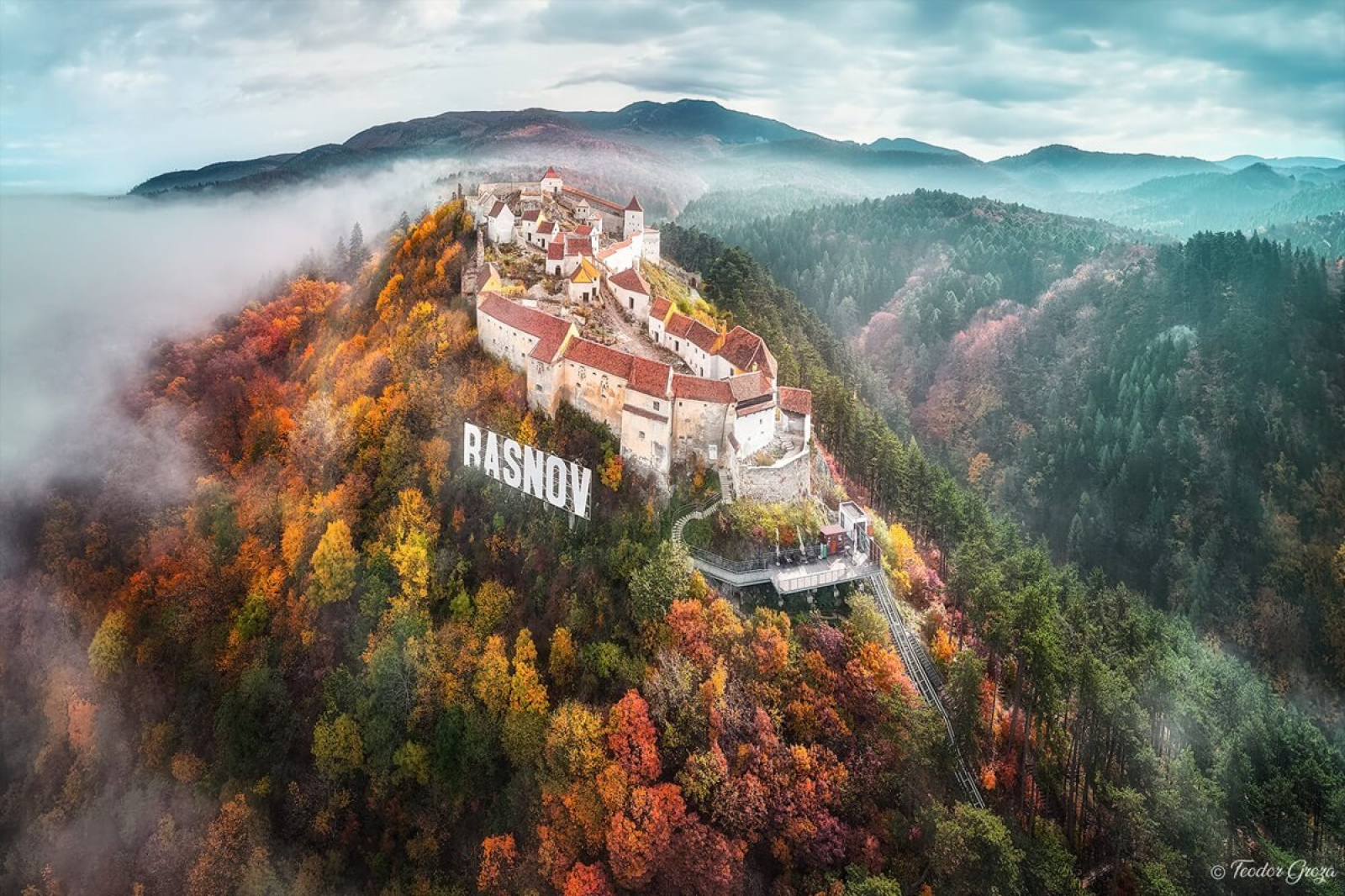
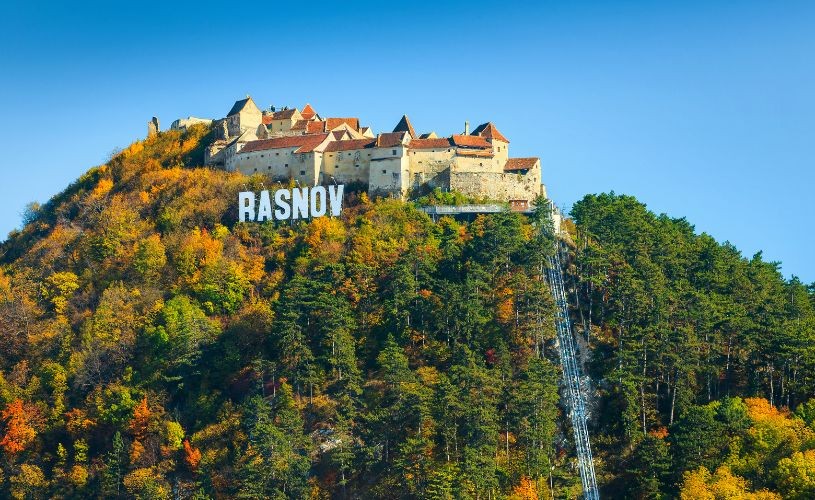
Just a few kilometers from Brașov, atop a hill overlooking the entire Țara Bârsei region, stands one of the most beautiful and best-preserved fortifications in Transylvania: Râșnov Fortress. Viewed from below, it resembles a stone crown perched on a forest-covered hill, and in the gentle light of November, its ancient walls take on a warm, golden hue that contrasts beautifully with the overcast autumn sky.
( Source: Ziarul Metropolis )
Built in the 13th century by the Teutonic Knights, Râșnov Fortress was intended to protect the inhabitants of Râșnov from Tatar and Ottoman invasions. Unlike many other military fortifications, however, Râșnov was not just a garrison; it was a true fortress-town, a refuge for the entire community. Within its walls were houses, a church, storage rooms, and even a deep well nearly 150 meters long — a symbol of the residents’ resilience, allowing them to survive for months in case of a siege.
Legend has it that this well was dug over 17 years by two Turkish prisoners, who promised to find water in exchange for their freedom. Arabic inscriptions found within the well testify to this story, adding a touch of mystery and drama to the site’s history.
Over the centuries, Râșnov Fortress stoically withstood numerous attacks. Neither the Tatars nor the Ottomans succeeded in conquering it, thanks to its strategic position and the solidarity of its inhabitants. Only time and neglect managed to take their toll, but recent restorations have restored its shine and dignity. Today, walking among its reconstructed walls is a true journey through time.
In November, the fortress exudes a special charm. The cold wind blowing through the towers, the rust-colored leaves covering the paths, and the scent of burning wood from the houses in the valley create an authentically medieval atmosphere. You can climb up to the watchtower for a spectacular view of the entire Țara Bârsei region, and if you’re lucky, you might catch the gentle morning mist rising above the village — a scene seemingly painted for the traveler’s soul.
Inside the fortress, the local museum houses medieval artifacts: weapons, tools, coins, and costumes that tell the story of everyday life in that era. Everything transports you to a forgotten world, where every stone has a tale, every tower has witnessed a battle, and every courtyard was once full of life.
Perhaps the most beautiful part of visiting Râșnov is its tranquility. Unlike other crowded destinations, the fortress has its own calm and authentic rhythm. November finds it in a peaceful state, where time seems suspended. You can sit on its walls, gazing at the Bucegi and Piatra Craiului Mountains, and let yourself be immersed in the thought that you are in a place that has survived centuries, preserving the spirit and courage of those who built it.
Râșnov Fortress is not just a historical monument but a lesson in resilience and community. It is living proof that when people unite in the face of hardship, they can create something capable of enduring even time itself.
Făgăraș Fortress – The Fortress Reflected in the Water
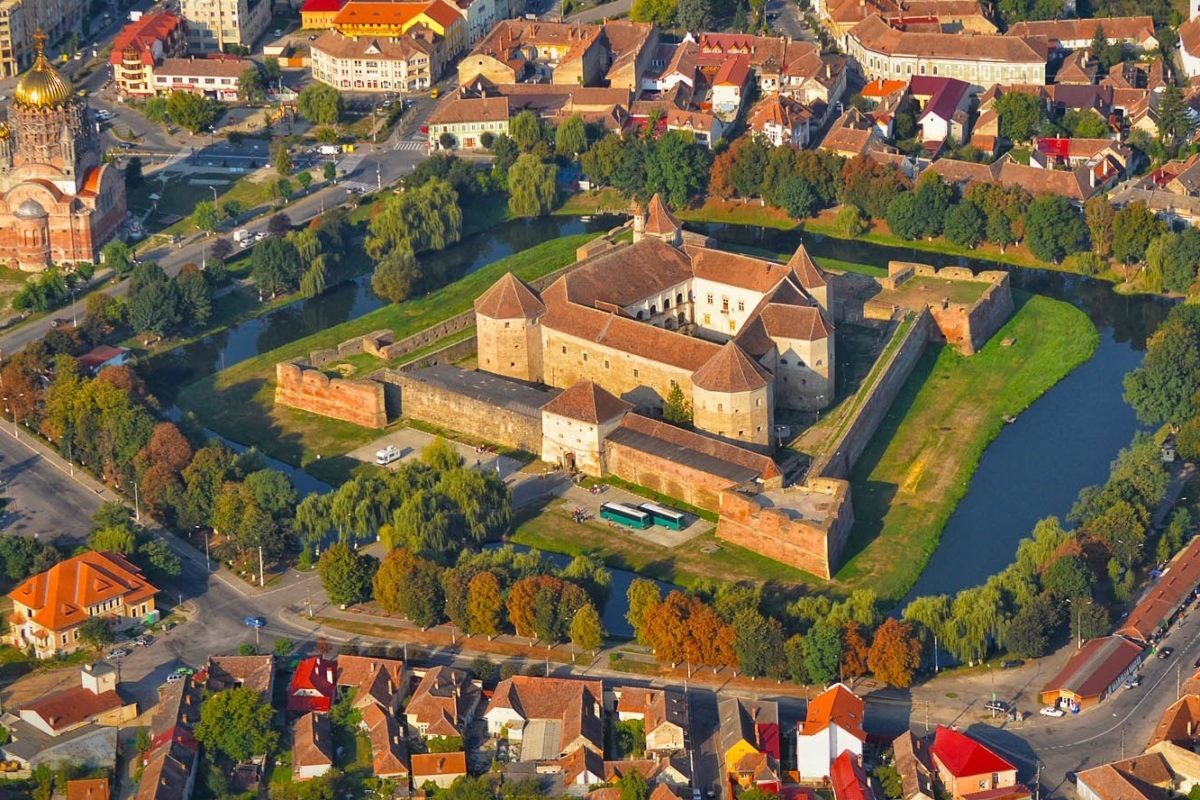
In the heart of Transylvania, at the foothills of the Făgăraș Mountains, stands one of Romania’s most impressive and beautiful fortifications: Făgăraș Fortress. Surrounded by a moat of clear water that perfectly reflects its walls, the fortress seems like a castle straight out of a fairy tale. In November, when mist hovers over the water and the surrounding trees wear shades of copper, the view becomes truly enchanting — a blend of strength and grace, history and poetry.
( Source: Monitorul de Botosani )
Built in the 14th century on the site of a former earthen fortification, Făgăraș Fortress was initially a strategic defense point. Over time, however, it became one of the most important noble residences in Transylvania, serving as a home for rulers, princes, and prominent figures. In the 17th century, the fortress was transformed into an elegant Renaissance palace, considered at the time one of the most luxurious residences in the region.
Every wall tells a story. During the reign of Mihai Viteazul, Făgăraș was given as a gift to his wife, Lady Stanca, who lived there during the unification of the three Romanian principalities. Later, during the era of the Transylvanian princes, the fortress became a major political and military center, hosting lavish balls, councils, and princely ceremonies.
Făgăraș Fortress has also witnessed darker times. During the communist period, its thick walls housed one of Romania’s most feared political prisons, a chapter of history that can now be explored in the museum within the fortress. Here, the past is presented with respect and balance, creating a striking contrast between the elegance of Renaissance architecture and the harshness of recent history.
Architecturally, the fortress is a true gem. With massive bastions, walls over two meters thick, and imposing towers, it offers a grand yet harmonious view. Its carefully restored interior reveals armories, art galleries, princely chambers, and valuable collections of furniture, costumes, and historical documents.
In November, the charm of the place reaches its peak. The cold morning mist rises above the water surrounding the fortress, and the soft light of late autumn gives the walls a unique glow. Walking across the access bridge over the moat becomes an almost ritual experience, a passage from the present into a past you can feel with every step.
In the evening, when the fortress lights reflect in the water, the entire scene seems to come alive again. It is easy to imagine knights, princesses, generals, and chroniclers moving through the same corridors, in an atmosphere that, in November, gains a melancholic yet deeply romantic charm.
Făgăraș Fortress impresses not only through history but also through its symbolism — a fortress that has been, in turn, a palace, a refuge, and a memorial. It is a place where power and beauty coexist, where the past is not forgotten but transformed into a visible lesson for today’s generations.
Visiting Făgăraș Fortress on a November day is more than a trip; it is an encounter with the soul of Transylvania, with the serenity and nobility of an era that still lives within its walls.
Alba Carolina Fortress – The Heart of Romanian History
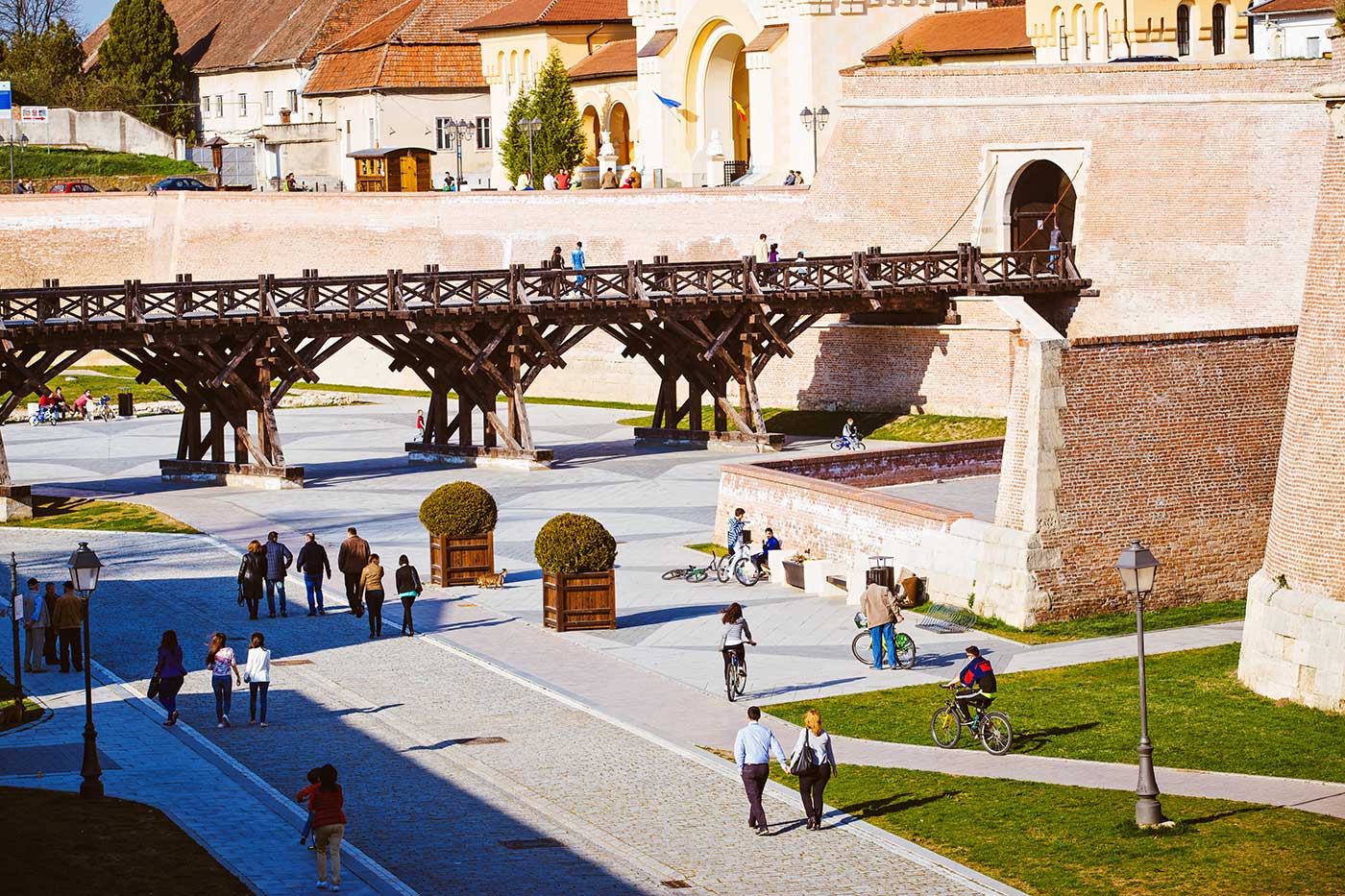
Few places in Romania manage to concentrate as much history, symbolism, and architectural beauty in a single space as Alba Carolina Fortress in Alba Iulia. Imposing and perfectly restored, this Baroque fortification, built in the 18th century, is considered the largest and most spectacular fortress in Romania. In November, when the air turns crisp and copper-colored leaves carpet the esplanades, its atmosphere takes on a special solemnity — a blend of patriotism, tranquility, and admiration.
( Source: Wikipedia )
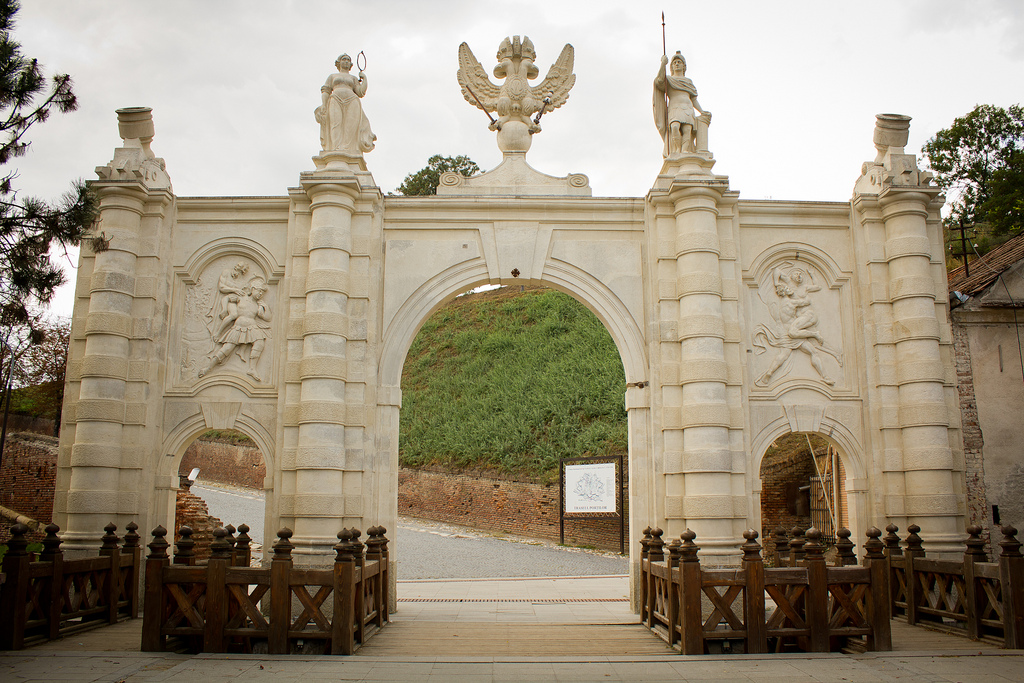
Built between 1715 and 1738 in the typical Vauban style, following the designs of the Habsburg Empire’s military architects, Alba Carolina Fortress was intended to consolidate Habsburg dominance in Transylvania. With star-shaped bastions, monumental gates, and massive walls, it stands as a masterpiece of European military engineering. Its seven gates, richly decorated with allegorical sculptures, bas-reliefs, and imperial emblems, are among the most beautiful Baroque elements in Romania.

( Source: Itinerat )
But the beauty of this fortress lies not only in its architecture but, above all, in its historical significance. Alba Iulia is the place where the Great Union of December 1, 1918, was realized — the moment that completed the national unity of modern Romania. Walking through the fortress, every corner seems to speak of this historic event: from the Union Hall, where the historic documents were signed, to the Coronation Cathedral, where King Ferdinand and Queen Maria were crowned in 1922 as the sovereigns of Greater Romania.
Today, Alba Carolina Fortress is more than a historical monument; it is an open-air museum, a place where past and present blend harmoniously. Its bastions and massive walls house museums, exhibitions, cafés, and relaxation areas, while the Changing of the Guard at the Third Gate, a daily ceremony during the tourist season, adds a spectacular touch reminiscent of old military traditions.
In November, the fortress exudes a special calm. The soft light of late autumn reflects on the white walls, and the footsteps of visitors echo along the paved paths, among the bare trees and spacious courtyards. The atmosphere is meditative, perfect for a walk in which history can almost be felt physically, in every stone and every gate. On cool evenings, the lantern light highlights the sculptural details of the gates, making the fortress feel like a storybook city suspended between eras.
Alba Carolina Fortress is not only a symbol of Romanian identity but also a testament to how the past can be elegantly integrated into the present. Carefully restored and returned to the community, it has become one of Romania’s most visited tourist attractions, drawing visitors from around the world.
A visit here in November is not just a history lesson but a deeply moving experience. It is a return to roots, a walk through a sacred space of collective memory, where every wall, archway, and stone bears the imprint of the past and the hope for the future.
Conclusion – An Autumn Among the Walls of History
November may seem, for many, a month of waiting and quiet. But for lovers of history, stories, and places with soul, it is one of the most beautiful times to explore medieval Romania. Each of the four fortresses — Bran, Râșnov, Făgăraș, and Alba Carolina — has its own unique personality, a charm that becomes even more vivid when copper-colored leaves dance in the cold wind and the autumn light bathes the walls in a warm glow.
Bran enchants with its dark legend and Gothic silhouette, Râșnov immerses you in the story of the courageous people who defended their freedom, Făgăraș fascinates with its Renaissance nobility and reflections in the water, and Alba Carolina moves you deeply with its national symbolism and the solemnity of every corner. Together, these sites form a route of memory, a journey through centuries that not only delights but also enriches the spirit.
Visiting these fortresses in November is more than just a weekend getaway. It is an experience that brings you closer to your roots, your identity, and the stories that have shaped Romania’s history. Whether you are passionate about architecture, legends, or simply the autumn landscapes, each stop offers another reason to fall in love with the beauty and depth of these places.
So let yourself be carried away by the calm of late autumn, wrap yourself in a warm coat, and set out on an adventure through Romania’s fortresses. Beyond their ancient walls, you will discover not only the history of a country but also a piece of yourself — that longing for beauty, balance, and stories that endure through time.