Customs and traditions
5 truly special Christmas traditions
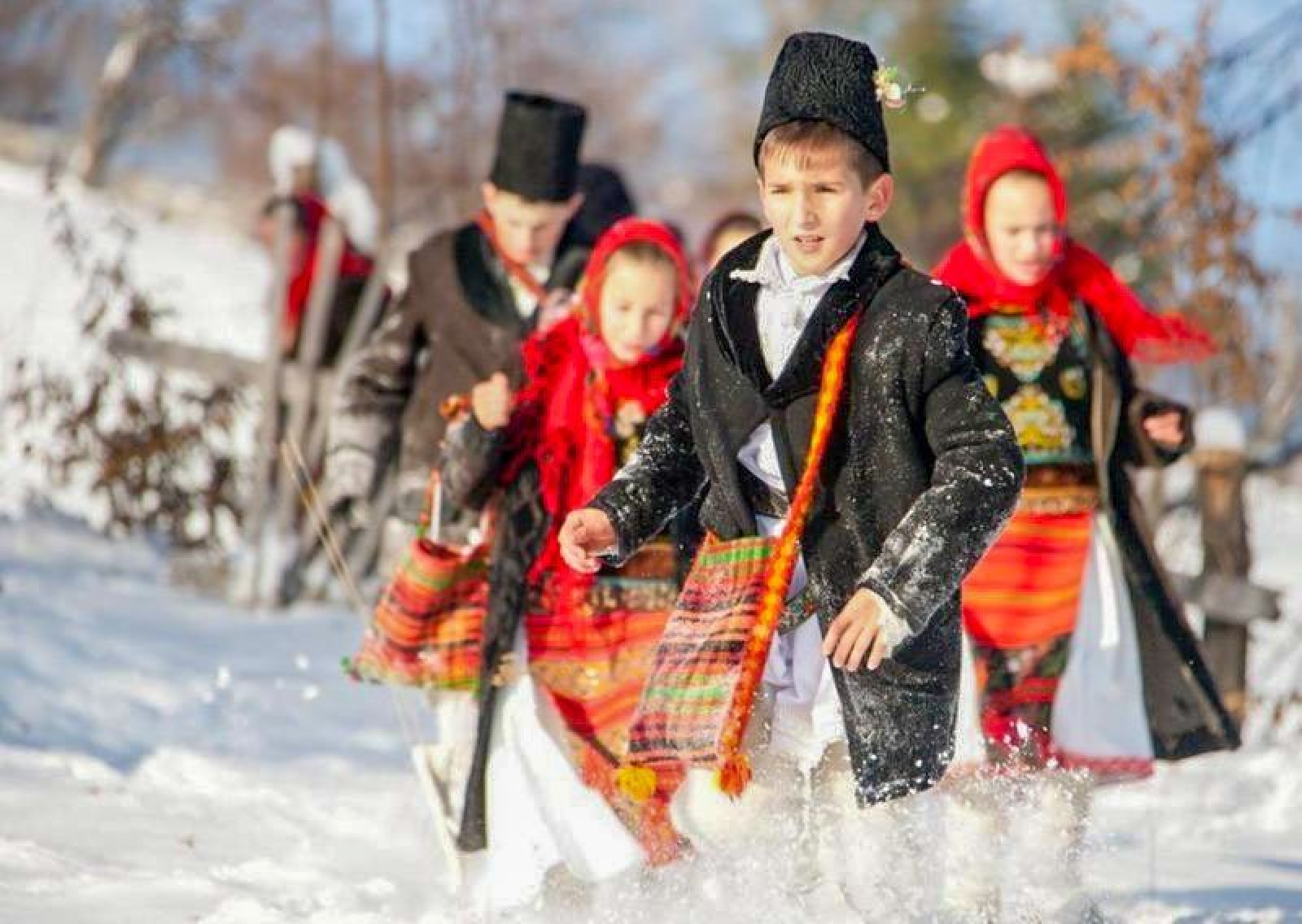
In Romania, Christmas is not just a holiday, but a living story passed down from generation to generation, filled with symbols, emotions, and rituals that give meaning to this magical period. From the first carols heard on village lanes to the scent of cozonaci fresh out of the oven, Christmas traditions create a deep connection between people, faith, and family. They transform winter days into a time of rediscovery, simple joy, and respect for ancestral customs.
Caroling, one of the oldest and most beloved Romanian traditions, brings the news of the Birth of the Lord from house to house through the voices of children, youths, or groups of carolers dressed in traditional folk attire. The feast of Ignat marks the beginning of preparations for the Christmas meal and preserves a ritual with deep roots in Romanian rural life. The Christmas tree, decorated with care and emotion, becomes a symbol of light, hope, and family unity, while Santa Claus brings joy to the little ones and reminds everyone of the magic of generosity.
In parallel, baking cozonaci is more than a simple culinary custom. It is a moment of communion, where the kitchen becomes the center of the home, and recipes passed down from mother to daughter carry memories and love within them. In this article, we will discover five truly special Christmas traditions that define the Romanian spirit of the holidays and transform every winter into an authentic experience, full of warmth and significance.
Caroling
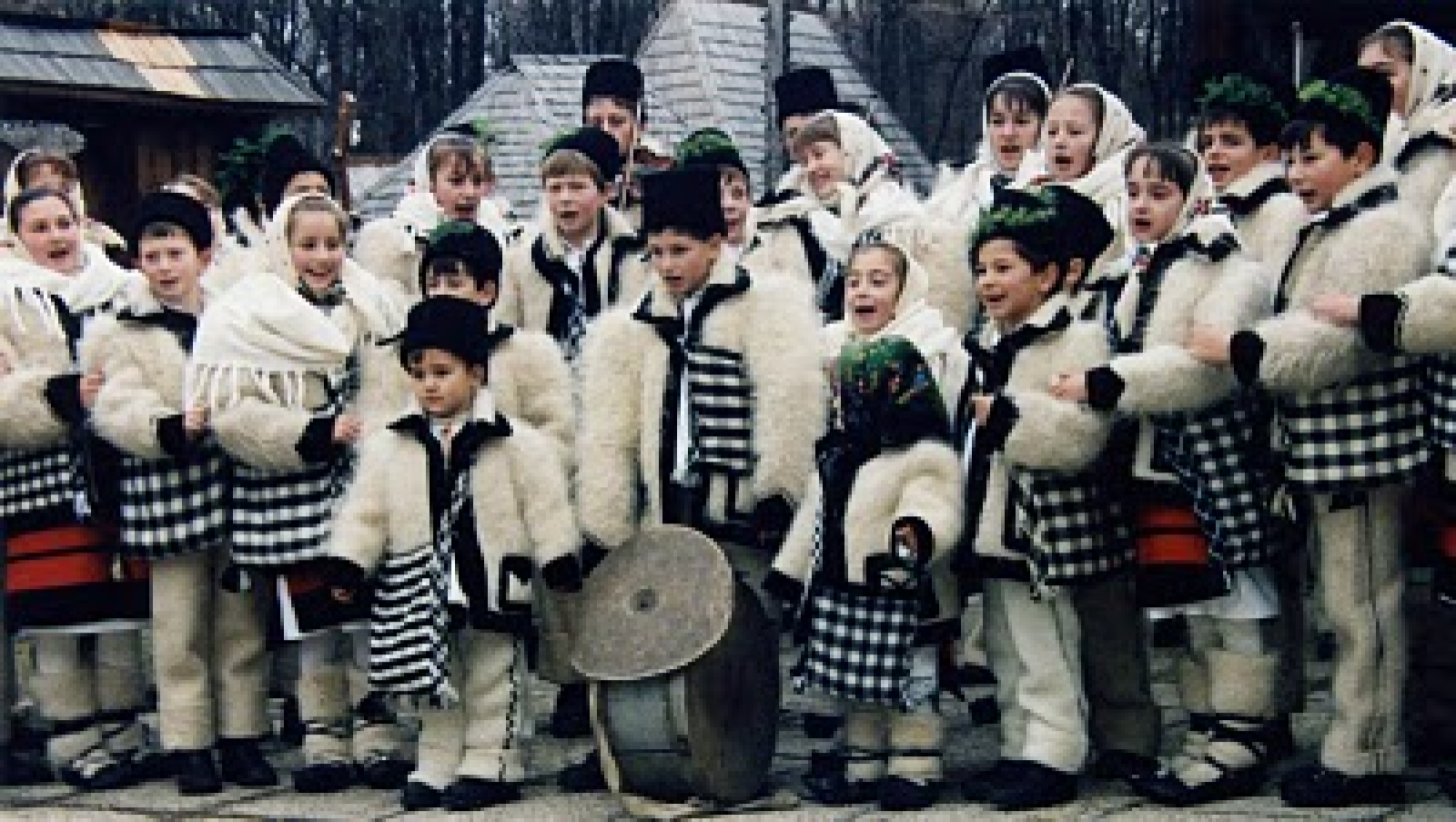
Caroling is one of the oldest and most beloved Christmas traditions in Romania, with deep roots in the history and spirituality of the Romanian people. Its origins go back long before Christianity, being linked to archaic rituals dedicated to the winter solstice, the rebirth of nature, and the desire for abundance, health, and protection for the coming year. With the spread of Christianity, these pre-Christian customs were reinterpreted and enriched with religious meanings, as carols became messengers of the Birth of the Lord and the joy of Christmas.
(Source: ziuaconstanta.ro)
In its traditional form, caroling begins on Christmas Eve and continues, in some areas, through the days following the holiday. Groups of children, youths, or adults set out from house to house, wearing folk costumes, carrying bells, stars, or symbolic masks, and singing carols meant to bring luck and prosperity to the hosts. In return, the carolers are rewarded with apples, walnuts, traditional braided bread, cakes, or money, gestures that symbolize generosity and the close bond between community members.
Caroling differs from one region to another, with each area adding its own cultural footprint. In Maramureș, the carols maintain a solemn and archaic character, sung slowly with lyrics rich in symbols. In Bucovina and Moldova, caroling is often accompanied by well-wishing chants and ritualistic dances, such as "The Goat" or "The Bear," which complete the festive atmosphere. In Transylvania, the carols are more melodious and often performed by organized groups, while in Oltenia and Muntenia, the tradition is closely linked to the community and village customs.
Over time, caroling has evolved, adapting to social and cultural changes. While it was once an exclusively rural tradition passed down from generation to generation, today carols also resonate in cities, in churches, on the stages of Christmas markets, or in special concerts. Even in this modern form, the essence of caroling remains the same: the joy of being together, the desire to give, and the preservation of the bond with Romanian roots and identity.
Caroling is not just a custom, but a profound expression of the Christmas spirit in Romania. Through song, tradition, and communion, carols continue to unite people, bring light into homes, and transmit, year after year, the message of hope, peace, and rebirth that defines this holiday.
The Feast of Ignat
The Feast of Ignat, celebrated annually on December 20, is one of the oldest and most deeply rooted Romanian Christmas traditions, with origins that blend Christian beliefs with archaic pre-Christian rituals. The day is dedicated to Saint Ignatius Theophorus, but in the Romanian collective consciousness, it has become, over the centuries, the symbolic moment of the pig sacrifice, an essential ritual for preparing the Christmas meal and for the family's well-being in the coming year.

(Source: Damboviteanul)
In folk tradition, the slaughtering of the pig is not a simple household task, but a ritual with powerful symbolic significance. It is said that the pig "dreams of its death" if it is not sacrificed on Ignat, and this moment marks the true beginning of the winter holidays. The ritual begins early in the morning in the yard, accompanied by gestures and customs passed down from generation to generation. After the sacrifice, the pig is singed, washed, and symbolically adorned; children are often dabbed on the forehead with blood in a gesture meant to bring them health and luck, a practice especially common in rural areas.
Ignat is celebrated in almost all regions of Romania, particularly in Muntenia, Oltenia, Moldova, Transylvania, and Banat, with each area preserving small local peculiarities. In Transylvania and Maramureș, for example, the ritual is often followed by a community meal called "pomana porcului" (the pig's alms), where the entire family gathers to taste the first dishes as a sign of gratitude and abundance. In Moldova, the custom is accompanied by prayers and strict observance of the day, as it is considered a time with special powers.
Over time, the Feast of Ignat has evolved, adapting to the modern context, yet its essence has remained unchanged. Even if the traditional ritual has diminished in cities and the slaughtering often takes place in authorized facilities, the symbolism of the day continues to be respected. Ignat remains an important landmark in the folk calendar, a moment of connection between man, community, and nature, as well as a bridge between the past and the present.
Today, Ignat is not just about preparing food for Christmas, but about preserving Romanian identity and traditions. It is a holiday that speaks of family, continuity, and respect for ancestral customs, confirming once more how deeply Romanian culture is linked to the rhythms of nature and Christian celebrations.
The Christmas Tree
The Christmas tree is today one of the most beloved symbols of the winter holidays, but its story begins long before the form we know today. The origin of this custom is found in the ancient pre-Christian beliefs of European peoples, for whom the evergreen tree was a symbol of life, continuity, and hope in the rebirth of nature after winter. In ancient times, people brought fir branches or other conifers into their homes to ward off evil spirits and to attract luck and abundance in the coming year.

(Source: The Livin Urn)
The tradition of the decorated tree, as we know it today, took shape in the German regions during the Middle Ages, where the tree was adorned with apples, walnuts, and candles, symbols of knowledge, fruitfulness, and light. With the spread of Christianity, the fir tree also acquired a religious significance, being associated with eternal life and the birth of Jesus Christ. In the following centuries, the custom spread throughout Europe, reaching the Romanian territories in the 19th century, first in urban areas and then gradually in the villages of Transylvania, Moldova, and Muntenia.
In Romania, the Christmas tree quickly became a central element of the winter holidays. On Christmas Eve, families gather to decorate the tree, a moment full of emotion and joy, especially for the little ones. Colorful baubles, strings of lights, tinsel, and figurines are chosen with care, each decoration often carrying its own story or memory. In many homes, the tradition of placing gifts brought by Santa Claus under the tree is preserved, transforming the tree into a symbol of generosity and shared love.
Over time, the way the tree is decorated has evolved, adapting to modern tastes and influences. While decorations were once handmade from paper, dried apples, or gilded walnuts, today the tree is often decorated in a unified style with LED lights and sophisticated ornaments. Nevertheless, the essence of the tradition remains the same: the tree gathers the family around it and marks the beginning of one of the most anticipated times of the year.
Regardless of whether it is natural or artificial, richly decorated or simple, the Christmas tree continues to be a symbol of hope, of heartfelt warmth, and of the joy of being together. Every year, it reminds us of the bond between past and present and the power of traditions to bring us closer to one another, especially during the most beautiful season of the year.
Santa Claus
Santa Claus is one of the most beloved figures of the winter holidays, a symbol of generosity, joy, and the magic of childhood, who has evolved over time through a blend of religious traditions, folk beliefs, and modern cultural influences. In the Christian tradition, the origins of Santa Claus are linked to Saint Nicholas, a 4th-century bishop known for his acts of charity and for the gifts he secretly gave to the needy, especially children. This model of selfless kindness formed the foundation for the image of Santa Claus as we know it today.
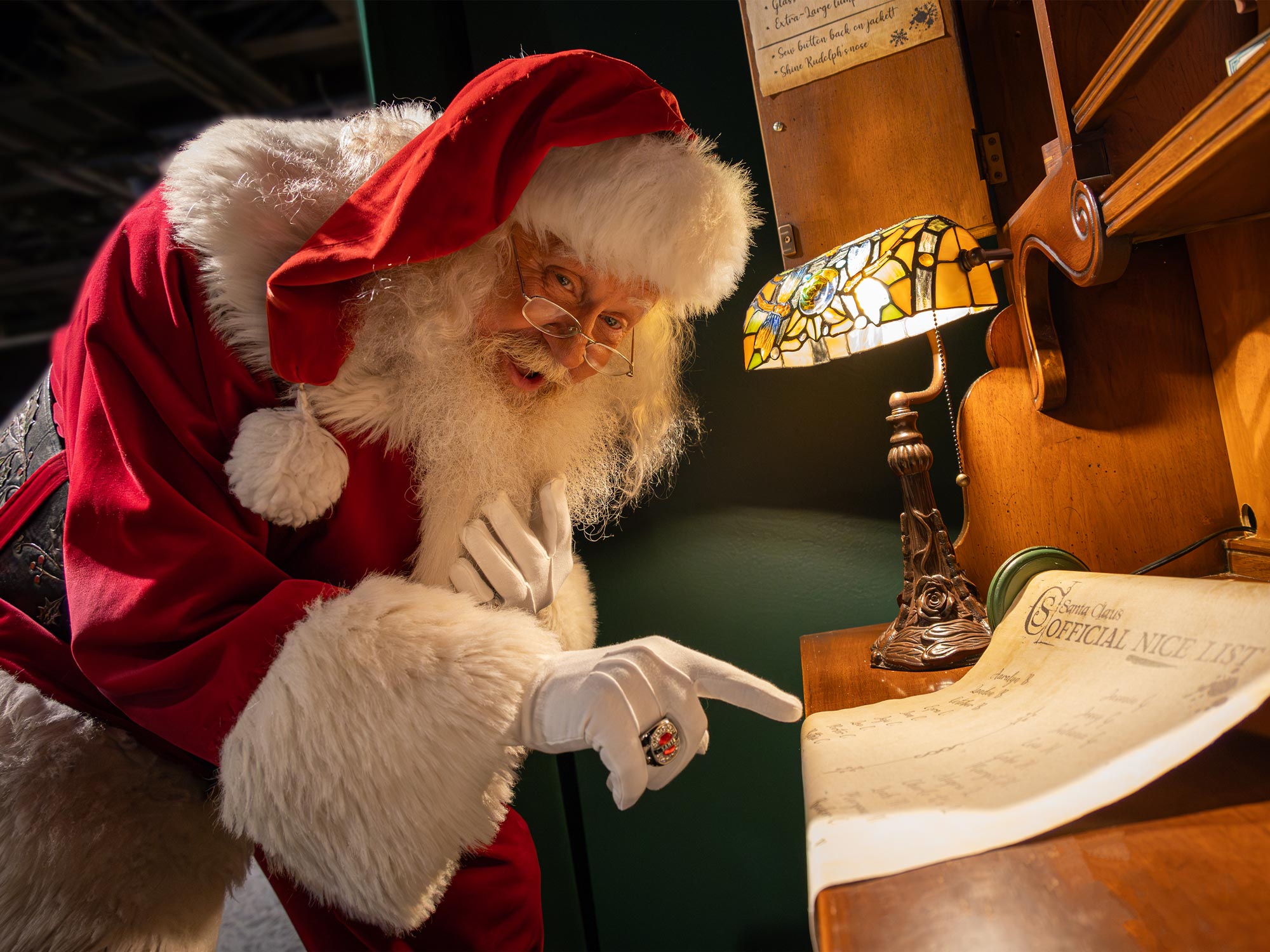
(Source: The Children's Museum of Indianapolis)
In Romanian culture, Santa Claus has long been associated with the celebration of the Nativity and the spirit of the family. In traditional villages, he was not just an imaginary character, but a symbolic presence who rewarded well-behaved children and brought abundance to the household. It was believed that Santa Claus arrived on Christmas Eve, slipping in unseen to leave gifts under the tree or in boots, and this moment was awaited with emotion and respect. Children would learn poems and carols to recite to "Santa Claus" as proof of their good behavior and holiday spirit.
Over the centuries, the image of Santa Claus has been enriched and adapted to the times. Under the influence of Western traditions, he took on the widely known appearance of today, an old man with a white beard, dressed in a red suit, cheerful and benevolent. Nevertheless, in Romania, Santa Claus has retained a distinct character, being closely linked to family, faith, and the warm atmosphere of holidays spent at home. He is not just a bringer of gifts, but also a symbol of hope, reconciliation, and shared joy.
Today, Santa Claus is present everywhere during the holiday season: at Christmas markets, in children's shows, in schools and kindergartens, but especially in Romanian homes. Regardless of his form, Santa Claus remains a figure who unites generations, brings people closer together, and keeps the magic of Christmas alive, transforming this holiday into a fairytale moment, year after year.
Baking cozonaci
Baking cozonaci is one of the most beloved and moving Romanian Christmas traditions, a custom that transforms the household into a space of patience, joy, and family bonds. For centuries, the cozonac has been a symbol of abundance, celebration, and hospitality, being a staple of the Christmas table in almost all regions of Romania. Its origins are linked to ancient winter rituals and festive bread, prepared only on special occasions when the community celebrated important moments in the cycle of life and the year.

(Source: Wikipedia)
Traditionally, cozonac is baked on Christmas Eve or a few days before, and the process is almost ceremonial. The women of the family gather in the kitchen early in the morning, preparing the best ingredients, white flour, fresh eggs, milk, butter, sugar, and yeast, and knead the dough with care and patience. It is said that the dough "feels" the mood of the person kneading it; therefore, during the preparation, there must be peace, good cheer, and pure thoughts. The scent of vanilla, rum, and lemon zest fills the house, and waiting for the dough to rise becomes part of the tradition's charm.
The fillings differ from one region to another, reflecting Romania's gastronomic diversity. In Moldova and Muntenia, cozonac with ground walnuts, cocoa, and raisins predominates, while in Transylvania, variants with poppy seeds or denser fillings are found. In some villages, the cozonac is intricately braided, a sign of the housewife's skill, and its rich shape symbolizes prosperity and luck for the coming year.
Beyond the taste, the cozonac has a profound symbolic role. It is shared with family, guests, and sometimes neighbors, serving as a sign of generosity and community. In many homes, the first cozonac is cut only on Christmas Day, after returning from church, thus marking the start of the celebration itself. Even today, when cozonaci can be easily purchased, many families choose to prepare them at home because this act keeps the bond with ancestral traditions alive.
Baking cozonaci is not just a recipe passed down from generation to generation, but an experience that brings people together, creates memories, and gives Christmas that unmistakable taste of "home." It is the moment when time seems to slow down, and the holiday is felt not just on the plate, but in the soul.