Travel Ideas
5 Unique Vacation Destinations in Romania

There are places in Romania that are not only beautiful, but truly unique — whether through their unusual architecture, the energy surrounding them, the breathtaking landscapes, or the stories (and legends) that accompany them.
You’ll quite literally step into the depths of a former salt mine transformed into a spectacular underground theme park, where the air is pure and silence becomes part of the experience — this is, of course, Salina Turda. Then you’ll arrive at the Corvin Castle in Hunedoara, one of the most impressive and best-preserved medieval buildings in Europe, a place where history becomes almost tangible.
For lovers of nature and mystery, the Bucegi Plateau, with the Babele and the Sphinx, offers not only extraordinary alpine views but also unanswered questions, with theories ranging from rare geological formations to lost ancient civilizations. And since we're talking about ancient cultures, Sarmizegetusa Regia, the former capital of Dacia, hidden in the Orăștie Mountains, is a destination filled with energy and spirituality, where the past silently pulses through sacred stone.
Finally, we suggest a place where death is met with a smile and verses full of self-irony: the Merry Cemetery of Săpânța, one of a kind in the world, where brightly colored crosses tell the stories of the departed with a kind of humor that touches even the most sensitive chords.
These five places are not just vacation destinations — they are experiences that challenge you, move you, and leave a mark. You won’t find crowds, but rather the feeling that you’ve discovered something authentic, speaking to you directly, without tourist filters.
Join us on a different kind of journey — into the heart of an unconventional Romania, where each place holds a surprise.
1. Salina Turda – The Underground Wonder of Transylvania
More than 120 meters underground, in the heart of Transylvania, lies one of the most spectacular tourist destinations in Romania—and even in the world: Salina Turda. What was once a simple Roman-era salt mine has now become a true underground theme park that blends history, health, architecture, and entertainment into a unique, almost surreal space.

(source: Tripadvisor)
In addition to its extremely pure air, rich in salt ions and beneficial for respiratory conditions, the Salt Mine impresses with its remarkable dimensions, artistically lit tunnels, salt stalactites and… a panoramic wheel, an underground lake with boats, mini-golf, bowling, an amphitheater, and even a sports hall. It is a world within worlds—silent and spectacular—that leaves every visitor in awe.
Famous on an international level, Salina Turda caught global attention in 2023, when the popular YouTuber MrBeast, with tens of millions of followers, filmed a special episode here. The episode presented the mine in a unique context, with challenges and spectacular reactions, showcasing it to a global audience. After airing, the number of foreign tourists visibly increased, and Salina Turda became not just a national destination, but an international symbol of Romanian tourism.

(source: Ora de Sibiu )
The visit to the salt mine begins with a slow descent, offering an almost ritual transition from the noise of the world above to the massive silence of the depths. Once you reach the main galleries, you will discover the Rudolf Hall, immense and imposing, where most of the attractions are located. From there, you can head to the underground lakes, where you can take a boat ride — a simple gesture that suddenly feels magical in the dim light reflected off the salt walls.
Our travel tip:
Bring a hoodie — even in summer, the temperature inside the salt mine rarely exceeds 16°C. For a complete experience, combine your visit to the salt mine with a stop in the center of Turda, where you can enjoy Transylvanian dishes in a peaceful atmosphere.
Salina Turda is not just a place you see. It is a place you feel — through the air you breathe, the deep silence, the grandeur of the spaces, and the awe it leaves in your soul. It is, without a doubt, one of the most unique destinations in Romania — not only for tourists but also for content creators from all over the world.
2. Corvin Castle – the living legend of Hunedoara
If you have ever dreamed of visiting an authentic medieval castle, with a drawbridge, imposing towers, and legends of kings and betrayals, then Corvin Castle in Hunedoara is exactly the place you must not miss. Located in the heart of Transylvania, this castle is one of the best-preserved and most spectacular Gothic structures in Eastern Europe — and one of the most photographed attractions in Romania.

(source: Holiday and Trips)
Built in the 15th century by John Hunyadi, the castle served as a noble residence, fortress, and, according to legend, even a prison for Vlad the Impaler. With architecture that combines Gothic style with Renaissance and Baroque elements, Corvin Castle impresses with its vast halls, vaulted ceilings, carved stone decorations, partially preserved frescoes, and an overall medieval fairy-tale atmosphere that envelops you at first sight.
But Corvin Castle is not just a relic of the past — it is also a film star. Due to its dramatic and authentic atmosphere, the castle has been chosen as a filming location for numerous international productions.
All these have turned Corvin Castle into a destination with a double appeal: historical and cinematic. Tourists come not only to admire the architecture but also to feel firsthand the atmosphere of a medieval film set.
3. The Babele and the Sphinx of the Bucegi Mountains – between geology, myth, and mystery
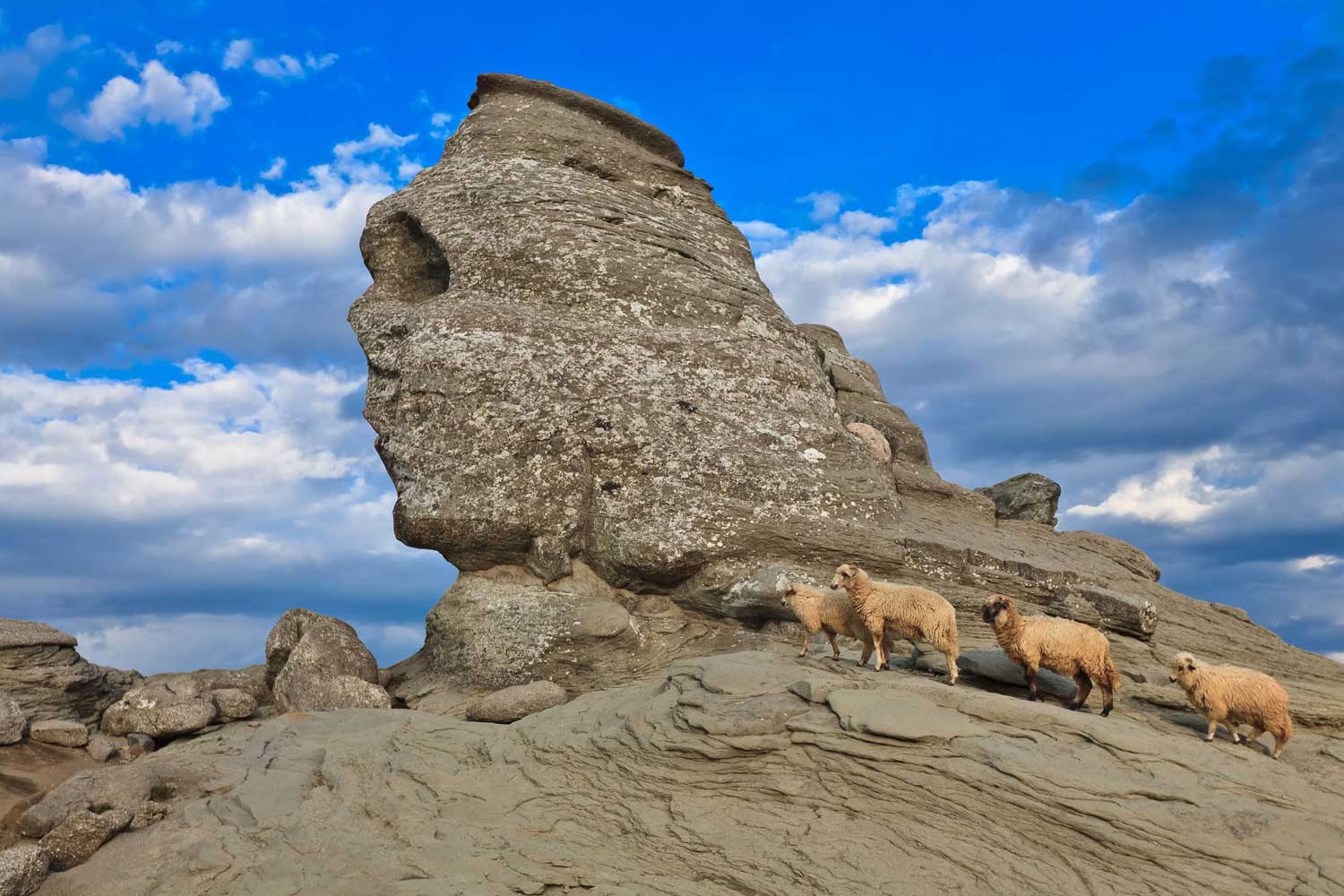
In the heart of the Bucegi Mountains, at over 2,200 meters altitude, nature has sculpted over thousands of years some of Romania’s most enigmatic and photographed rock formations: the Babele and the Sphinx. When seen up close, they may seem like simple geological curiosities, but for many visitors, these natural monuments are much more — sources of energy, ancient symbols, or even evidence of a lost civilization.
(source: Planiada)
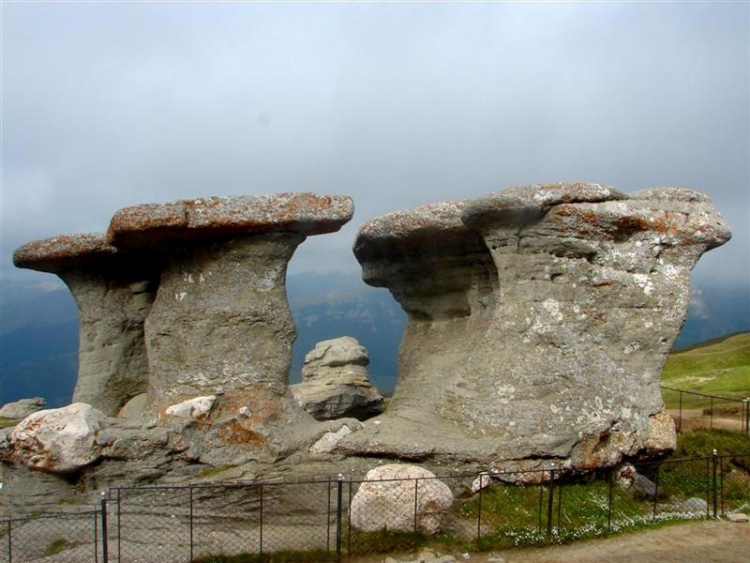
The Babele, located near the cabin of the same name, resemble human silhouettes wearing helmets, while the Sphinx, named for its striking resemblance to the Sphinx of Egypt, seems to silently guard the Bucegi Plateau for thousands of years. It’s hard not to be impressed by the silence surrounding them and their immense size. The landscape, arid and spectacular, makes you feel as if you have stepped into a place that belongs more to legends than to reality.
(source: Merg In)
Of course, science explains their formation through wind erosion and differences in the hardness of rock layers. However, alongside this, there are persistent theories and legends speaking of sacred places, energy alignments, Dacian symbols, and even connections to extraterrestrial civilizations. Many come here for “energy recharging,” meditation, or simply for the peace above, where the wind tells stories and the horizon knows no bounds.
How to get there?
Most visitors take the cable car from Bușteni to the plateau, from where it’s a 10-15 minute walk to Babele and then to the Sphinx. The more adventurous choose to hike marked mountain trails from Sinaia, Bușteni, or Peștera — an ideal option for those who want to combine physical effort with the visual and spiritual reward found above 2,000 meters.
4. Sarmizegetusa Regia – the sacred capital of the Dacians
In the depths of the forests of the Orăștie Mountains, in an almost solemn silence, lie the ruins of one of the most important and mysterious places in Romania’s history: Sarmizegetusa Regia. Hidden among peaks and rocks, the ancient capital of the Dacian kingdom is not just an archaeological site, but a space charged with spirituality, a gateway to an ancient world about which we still do not know everything.

(source: Secret Romania)
Founded in the 1st century BC, Sarmizegetusa Regia was the political, military, religious, and cultural center of Dacia — a place where the kingdom’s decisions were made, priests were trained, armies were coordinated, and gods were worshipped. The site is part of the UNESCO heritage and impresses both through its vastness and the highly advanced organization for its time: paved roads, drainage systems, stone constructions perfectly aligned astronomically, all built amid nature that seems to protect the place jealously.
The best-known symbol of Sarmizegetusa is the large circular sanctuary, often compared to Stonehenge, which has sparked numerous controversies and theories regarding its function: solar temple, astronomical calendar, cult space? The truth remains partly hidden, but the fascination persists. Visitors come from all over the country — and abroad — to walk among the remaining stones, feel the energy of the place, and imagine what the Dacian capital looked like over 2,000 years ago.
But history does not end there. After the Roman conquest of Dacia in 106 AD, the new capital was moved to the plain, to Ulpia Traiana Sarmizegetusa, located near today’s town of Hațeg. There, the Romans built an organized city with a forum, amphitheater, temples, and baths, reflecting the influence of the Roman Empire on the new province of Dacia Felix. The two “Sarmizegetusas” — Regia (Dacian) and Ulpia Traiana (Roman) — testify to a key moment in Romanian history: the meeting, conflict, and fusion of two powerful civilizations.
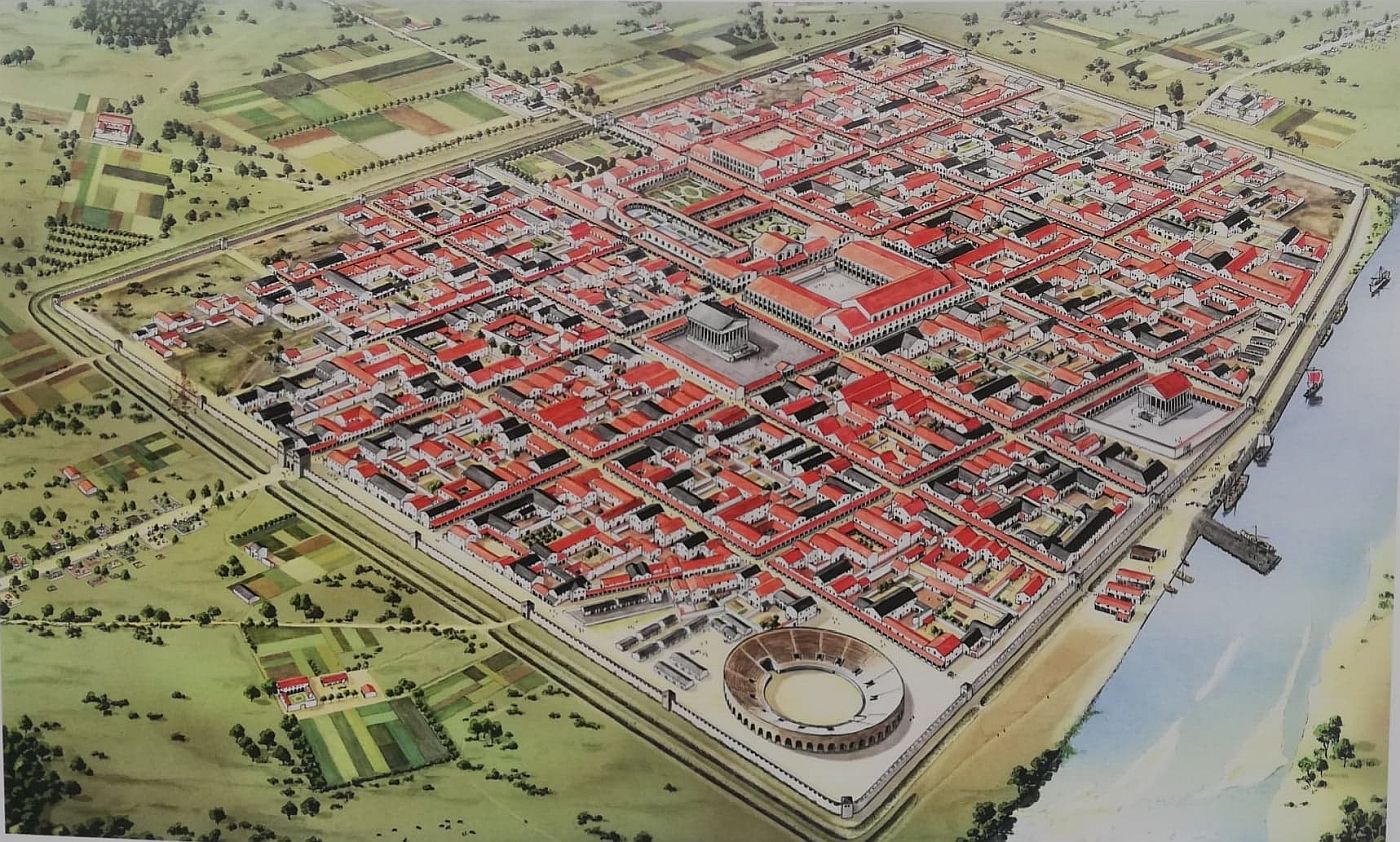
(source: Imperium Romanum)
Our travel tip:
The road to Sarmizegetusa Regia has been partially modernized, but the final access is on foot, about 1 km. Wear comfortable shoes, bring enough water, and avoid rainy days for a more pleasant and safe experience.
If you want to deepen this historical journey, also visit Ulpia Traiana, located about 40 km away — the two sites perfectly complement each other and offer a broad perspective on Dacia’s evolution.
5. The "Merry Cemetery" of Săpânța
In the remote north of Maramureș, in a seemingly quiet village called Săpânța, lies one of the most unusual places in Romania — and the world: the Merry Cemetery. At first glance, it seems like a paradox. How can a cemetery be… merry? But once you walk among the blue crosses, painted with traditional motifs and accompanied by poems full of humor and irony, you understand that here death is not an end but a natural — and sometimes amusing — part of life.
The initiative belongs to the folk artist Stan Ioan Pătraș, who in the 1930s began carving oak wooden crosses in the traditional Maramureș style, but with an original approach: instead of formal epitaphs, he wrote naive, direct, sincere, and often humorous verses, accompanied by brightly colored paintings depicting the deceased’s profession or life. Whether it’s a shepherd, a weaver, a teacher, or even a demanding mother-in-law, each has their own story… told with a smile.
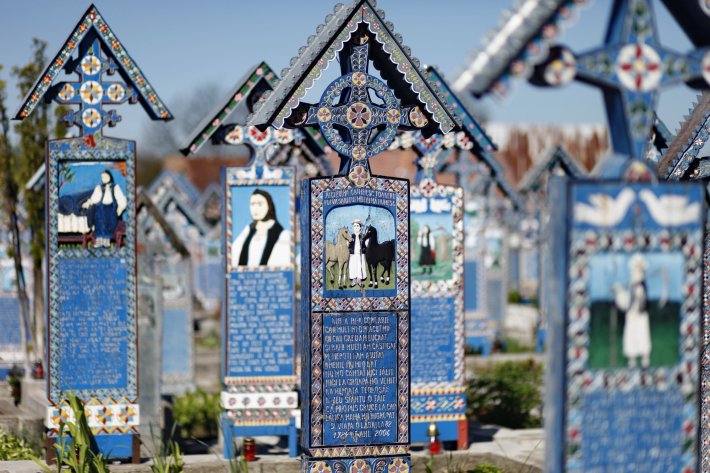
(source: Ziarul Lumina)
Today, over 800 such crosses form a unique artistic ensemble in the world, recognized as a cultural heritage monument. The blue of Săpânța, the predominant color, has become the symbol of this place, and the carved stories are a lesson in acceptance, sincerity, and, in their own way, love for life.
Besides the cemetery, in Săpânța you can visit the workshop of the craftsman Pătraș, transformed into a museum, where his original works are exhibited and you can understand the philosophy that gave birth to this unique place. In the village, Maramureș traditions are alive: carved gates, people dressed in folk costumes, wooden houses, and authentic hospitality.
Conclusion – Unique Romania deserves to be discovered
Romania is not just about classic mountain trails, medieval towns, or well-known resorts. Deep within, whether underground, atop mountains, or hidden among the hills of Maramureș, the country holds truly unique places — places that tell stories differently, that surprise, challenge, and stay in your heart.
Whether you are amazed by the sci-fi depths of Turda Salt Mine, walk through the Gothic legends of Corvin Castle, climb to the mysterious quiet of the Bucegi Sphinx, discover the heritage of the Dacians and Romans at Sarmizegetusa, or learn to smile at life and death at the Merry Cemetery in Săpânța, all these places offer you more than a vacation – they offer you an authentic experience.
These destinations are not just to be seen, but to be felt. They remind you of the depth of history, popular humor, the unfiltered beauty of nature, and humanity’s ability to leave something alive behind.
So next time you plan a trip to Romania, choose to step outside the ordinary. Let curiosity guide you and head to these rare corners where tradition, myth, and modernity meet in the most beautiful way possible.
Unique Romania awaits you. And perhaps now you are truly discovering it.