Top7
7 amazing Romanian cities for the perfect late-summer city break

This is the perfect time to fully savor the charm of historical architecture, uncover hidden corners, enjoy cultural events, and indulge in authentic culinary experiences—without the rush and bustle of June and July.
From the architectural elegance of Oradea and the cosmopolitan vibe of Bucharest, to the medieval beauty of Sighișoara and Brașov, the bohemian atmosphere of Sibiu, the youthful energy of Cluj, and the rich history of Iași, Romania offers destinations to suit every taste and preference. Whether you’re looking for a romantic weekend escape, a cultural journey, or simply a few days of relaxation, these cities promise unforgettable memories.
In the following lines, we’ll introduce you to 7 ideal cities for a late-summer city break—each with its own personality, story, and unique attractions, waiting to be discovered step by step.
Oradea – Architectural Elegance and Thermal Relaxation
Located in western Romania, just a few kilometers from the Hungarian border, Oradea perfectly blends architectural refinement with the laid-back vibe of a modern European city. Known as “Romania’s Art Nouveau capital,” Oradea enchants visitors with its beautifully restored historic center, where elegant buildings create a postcard-worthy urban landscape. The Black Eagle Palace, the city’s iconic landmark with its glass-covered passage decorated in vivid colors, is just one of the many architectural gems worth discovering.:contrast(8):quality(75)/https://static4.libertatea.ro/wp-content/uploads/2025/04/oradea.jpg)
( Source: Libertatea )
Strolling through Union Square or along the Crișul Repede River reveals a vibrant city filled with charming cafés, lively terraces, and public squares where history meets modern life. Oradea is also famous for its quick access to Băile Felix, one of Romania’s most renowned spa resorts, where thermal waters and wellness centers provide an unforgettable relaxation experience—perfect for a late-summer getaway.
The Oradea Fortress, a well-preserved Renaissance stronghold, adds to the city’s historical charm, hosting exhibitions, cultural events, and festivals throughout the year. For food lovers, the city offers a diverse range of restaurants serving both traditional Romanian dishes and international cuisine, allowing you to savor the local atmosphere at a leisurely pace.
( Source: Reddit )
Why choose Oradea at the end of summer?
Because it’s the place where stunning architecture, rich culture, and ultimate relaxation come together most delightfully—offering you a memorable city break, far from the hustle and bustle of the major tourist capitals.
Brașov – A gateway to History and Mountains
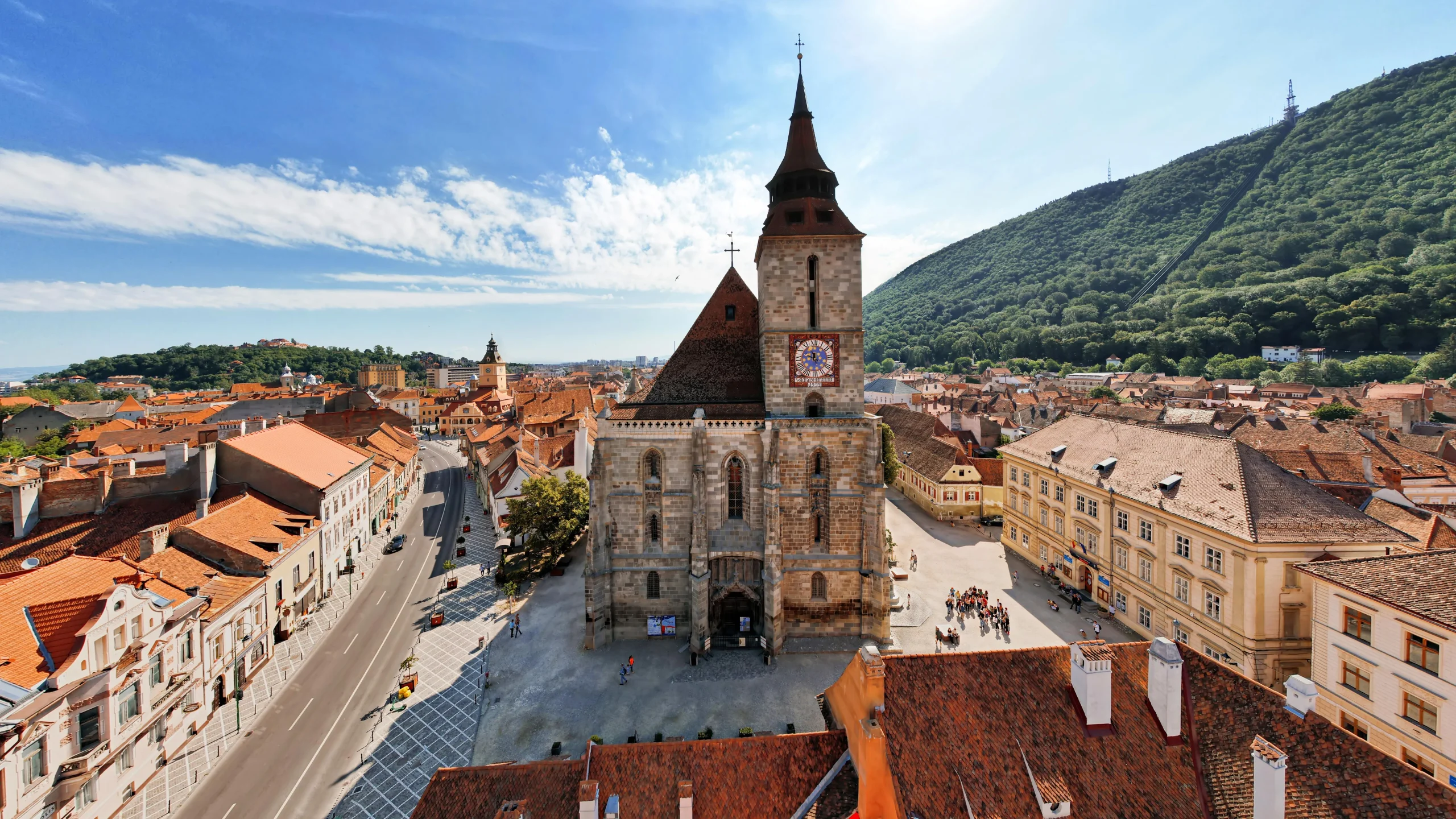
Brașov is one of those cities that magically blends the charm of medieval history with the vibrancy of a modern tourist destination. Nestled at the foot of the Carpathian Mountains and surrounded by forests, Brașov is the perfect spot for a late-summer city break, when the temperatures are pleasant and its historic streets feel even more enchanting.
( Source: Brasov Holiday apartment )
The Old Town, with Council Square at its heart, is where you’ll truly sense the city’s atmosphere. Here, the Council House and the Black Church—the largest Gothic building in Romania—dominate the skyline, while cozy cafés and lively terraces invite you to pause and soak in the view. Rope Street (Strada Sforii), one of the narrowest streets in Europe, adds a picturesque touch to your strolls.
For nature lovers, Brașov offers quick access to Mount Tâmpa, where you can admire a breathtaking panorama of the city, or to hiking trails in the Postăvaru and Piatra Mare mountains. From Brașov, you can also set out on day trips to Bran Castle or Râșnov Fortress, two of Romania’s most visited attractions.
At the end of summer, Brașov exudes a calmer atmosphere—away from the peak-season crowds, yet alive with cultural events, fairs, and local festivals. It’s the place where history, nature, and gastronomy come together for an unforgettable weekend escape.
Sibiu – The Cultural Elegance of Transylvania
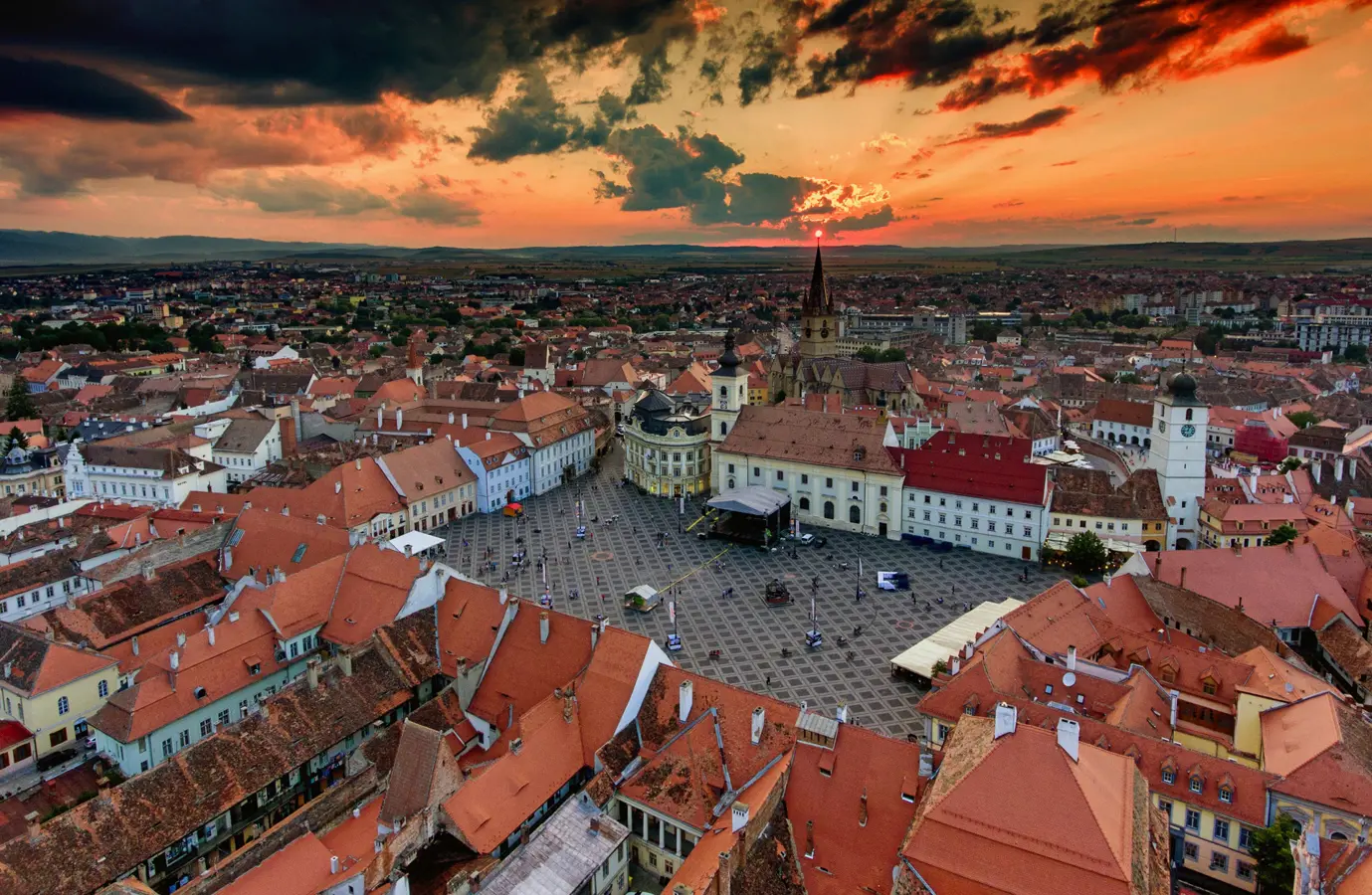
Sibiu is one of Romania’s most beautiful and best-preserved cities, a place where history, architecture, and culture intertwine harmoniously. A former European Capital of Culture in 2007, the city continues to charm visitors with its bohemian atmosphere, cobblestone squares, and pastel-colored façades.
( Source: Avion Tourism )
The historic center is divided between the Upper Town, with its wide squares, such as the Great Square (Piața Mare) and the Small Square (Piața Mică), and the Lower Town, with its narrow streets and bridges steeped in legend. The city’s symbol, the Bridge of Lies, is a perfect spot for photos and stories, while the Council Tower offers a panoramic view over the entire city.
At the end of summer, Sibiu takes on a warm glow—perfect for leisurely walks and museum visits, such as the Brukenthal National Museum, one of the oldest in Europe, or the Astra Open-Air Museum, which brings the traditions of the Romanian village to life.
The city is also famous for its cultural and gastronomic events, with fairs and festivals filling its streets with energy. From here, you can easily set out to nearby attractions such as the Transfăgărășan Highway, the Olt Valley, or the Saxon villages of Mărginimea Sibiului.
Sibiu is not just a holiday destination, but a complete experience—where elegant architecture, cultural diversity, and warm hospitality will make you want to return again and again.
Sighișoara – The Living Fortress of Transylvania
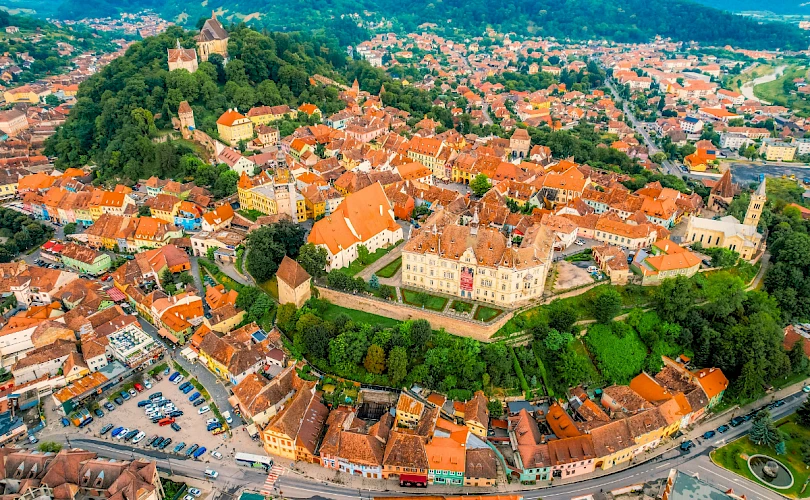
Sighișoara is a truly unique city in Romania and in Europe, as it is the only medieval fortress that has been continuously inhabited for more than seven centuries. Founded in the 12th century by Saxon settlers, the citadel was once an important center of trade and craftsmanship. Today, it preserves its historic charm intact, with narrow cobbled streets, colorful houses, and sturdy defense towers.
( Source: Drive )
The city’s symbol is the Clock Tower, built in the 14th century, which houses a history museum and offers stunning views over the entire fortress. At every step, you’ll come across buildings rich in legends, such as the Vlad Dracul House—believed to be the birthplace of Vlad the Impaler—or the Covered Stairway leading up to the Church on the Hill and the old Saxon cemetery.
At the end of summer, Sighișoara takes on a magical atmosphere: mild days, warm light that enhances the vivid colors of the houses, and streets filled with street performers, cozy cafés, and artisan workshops. Beyond the citadel walls, you can explore nearby Saxon villages and their fortified churches, part of the UNESCO World Heritage.
Sighișoara is not only a destination for history lovers but also for those in search of a romantic escape or a journey back in time. It is the perfect place where the past comes alive, and the present feels like a fairytale.
Iași – The Cultural Capital of Romania
Nicknamed “the City of Seven Hills,” Iași is one of Romania’s oldest and most important cultural, historical, and academic centers. Once the capital of Moldavia and the birthplace of many of the country’s fundamental institutions, Iași radiates history and elegance at every step.
( Source: palatulculturii.ro )
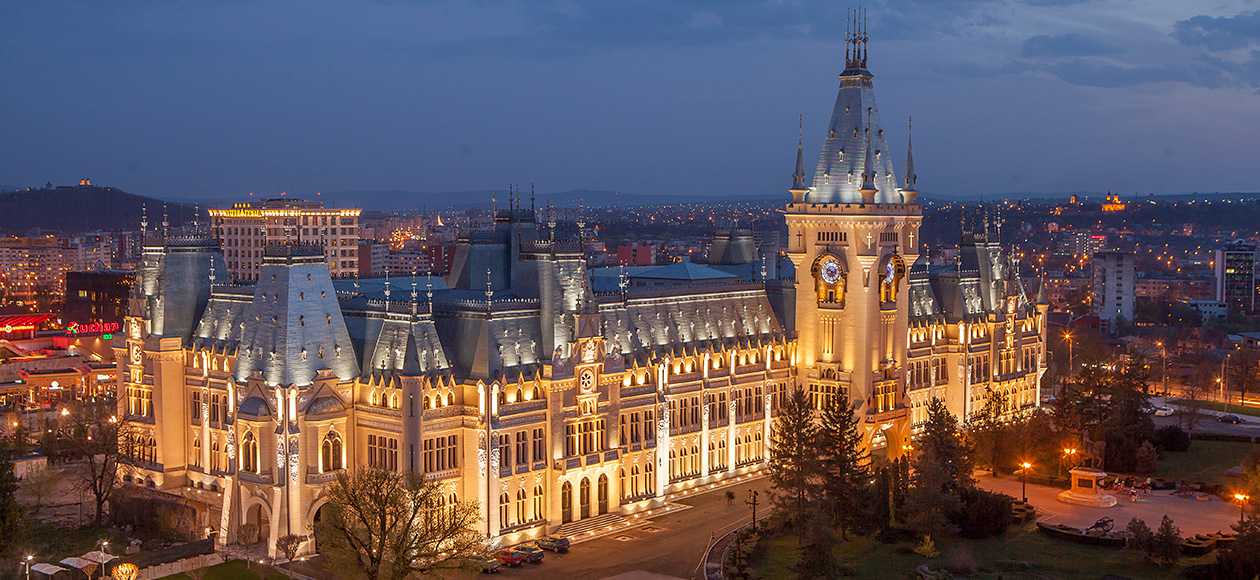
At the heart of the city stands the Palace of Culture, an imposing Neo-Gothic building that houses four major museums and becomes a spectacular architectural landmark at sunset. Equally emblematic are the Church of the Three Hierarchs, a unique monument adorned with intricate stone carvings, and the Metropolitan Cathedral, a place of both reverence and admiration.
Iași is also a city of learning, home to Romania’s oldest university and a vibrant student community that gives it a youthful, dynamic energy. Its parks—such as Copou Garden, where you’ll find Eminescu’s famous Linden Tree—are perfect for a leisurely stroll on a late-summer day.
The city also impresses with its cultural richness: theaters, philharmonics, art galleries, and countless literary cafés create a perfect blend of tradition and modernity. The central streets, with their eclectic architecture, invite you to wander and uncover stories at every corner.
At the end of summer, the city breathes a calm atmosphere, with the gentle August light highlighting its monuments and gardens. Iași is not just a place to visit, but a complete cultural experience—one that will make you want to return.
Cluj-Napoca – The Vibrant Heart of Transylvania
Known as “the heart of Transylvania,” Cluj-Napoca is a city where historical heritage blends seamlessly with a modern, dynamic, and cosmopolitan spirit. Its roots go back to Roman times, when it was called Napoca, and over the centuries, it grew into a major commercial, cultural, and academic hub.
( Source: In your pocket )
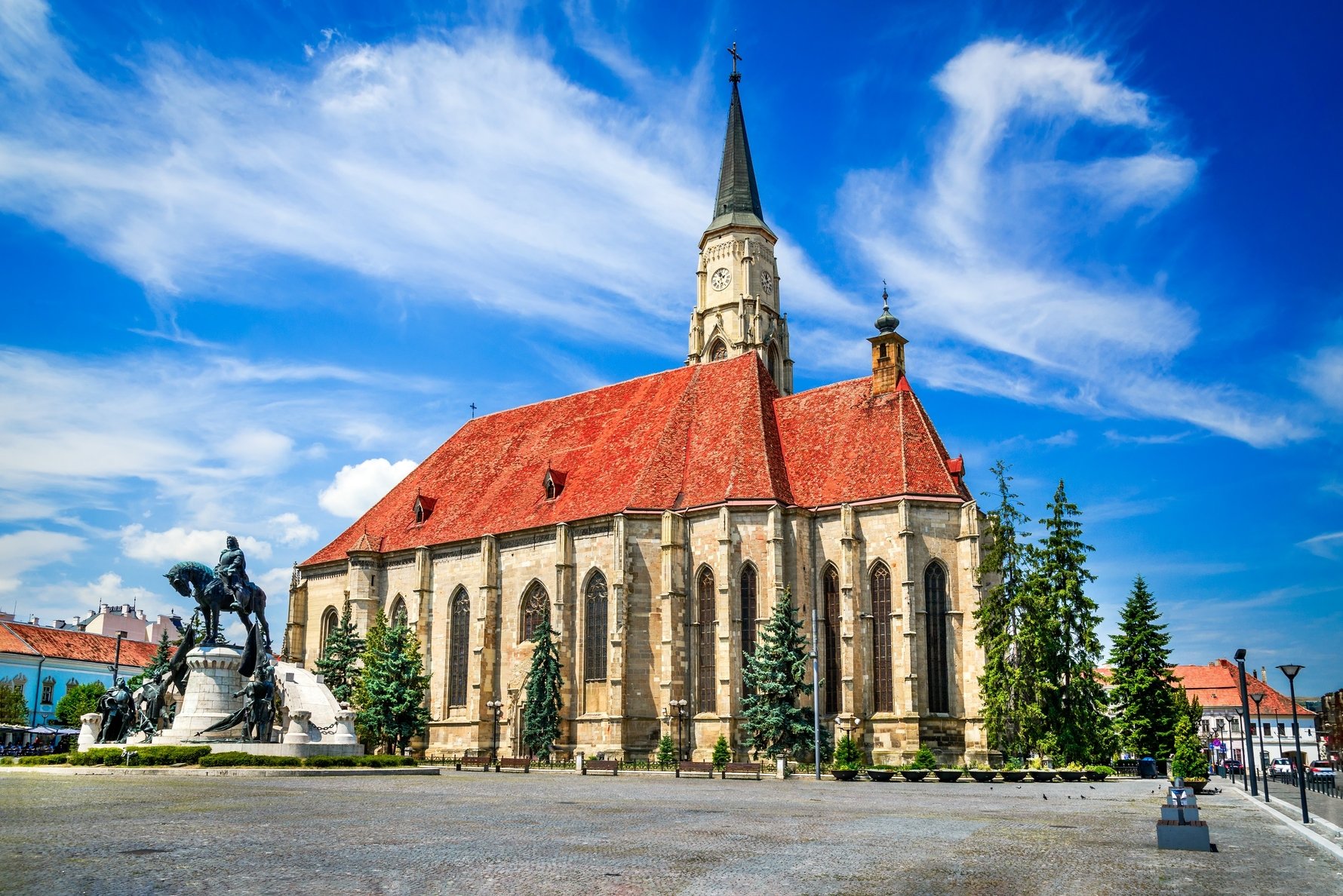
The historic center, with the Gothic-style St. Michael’s Church and the Matthias Corvinus Statue in Union Square, is the perfect place for a leisurely stroll among historic buildings, charming terraces, and lively cobbled streets. Nearby, the Art Museum and the National Museum of Transylvanian History reveal fascinating stories about the region.
Cluj is also famous for the Alexandru Borza Botanical Garden—a true green paradise featuring thousands of plant species, themed gardens, and sweeping views over the city. For those who love spectacular panoramas, climbing up to Cetățuie Hill at sunset is an unforgettable experience.
As one of Romania’s most important university cities, Cluj radiates youthful energy and creativity. Specialty coffee shops, diverse restaurants, and a relaxed atmosphere make it an ideal spot for a city break full of discoveries.
At the end of summer, Cluj is bathed in warm light—perfect for photography—while the pleasant weather invites long explorations. The surrounding area also offers memorable day trips, from the dramatic Turda Gorge to the impressive Turda Salt Mine.
Bucharest – The Capital’s Energy in Late-Summer Colors
Once known as “Little Paris,” Bucharest is a city of contrasts, where historic buildings stand side by side with modern architecture, and wide boulevards intertwine with shaded alleys and hidden gardens. Its rich history is reflected in landmarks such as the Romanian Athenaeum, the Palace of Parliament—one of the largest buildings in the world—and the former Royal Palace, now home to the National Museum of Art of Romania.

( Source: Ziarul incisiv de Prahova )
The Old Town is the city’s beating heart, with cobbled streets, restored heritage buildings, and a lively mix of cafés, restaurants, and bars where you can feel the pulse of the capital. Late summer brings a special atmosphere here—warm days and pleasant evenings, perfect for enjoying an outdoor meal.
For those seeking greenery and tranquility, Herăstrău Park (now King Michael I Park), Cișmigiu Park, or the Botanical Garden offer peaceful retreats within the urban bustle. At the same time, museums such as the Dimitrie Gusti Village Museum or the National Museum of History reveal different facets of Romanian culture and traditions.
Bucharest is also a city of diverse gastronomy—from traditional Romanian flavors to refined international cuisines. Its cultural scene is always vibrant, with theater performances, exhibitions, and concerts filling the calendar.
At the end of summer, the capital takes on a gentler rhythm: traffic eases, the city feels more welcoming, and exploration becomes a pleasure. Bucharest is a place where you can combine urban tourism with moments of relaxation, all while experiencing the vibrant energy of a modern capital.
Conclusion
Oradea, Brașov, Sibiu, Sighișoara, Iași, Cluj-Napoca, and Bucharest each have their own personality and unique charm, offering the perfect mix of culture, history, gastronomy, and authentic urban experiences. Late summer is the ideal time to explore them: the temperatures are milder, the streets calmer, and the atmosphere relaxed yet full of life. Whether you choose to wander through medieval alleyways, savor local dishes, or discover museums and impressive landmarks, these cities will turn your getaway into an unforgettable memory—reminding you just how beautiful and diverse urban Romania truly is.