Travel Ideas
7 of the Most Impressive Castles and Fortresses in Romania

Romania boasts a truly remarkable fortified heritage. From lavish noble residences to austere military fortresses, every wall tells a story. Many of these places are well-preserved or carefully restored, while others retain the romantic charm of ivy-covered, mysterious ruins. Some became famous through movies filmed there, while others come to life through medieval festivals, cultural events, or interactive tours that bring the past closer than ever.
What makes these castles and fortresses truly special is not just their architectural beauty, but also their stylistic and historical diversity. Whether you’re standing before a Gothic castle built by a Transylvanian noble family, a Dacian fortress that withstood Roman assaults, or a border citadel rebuilt by the Habsburgs, you feel the same emotion: you’ve stepped into a story written in blood, stone, and legend.
In this article, we present a top list of 7 of the most impressive castles and fortresses in Romania. You’ll find famous names like Corvin Castle or Bran Castle, as well as lesser-known surprises such as Enisala Fortress or Rupea — places that, once discovered, become irresistible to any history lover, photographer, or adventurer.
Get ready for a journey through time, into the hidden corners of a country that hasn’t forgotten its past. Beyond stories and legends, these places offer a visual, emotional, and cultural spectacle that will make you appreciate Romania in a whole new way.
1. Deva Fortress – The Stronghold Above the City
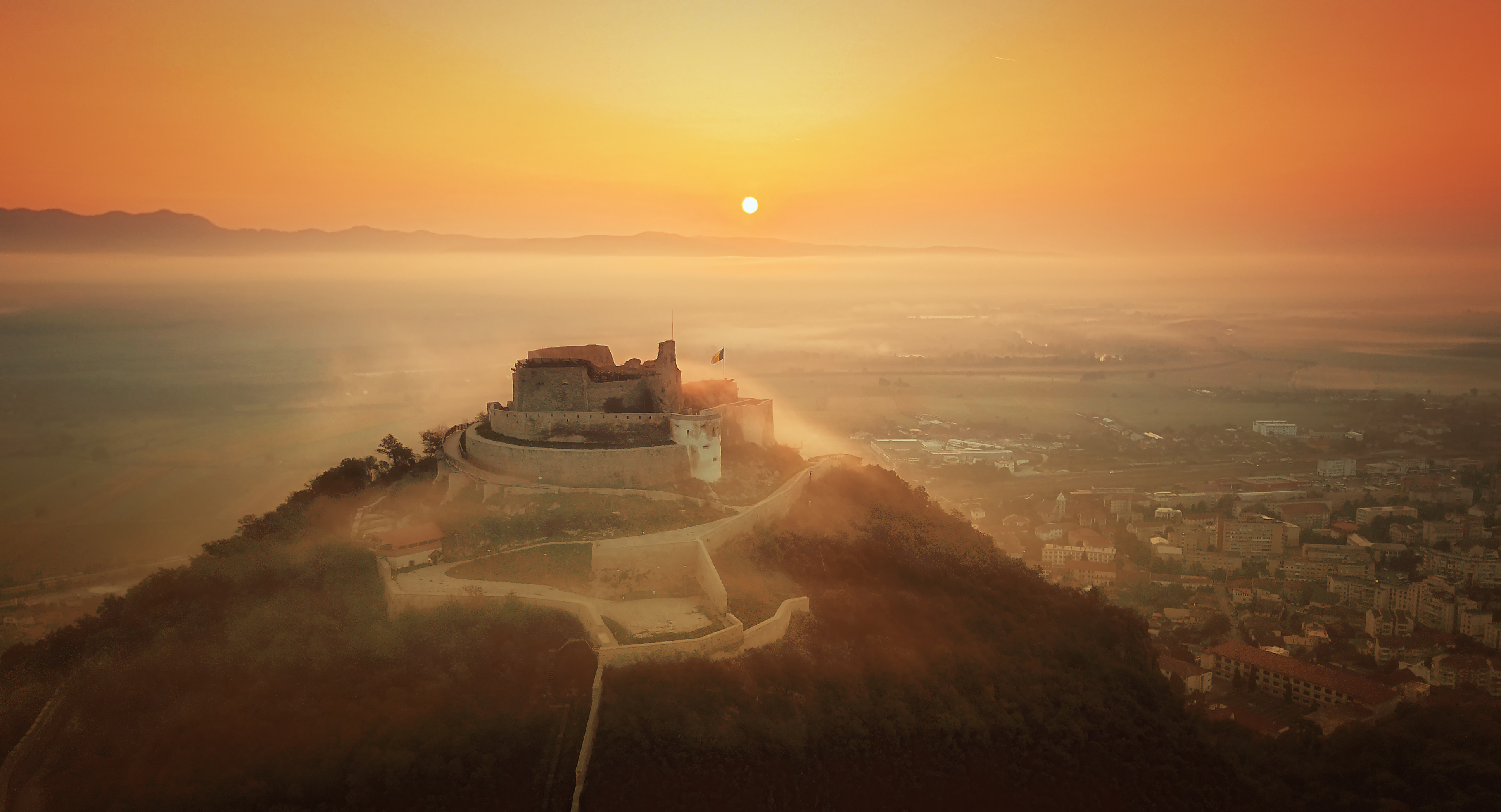
Spectacularly perched on a volcanic cone overlooking the city of Deva, the Deva Fortress is one of the oldest and most strategically important fortifications in Transylvania. It has watched over centuries of history, invasions, uprisings, and transformations. Once imposing and nearly impossible to conquer, today the fortress attracts visitors from all corners of the country thanks to its breathtaking panorama and its carefully preserved medieval charm.
(source: Wikipedia)
The first documented mention of the fortress dates back to 1269, but traces of habitation on the Citadel Hill are much older. During the Middle Ages, Deva Fortress played a crucial role in defending the region, being contested by voivodes, Hungarian nobles, and even the Habsburg and Ottoman powers. It served both as a noble residence and a military fort, with its walls witnessing battles, alliances, and betrayals.
Access to the fortress today is unique in Romania: by a modern funicular that smoothly climbs to the top of the hill, offering spectacular views over the city of Deva, the Mureș River, and the Poiana Ruscă Mountains. For the more active visitors, it is also possible to hike up on one of the forest paths winding through the woods.
Once at the top, you'll be greeted by the thick walls, massive towers, and scenic viewing platforms of the fortress. From here, the view is truly overwhelming — you can see Deva from above with its colorful rooftops, as well as the vast Hațeg depression and the distant outlines of the mountains. In summer, the fortress becomes a stage for cultural events and medieval festivals that bring the spirit of the past back to life among the ancient walls.
2. Marienburg Fortress in Feldioara – The Teutonic Knights' Bastion in Transylvania
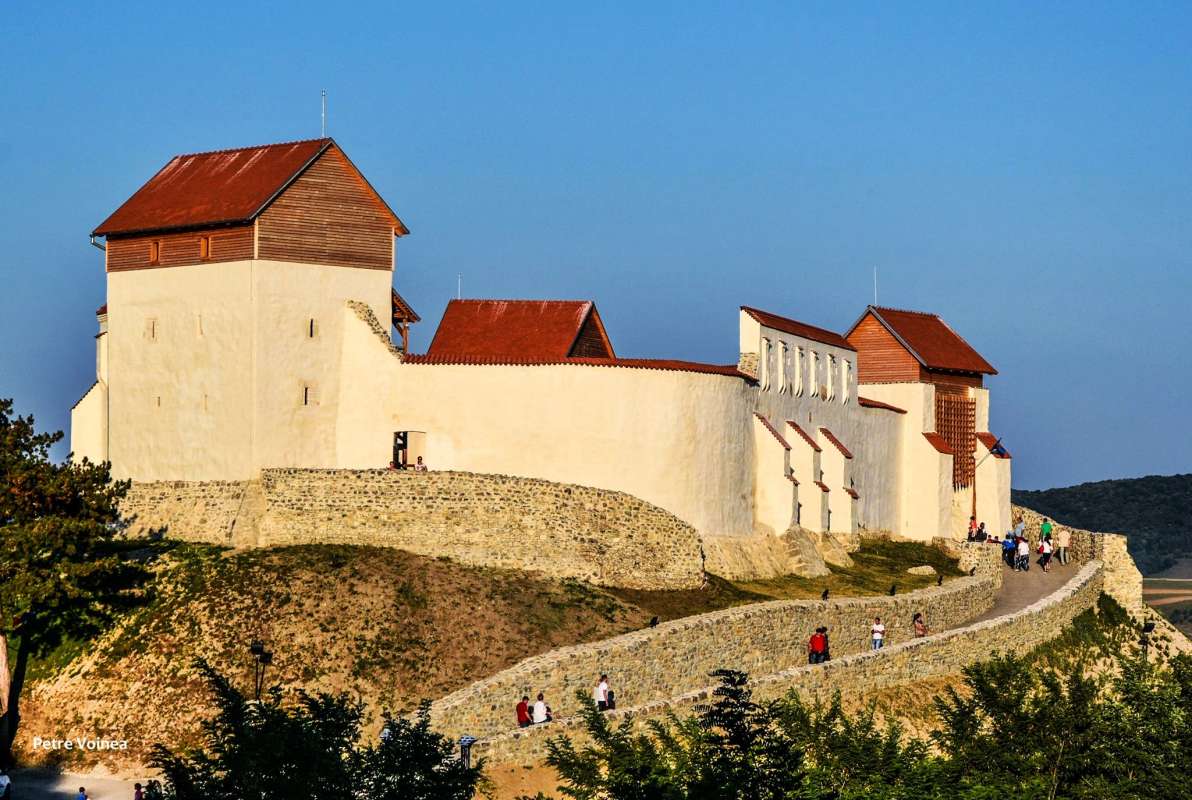
Just a few kilometers north of Brașov, in the village of Feldioara, rises one of the most valuable and beautifully restored medieval fortifications in recent years: Marienburg Fortress. With its white walls and watchtowers perched on a gentle hill above the Olt River, the fortress looks like it came straight out of a knightly tale and stands as a symbol of Saxon identity and military history in the Țara Bârsei region.
(source: Primaria Feldioara)
Marienburg – "The Fortress of Mary", as it was called in Latin and German documents – was built in the 13th century by the Teutonic Knights, who were invited by the King of Hungary to defend the eastern borders of the kingdom. Although the military order did not stay in the area for long, they laid the foundations of the first stone fortification, which would later be taken over and expanded by the Saxon communities of Feldioara in the following centuries.
Over time, the fortress was destroyed, rebuilt, and transformed into a defensive bastion against Ottoman invasions. It survived until the 18th century, when it was abandoned and left in ruins for more than two hundred years. However, starting in 2013, a major restoration project brought Marienburg Fortress back into the tourist circuit, turning it into a model of good practice in heritage preservation.
Today, the fortress impresses with its sober yet elegant appearance, featuring restored towers, paved inner courtyards, and a small museum exhibition that presents the site’s history, the life of the Teutonic Knights, and artifacts discovered during archaeological excavations. From the battlements, wide views open over the plains and the Saxon village, where tall-roofed houses preserve a patriarchal atmosphere.
3. Bran Castle – Legends, History, and Mystery in a National Symbol
Bran Castle is undoubtedly the most famous castle in Romania and one of the most visited tourist attractions in Eastern Europe. Located at the border between Transylvania and Wallachia, in the Rucăr-Bran Pass, the castle rises proudly on a steep cliff, offering a spectacular view over the Bran Corridor and the Bucegi Mountains. Although it is often associated with the mythical figure of Dracula, the real story of the castle is at least equally captivating.
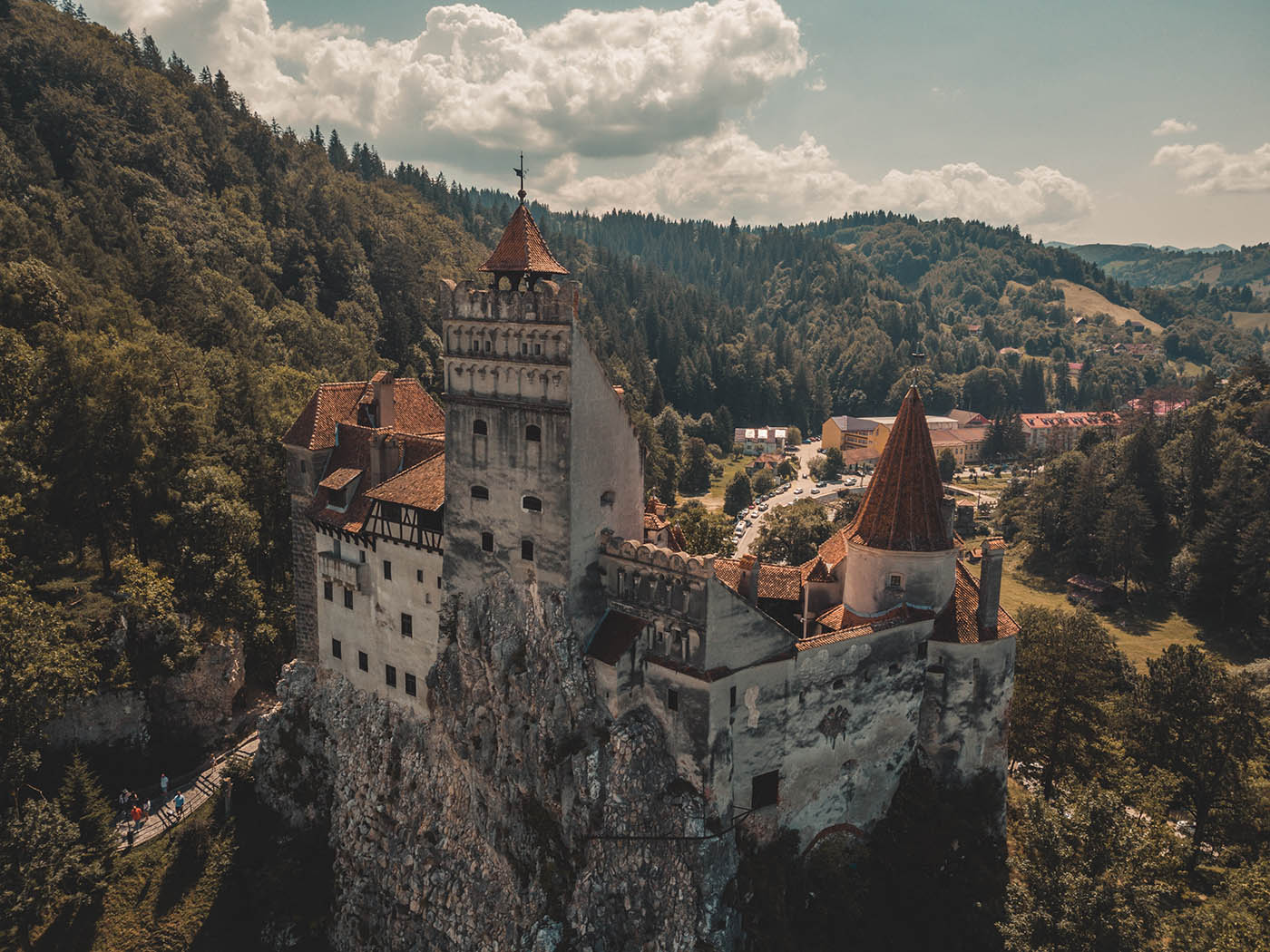
(Source: Discover Brasov)
Built at the end of the 14th century, initially as a strategic fortress to defend the border and control the trade route between Brașov and Câmpulung, Bran Castle has had a complex history: military residence, customs post, noble refuge, and later, a royal residence. During the interwar period, Queen Marie transformed the castle into a warm, artistic, and personal space, tastefully restoring it and furnishing it with pieces from across the country.
Today, Bran houses an extensive museum with permanent exhibitions showcasing the medieval history of the region, collections of art and furniture, traditional costumes, and historical reconstructions. Each room tells its own story, and the castle tour offers a fascinating glimpse into aristocratic life from another era.
Of course, the Dracula myth adds a layer of mystery. Although there is no solid evidence that Vlad the Impaler ever lived in the castle, the legend popularized by Bram Stoker turned it into “Dracula’s Castle,” attracting visitors eager for dark tales, gothic corridors, and vampire lore. The castle embraces this fame with elegance, organizing night tours, themed exhibitions, and special events—especially around Halloween.
4. Oradea Fortress – The rebirth of a historic stronghold in the heart of a European city
Oradea, one of the most elegant and vibrant cities in western Romania, hides in its heart a historical treasure with a story of over 1,000 years: Oradea Fortress. With its unmistakable Italian Renaissance star shape and five bastions, the fortress has witnessed key episodes in the history of Transylvania and continues to live on today—this time through art, culture, and community.

(Source: Planiada)
Throughout the centuries, Oradea Fortress served as a royal stronghold, a religious and academic center, a military garrison, and also a place of refuge and political power. King Ladislaus I of Hungary was buried here, and during the Middle Ages, one of the most advanced astronomical observatories in Central Europe operated within its walls.
After centuries of decline and neglect, the fortress was excellently restored over the last decade and has become a model of urban revitalization. The massive walls have been preserved, the bastions have been redesigned, and the inner courtyards now host exhibitions, workshops, coworking spaces, cafés, a museum, and numerous cultural events that bring the past into the present.
In summer, Oradea Fortress becomes a lively hub: film festivals, craft fairs, open-air concerts, and theater performances take place right within the ancient walls. It is not just a site to visit, but a living space, open to both locals and tourists alike.
5. Corvin Castle – the Gothic Jewel of Transylvania
Imposing, theatrical, and steeped in legend, Corvin Castle in Hunedoara is without a doubt one of the most spectacular and well-preserved medieval castles in Romania and Eastern Europe. With its flamboyant Gothic architecture, defensive towers, pointed arch windows, and suspended bridges, the castle looks like it stepped out of the pages of a fantasy book – and it’s no wonder that it has inspired filmmakers, historians, and hundreds of thousands of tourists every year.
Built in the 15th century by the voivode John Hunyadi, Corvin Castle was designed both as a noble residence and a strategic military fortress. Over time, it was expanded and beautified by later generations, coming to include Knights’ Halls, arcaded courtyards, galleries, bastions, and a Gothic chapel. Treaties were signed here, rivals imprisoned, and lavish feasts held worthy of a royal palace.

(source: Holiday and Trips)
Legends are not missing either. It is said that Vlad Țepeș was held prisoner within the castle walls, and the well in the inner courtyard, dug by three Turkish prisoners, carries a curse. Tourists come not only for the history but also for the mystery – Corvin Castle is considered one of the most "haunted" places in the country, according to local traditions and romantic folklore.
Today, the castle is carefully restored and open to the public. Permanent exhibitions showcase armor, furniture, period documents, as well as Gothic and Renaissance architectural elements. Cultural events are also frequent: medieval festivals, historical reenactments, concerts, and even film shootings. The castle has appeared in international films such as "The Nun," "Ghost Rider: Spirit of Vengeance," "Dragonheart," and numerous historical documentaries.
6. Rupea Fortress – the ancestral guardian of Transylvania
On a steep hill overlooking the town of the same name, at the crossroads between Brașov, Sighișoara, and Târgu Mureș, rises one of Romania’s most imposing medieval fortifications: Rupea Fortress. Visible from a great distance, with massive walls and round towers made of yellow-reddish stone, the fortress seems to have stood watch for centuries over Țara Bârsei and southeastern Transylvania.
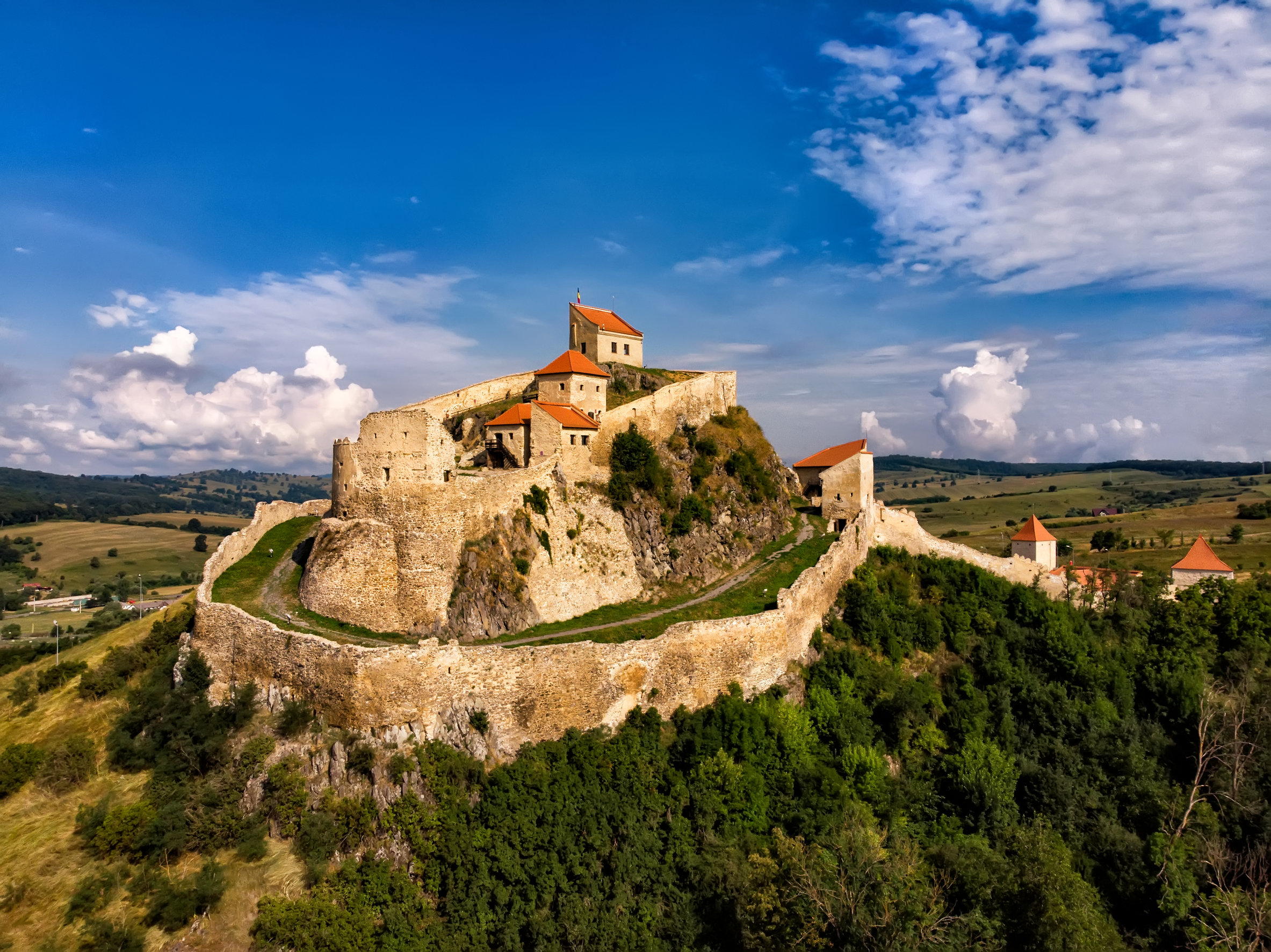
(source: Liberatea)
Built in successive stages starting from the 14th century on the site of an older Dacian fortification (Rumidava), Rupea Fortress has served over time as a military fort, a refuge for local inhabitants, and an administrative center. It was expanded multiple times, reaching its current form, which consists of three fortified enclosures: the upper, middle, and lower fortress—each constructed in different periods depending on defensive needs and the economic development of the region.
Completely restored in the last decade after a long period of abandonment, Rupea Fortress is now a well-organized tourist destination. Visitors can walk along paved paths, explore defensive towers, thick walls, inner courtyards, and halls converted into museum spaces. Informational panels provide insights into local crafts, medieval life, trade, and military conflicts that shaped the area.
One of the fortress’s most impressive features is the stunning panorama of the Transylvanian landscape. From above, you can admire forested hills, villages with fortified churches, fields stretching to the horizon, and the winding serpentine of the European road that crosses the region.
7. Enisala Fortress – the solitary stronghold guarding the Dobrogea lakes
Perched on a rocky hill near the Razim and Babadag lakes, Enisala Fortress stands quiet and solitary amidst a breathtakingly wild landscape. It is the only surviving Genoese-type medieval fortress in Dobrogea, and its strategic position — between the Danube Delta, the Danube River, and the Black Sea — gave it crucial importance during the Middle Ages.
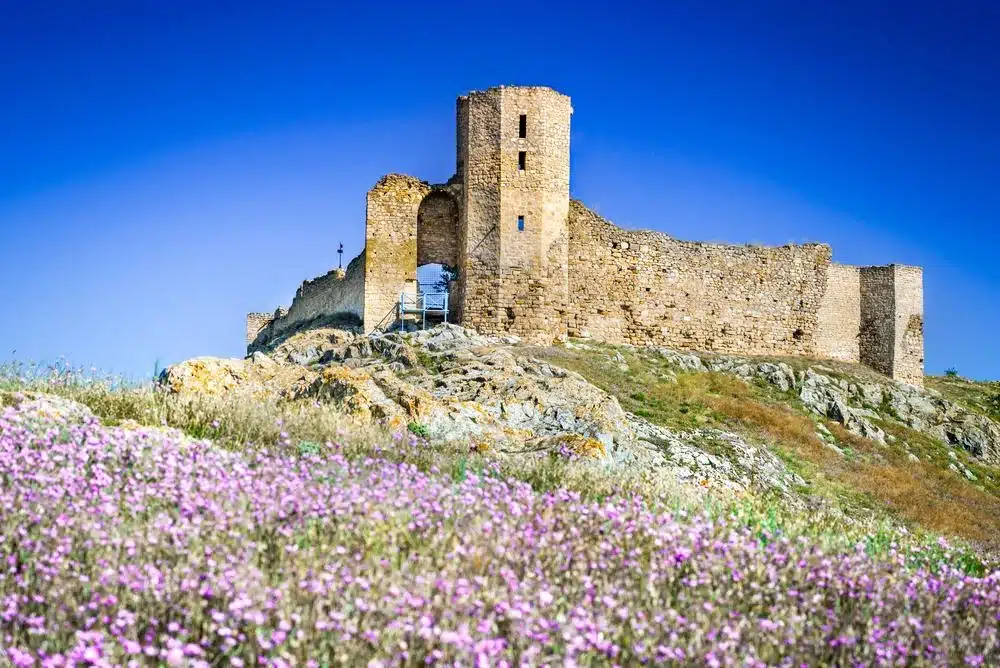
(source: Green Dolphin Camping)
Built in the 14th century, probably by Genoese merchants who controlled the Black Sea trade routes, the fortress was later used by the Byzantine Empire, then by the rulers of Wallachia, and finally by the Ottomans. Its role was twofold: military defense and economic control point over maritime and river trade. With the coastline’s retreat and the silting of the nearby lakes, Enisala gradually lost its importance and was abandoned in the following centuries.
Today, the fortress impresses precisely through its austerity and isolation. The partially restored stone walls, massive towers, and round bastions create a distinctive silhouette against the Dobrogea sky. From above, the view is stunning: you see the quiet villages, the lakes shimmering silver, the vast fields, and feel the wind bringing peace — and perhaps the echo of a nearly forgotten history.