Travel Ideas
Medieval fortified churches to visit in Romania
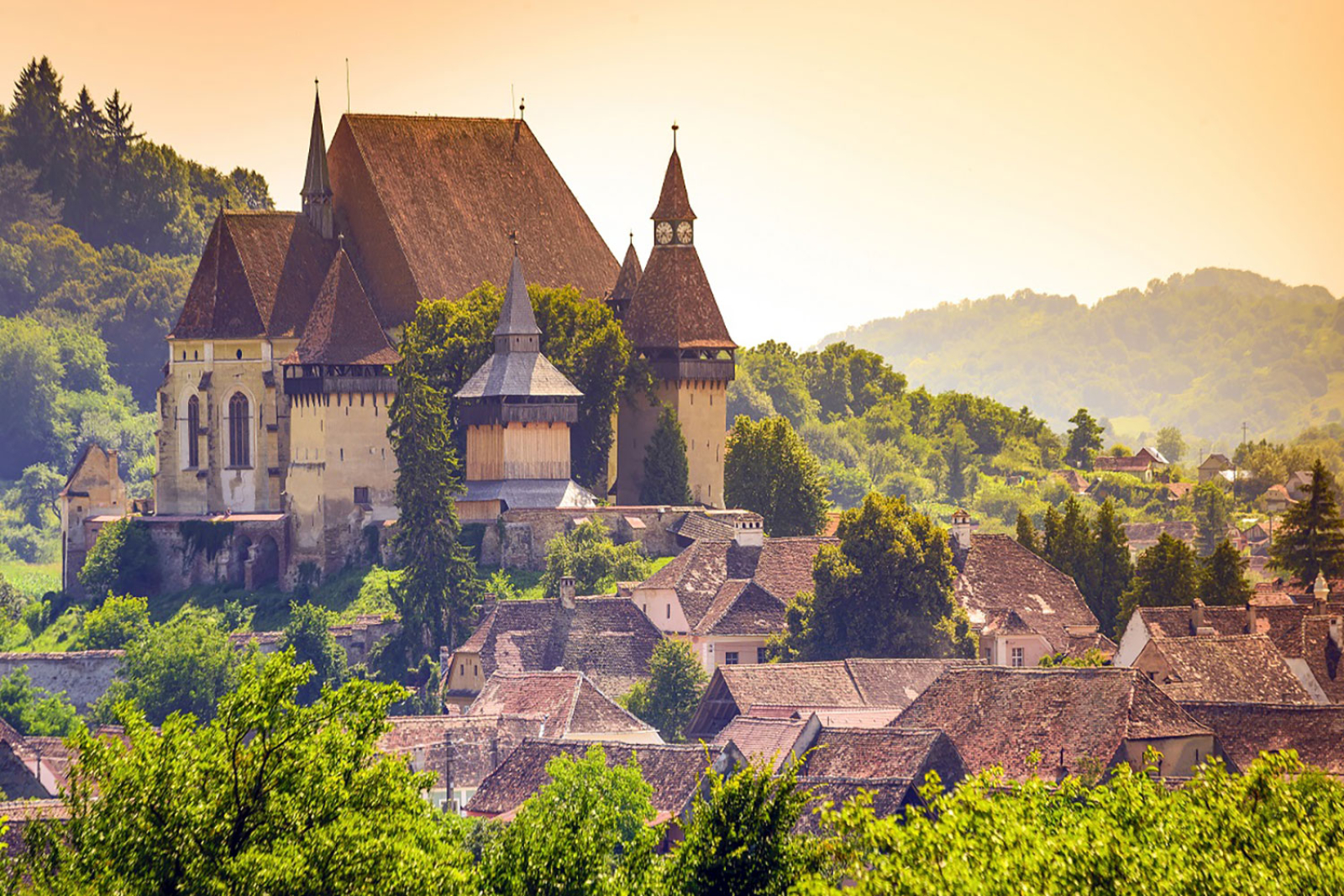
Romania is a true treasure trove of medieval heritage, and the fortified churches of Transylvania represent some of the most impressive and well-preserved historical monuments in this part of Europe. Built hundreds of years ago by the Saxon communities, these edifices were not just places of worship, but also true fortresses meant to protect the inhabitants against invasions. Today, they impress through their robust architecture, the stories they preserve, and the picturesque landscapes in which they are situated.
Among the most spectacular such monuments is the Fortified Church of Prejmer, one of the best-preserved medieval fortifications in Eastern Europe. Its massive walls and complex defensive system offer a clear picture of how local communities organized their defense in the Middle Ages. Equally impressive is the Fortified Church of Saschiz, a monument included in the UNESCO World Heritage, which combines Gothic elements with defensive functions. Situated in an authentic rural setting, the church is proof of the ingenuity and community spirit of the Transylvanian Saxons. Another remarkable place is the Fortified Church of Biertan, one of the most important fortified churches in Transylvania and the former seat of the Evangelical bishopric. The complex impresses with its three rows of defensive walls and its imposing Gothic architecture. Last but not least, the village of Viscri houses one of the most well-known fortified churches in Romania, appreciated for its authenticity and the way it has been preserved over time. The church in Viscri is a perfect example of the harmony between built heritage and the traditional rural landscape.
These fortified churches are not just historical monuments, but true symbols of an era in which faith, community, and the need for protection intertwined in a unique way. Visiting them offers an authentic experience, an incursion into the medieval history of Transylvania, and the opportunity to discover some of Romania's most valuable cultural treasures.
The Fortified Church of Prejmer
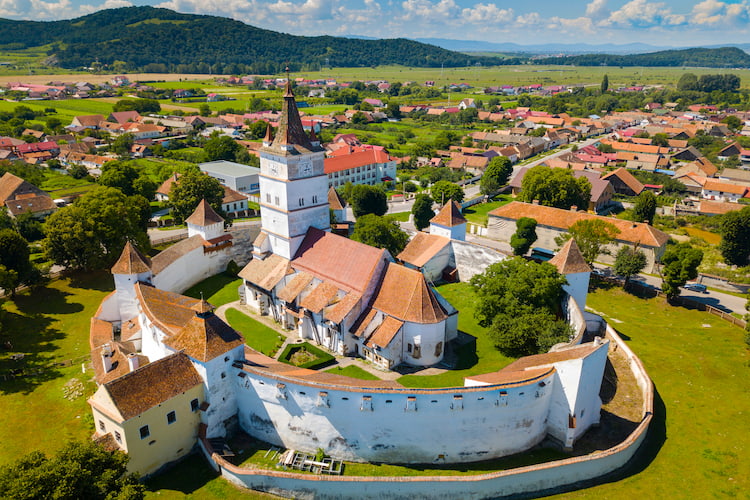
One of the most impressive and well-preserved medieval fortifications in Romania is the Fortified Church of Prejmer, located near Brașov. Built in the 13th century by the Teutonic Knights and later developed by the Saxon community, this fortified church represents a remarkable example of medieval defensive architecture, being included in the UNESCO World Heritage. What makes this complex so special is its extremely well-thought-out defense system. The massive walls, reaching heights of over 12 meters and impressive thicknesses, completely surround the church, forming an almost circular fortress. Access to the interior is through a long and narrow corridor, designed to slow down potential attackers, giving the defenders a strategic advantage.
( Sursa: History Hit )
Inside the fortification, there are over 250 rooms arranged on several levels, each with a well-defined role during sieges. These rooms were used by the villagers to take shelter along with their supplies, transforming the complex into a true community refuge. Each family had its own space where they could keep their food and belongings safe. The church itself, built in Gothic style, impresses with its simplicity and elegance. The interior is sober but full of history, reflecting the spirituality of the community that built this place of worship. Over time, the edifice has witnessed numerous historical events and played an essential role in the lives of the locals. A fascinating aspect of the fortified church in Prejmer is its high degree of preservation. Unlike other medieval fortifications, this complex has remained almost intact, offering visitors an authentic image of how such a fortress functioned in the Middle Ages. Every corner of the complex tells a story about the life of the Saxon community and the challenges it faced over time.
Today, the fortified church in Prejmer is one of the most important tourist attractions in Transylvania, drawing visitors from all over the world. It is a place where history comes to life, and medieval architecture can be admired in all its splendor, offering an authentic and memorable experience for all who cross its threshold.
The Fortified Church of Saschiz
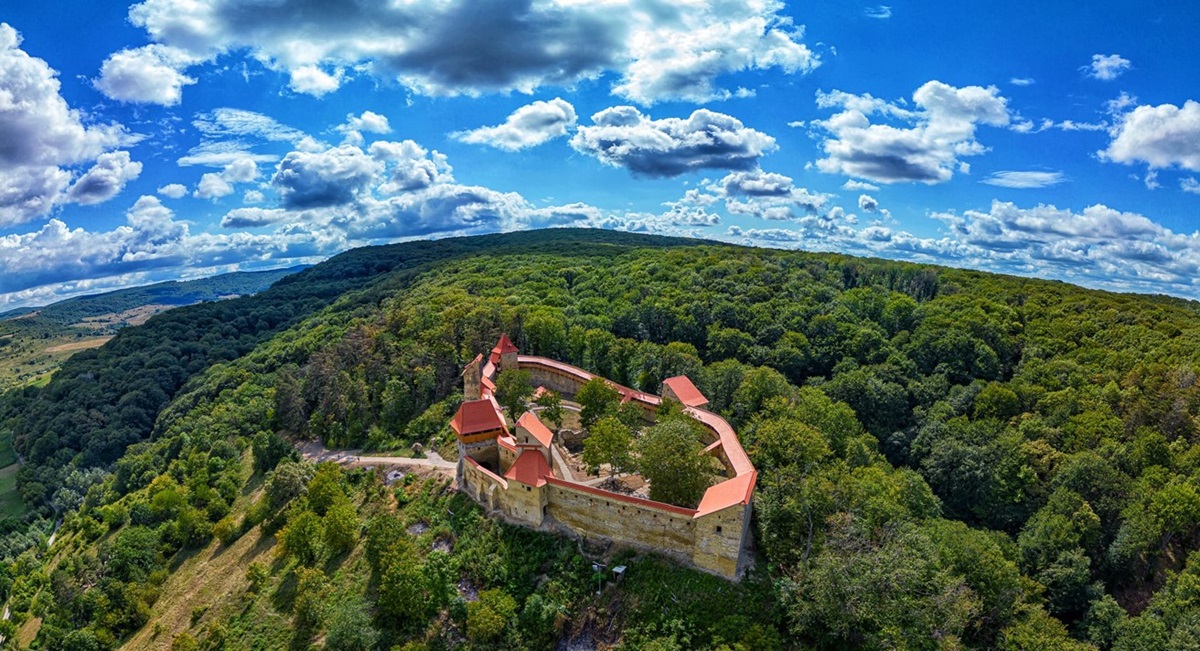
In the Transylvanian village of Saschiz, located in Mureș County, stands the imposing Fortified Church of Saschiz, one of the most valuable medieval monuments in Romania. Included in the UNESCO World Heritage, this fortified church impresses with its Gothic architecture and the defensive role it has played over the centuries. Built in the 15th century by the Saxon community, the church was designed both as a place of worship and as a fortification meant to protect the village inhabitants from invasions. The solid walls, strategic positioning, and defensive elements integrated into the construction reflect the constant need for defense of the medieval communities in Transylvania.
( Sursa: Romania Tourism )
One of the most distinctive elements of the church is its massive tower, which is reminiscent of the famous Clock Tower in Sighișoara. This tower had not only an aesthetic role but also a practical one, being used for surveillance and defense. Its imposing silhouette dominates the village and contributes to the architectural charm of the entire area. The interior of the church is characterized by the sobriety and elegance specific to the Gothic style. Although not as richly decorated as other places of worship, the space conveys a profound and authentic atmosphere, reflecting the spirituality of the community that built it. Over time, the church was a central point of the religious and social life in Saschiz. Near the church are also the ruins of the peasant fortress, which completes the village's defensive system. Together, these two elements provide a clear picture of how Saxon communities organized their defense and daily life in the Middle Ages.
Nowadays, the Fortified Church of Saschiz is a popular tourist destination appreciated for its authenticity and the picturesque landscapes that surround it. Visitors can discover here not only a remarkable historical monument but also the charm of a Transylvanian village where traditions and history are still well preserved. It is an ideal place for those who wish to explore the medieval heritage of Romania in an authentic and peaceful setting.
The Fortified Church of Biertan
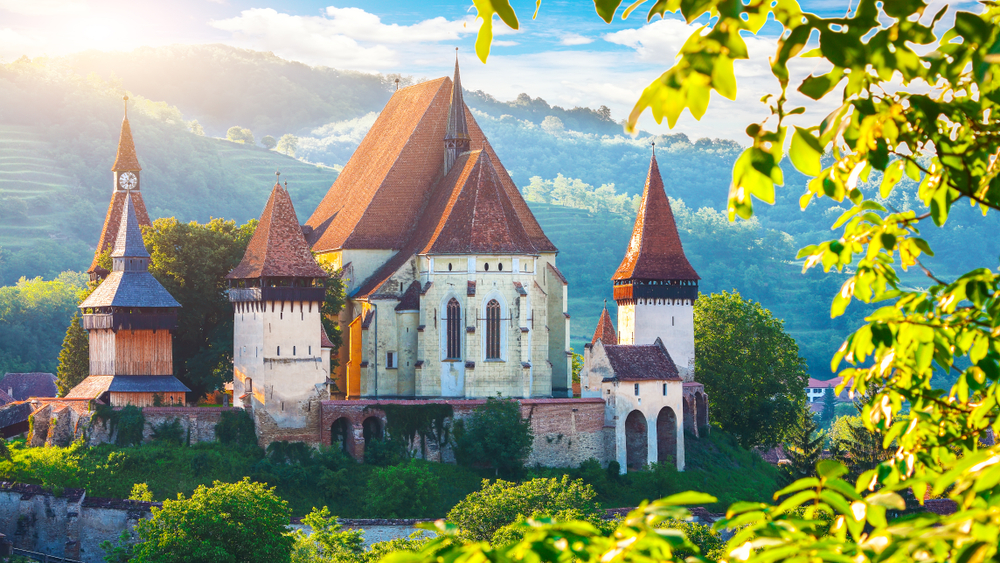
In the heart of Transylvania, in the village of Biertan, lies one of the most impressive and well-preserved fortified churches in Romania: the Fortified Church of Biertan. Included in the UNESCO World Heritage, it represents a symbol of Transylvanian Gothic architecture and the organization of Saxon communities in the Middle Ages. Built between the 15th and 16th centuries, the church was the seat of the Evangelical bishopric in Transylvania for almost 300 years, which gave it a particularly important role in the religious and administrative life of the region. Positioned on a hill overlooking the village, the church impresses both through its dimensions and the complexity of its defense system.
( Sursa: Libertatea )
The complex is protected by three rows of fortified walls, connected by towers and bastions, creating an extremely effective defensive system for that period. Access to the interior is through massive gates, and each level of the fortification had a well-defined role during sieges. This complex structure reflects the ingenuity and organization of the community that built it. The interior of the church is just as impressive as the exterior. The polyptych altar, one of the largest in Transylvania, is a true masterpiece of late Gothic art, richly decorated and full of religious symbolism. Also, a unique element of the church is the sacristy door, famous for its complex locking system that includes no less than 19 bolts, being considered a true medieval security mechanism. An unusual aspect of this place is the "reconciliation room," a space used in the past for couples who wanted to divorce. They were forced to spend a period together in a small room in an attempt to resolve their conflicts and avoid separation. This tradition reflects the community's values and the importance of the family in Saxon society. Besides its historical and architectural importance, the fortified church in Biertan also impresses with the landscape in which it is set. The rolling hills, traditional houses, and the quietness of the village create a fairytale setting, perfect for exploration and relaxation.
Thus, the Fortified Church of Biertan remains one of the most valuable cultural attractions in Romania. Visiting this place offers an authentic foray into the medieval past of Transylvania and an opportunity to discover one of the most spectacular architectural achievements of the Saxon communities.
The Fortified Church of Viscri
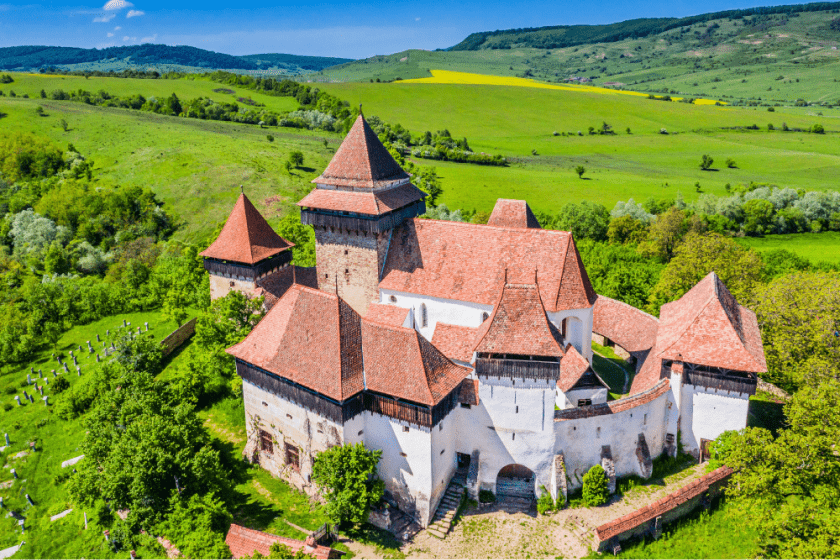
In the Transylvanian village of Viscri, one of the most authentic and well-preserved villages in Romania, lies the impressive Fortified Church of Viscri, a monument included in the UNESCO World Heritage. This place has become internationally known not only for its historical value but also for the way traditions and rural architecture have been preserved over time. Originally built in the 13th century as a Romanesque church, the building was later expanded and fortified by the Saxon community. Over the centuries, the church was adapted to face the dangers of the times, being surrounded by defensive walls and towers that offered protection to the villagers in case of an attack.
( Sursa: Valea Verde Retreat )
One of the distinctive elements of this complex is its authentic simplicity. Unlike other, more imposing fortified churches, the one in Viscri impresses with the balance between functionality and aesthetics. The white walls, the defense tower, and the inner courtyard create a harmonious space that reflects the lifestyle of the Saxon community. The interior of the church preserves original elements, including wooden galleries and architectural details specific to the medieval era. The atmosphere is peaceful and authentic, giving visitors the opportunity to feel the spirit of the place and to understand the role this church played in the life of the community. An important aspect that contributes to the charm of this place is the involvement in heritage conservation. The village of Viscri has become a successful example of restoring and protecting traditional architecture, being supported even by Charles III, known for his interest in the rural heritage of Transylvania. Besides the fortified church, the entire village offers an authentic experience: well-kept traditional houses, unpaved roads, and a quiet atmosphere where time seems to have slowed down. Visitors can discover here not only a historical monument but also a way of life that has remained almost unchanged across generations.
The fortified church in Viscri is not just a tourist attraction, but a symbol of the cultural heritage and Transylvanian identity. Visiting this place offers an authentic experience, where history, traditions, and the rural landscape blend in a unique and memorable way.