Customs and traditions
Easter Traditions in the Regions of Romania

From isolated villages to large cities, Easter traditions are carefully preserved, with each region of Romania having its own customs and rituals.
For Romanians, Easter preparations begin long before Easter Sunday. During Holy Week, households are thoroughly cleaned, eggs are dyed—often using traditional techniques passed down through generations—and delicious treats such as fluffy cozonac (sweet bread) and roast lamb are prepared. In some regions, fasting is strictly observed, while Maundy Thursday and Good Friday are marked by religious services and folk traditions.
Depending on the geographical area, Easter is celebrated with unique and fascinating traditions. In Bukovina, eggs are intricately decorated, turning into true works of art, while in Transylvania, boys take part in the "sprinkling" tradition, where they splash girls with perfume—an old custom rooted in Saxon and Hungarian culture. In Oltenia and Muntenia, believers take baskets filled with "pască" (a special Easter bread) and other treats to church for blessing, while in Maramureș, the Resurrection night rituals are accompanied by traditional folk attire and songs.
These customs, some preserved from ancient times and others adapted to modern realities, reflect Romania's cultural diversity and the deep spiritual heritage of the Romanian people. Every corner of the country holds stories and traditions that make Easter not only a religious holiday but also an opportunity to celebrate local identity.
In this article, we invite you to discover the most beautiful Easter traditions in Romania, exploring how each region preserves and honors its spiritual and cultural heritage.
Bukovina – The Art of Egg Decorating
In Bukovina, Easter is synonymous with the refined art of egg decorating, a tradition passed down from generation to generation. Unlike the simple red egg dyeing common in other regions, here the eggs are meticulously decorated by hand using intricate techniques and symbols with deep meanings.

(source: destepti.ro)
Folk artisans use beeswax and a chișiță (a special drawing tool) to transform eggs into true works of art. Traditional patterns include geometric designs, natural elements, and religious symbols, each carrying a distinct meaning. For example, the spiral symbolizes eternity, the wheat stalk represents abundance, and the cross signifies faith.
In some Bukovinian villages, egg decorating is considered a sacred ritual, and young girls learn the craft from their grandmothers and mothers. Around Easter, fairs and workshops are organized where tourists can admire and even try this traditional technique themselves.
For locals, decorated eggs are not just an Easter symbol but also an expression of their cultural identity. This unique tradition has gained international recognition, with Bukovinian decorated eggs displayed in museums and private collections worldwide.
Transylvania – The "Sprinkling" Tradition on Easter Monday
In Transylvania, one of the most cherished Easter traditions is “sprinkling”, a custom with Hungarian and Saxon influences that has been faithfully preserved in the region’s communities. This ritual takes place on Easter Monday when boys and young men go from house to house to sprinkle girls with perfume—or, in the past, with fresh well water.
It is said that this tradition symbolizes purification, fertility, and good luck, with its roots in ancient spring rituals. According to tradition, girls who are "sprinkled" will have a lucky and successful year. In return for this gesture, boys are rewarded with red eggs, homemade sweets, and sometimes a glass of horincă (a strong plum brandy) or wine

Today, “sprinkling” is a highly anticipated tradition, especially in rural communities, where girls dress in traditional folk attire and boys recite poems before sprinkling them. While in cities the custom has modernized—water being replaced with perfume—the essence of this spring ritual remains unchanged: a celebration of youth, joy, and community.
If you find yourself in Transylvania during Easter, don’t be surprised if you get “sprinkled”—it’s simply a sign of good luck and prosperity for the year ahead!
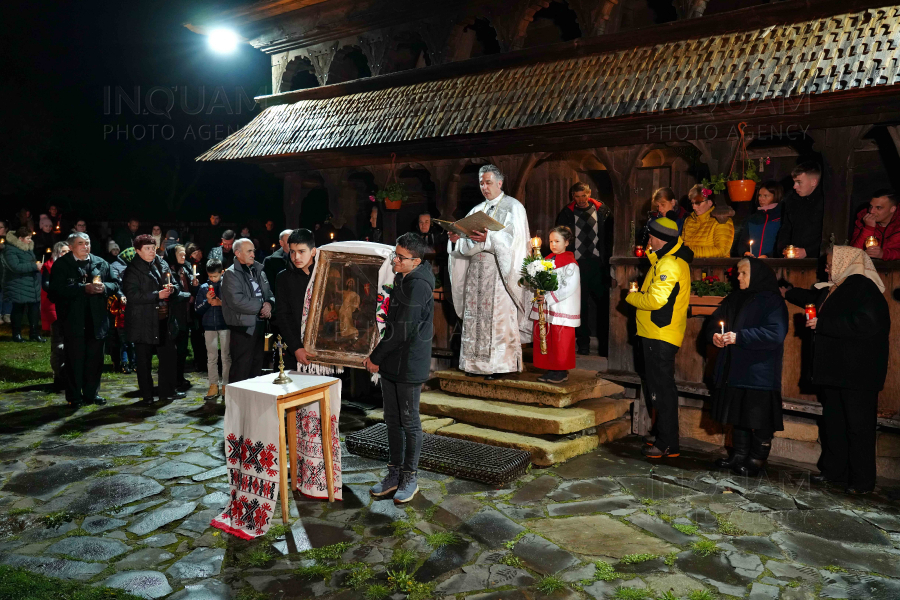
In the morning, after the church service, the people of Maramureș return home for the “washing with red eggs” ritual, a symbolic act of purification. It is believed that washing one’s face with water in which a red egg and a coin have been placed brings health and prosperity for the year ahead.
Easter in Maramureș is not just a religious celebration but also an opportunity to honor local traditions and cultural identity. The radiant atmosphere, church hymns, and the beauty of traditional attire make this region a truly special place to experience Easter.
Oltenia – Blessing the Easter Basket and the Tradition of “Scalding” the Lamb
In Oltenia, Easter is marked by a series of traditions passed down through generations, including the blessing of the Easter basket and a unique ritual known as “scalding” the lamb.
On the night of the Resurrection, believers in Oltenian villages prepare an Easter basket, which they take to church to be blessed by the priest. The basket contains red eggs, cozonac (sweet bread), pască (Easter bread), salt, red wine, and lamb meat, all of which hold deep symbolic meanings related to Christ’s sacrifice and resurrection. After the service, families return home and share the blessed food, believing that it will bring them health and prosperity in the coming year.

(source: Adevărul)
Another tradition specific to this region is the “scalding” of the lamb, a culinary ritual in which hot water is poured over the lamb meat immediately after slaughter. This process helps clean the skin and is considered essential for preparing the traditional Easter roast. In the past, this custom also carried a symbolic meaning, being associated with purification and the transition to a new cycle of life.
In many Oltenian villages, the first day of Easter begins similarly to many other regions in the country with the washing of the face using water in which a red egg and a coin have been placed—a ritual believed to bring health and prosperity. After the festive meal, families gather together to spend time with one another, and young people come together for traditional games and dances.
Easter in Oltenia preserves a fascinating combination of faith, culinary traditions, and folk customs, offering a warm and authentic atmosphere.
Muntenia – The Tradition of Sharing the “Light” and the Easter Feast
In Muntenia, Easter is marked by traditions that emphasize community, generosity, and the celebration of the joy of the Resurrection. Two of the most important Easter customs in this region are the sharing of the "light" after the Resurrection service and the rich Easter feast on the first day of Easter.
On the night of the Resurrection, the entire community gathers outside the church, where the priest distributes the holy light, and the faithful carefully carry it home. In Muntenia, there is a tradition of keeping the candle lit upon returning home to bring blessing to the household. Some locals also have the custom of drawing a cross on the house's wall with the soot from the candle as a symbol of divine protection for the family.

(source: B1 TV)
Another Easter tradition in Muntenia is tied to the festive feast on the first day. After the service, family members gather around the table and begin the holy meal with a special ritual: the clinking of red eggs, accompanied by the traditional greeting “Christ is Risen!”, to which the response is “Truly, He is Risen!” It is said that the person whose egg remains intact after clinking will have health and good luck throughout the year.
On the Muntenian Easter table, you’ll find lamb’s drob, roast lamb, sweet pască with cheese, fluffy cozonac, and red wine. A particularity of the region is that many housewives also prepare lamb soup sourd with borsch, a delicacy appreciated for its intense flavor.
In some villages of Muntenia, the first day of Easter is considered a day of quiet time spent with family, while the second day is dedicated to visits and celebration. People visit relatives and friends, offering each other red eggs and traditional dishes.
Conclusion
Easter in Romania is not only a religious holiday but also an opportunity to celebrate local traditions, bring families together, and preserve customs passed down through generations. Each region of the country has its own Easter rituals and symbols, from the artistic painting of eggs in Bucovina, to the sprinkling of girls in Transylvania, the wearing of traditional costumes to church in Maramureș, the blessing of the Easter basket in Oltenia, and the rich Easter feast in Muntenia.
These traditions, some preserved strictly and others modernized in various ways, remind us of Romania's cultural richness and the power of community. Regardless of where we are, Easter is a moment of reflection, joy, and gratitude for what we have.
Whether we are clinking red eggs with loved ones, attending the Resurrection service, or savoring traditional delicacies, the most important thing is the spirit of the holiday: faith, love, and unity.