Travel Ideas
Prejmer Fortified Church – Romania’s Only Three-Star Michelin Site
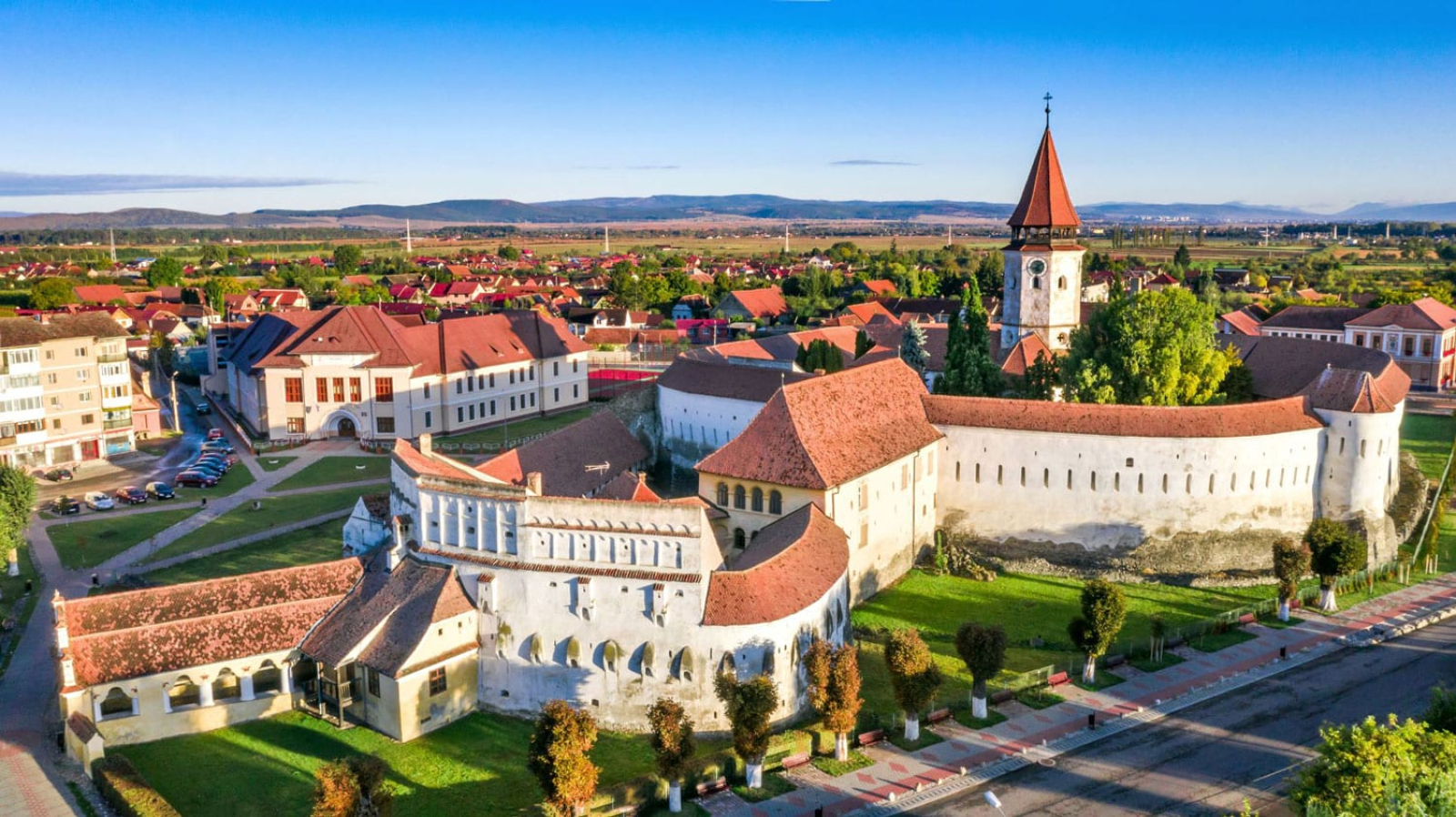
Throughout history, the church and its fortified complex served as the main defense of the local community against Tatar and Ottoman invasions. With walls up to 12 meters thick, defensive towers, and an impressive enclosure containing more than 270 rooms, the fortified church of Prejmer is considered the strongest fortification of its kind in Southeastern Europe. In these small rooms, village families stored their provisions and valuables, turning the ensemble into a true refuge in times of danger.
Its historical and cultural importance has been recognized at the highest level. Beyond being included on the UNESCO World Heritage List, the Fortified Church of Prejmer has also received a rare distinction: it is the only tourist attraction in Romania awarded three Michelin stars in the famous Michelin Green Guide. This international recognition places it alongside world-renowned cultural and architectural landmarks, confirming its uniqueness and value.
What impresses visitors is not only the monumentality of the walls or its tumultuous history, but also the authentic medieval atmosphere preserved within the fortifications. Walking through its enclosure, you feel how the massive walls, the central courtyard, and the Saxon chambers transport you to an era when the entire community found protection within these bastions.
Where the Fortified Church of Prejmer Is Located and How to Get There
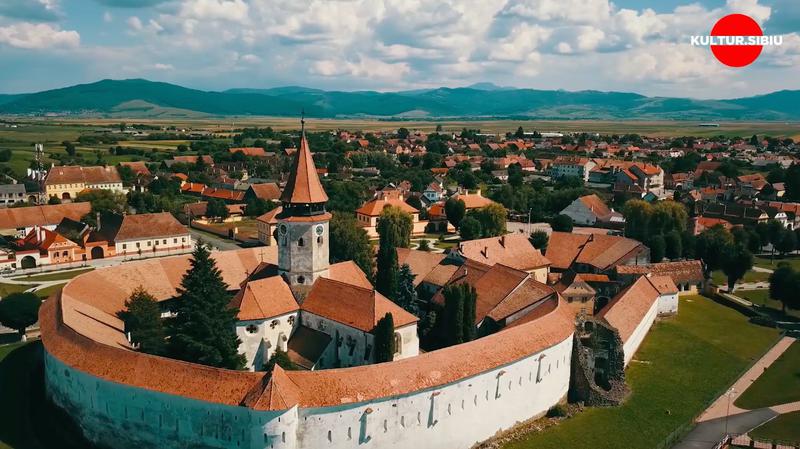
In the heart of the picturesque Țara Bârsei, just 15 kilometers east of Brașov, rises one of the most spectacular and best-preserved medieval fortifications in Romania: the Fortified Church of Prejmer. The village enjoys a unique location, surrounded by gentle hills and fertile fields that have contributed over the centuries to the prosperity of the Saxon community. Prejmer was not chosen by chance for the construction of such a fortification: since the Middle Ages, the village lay at the crossroads of important trade routes linking Transylvania to Moldavia and Wallachia, making it a strategic point both militarily and economically.
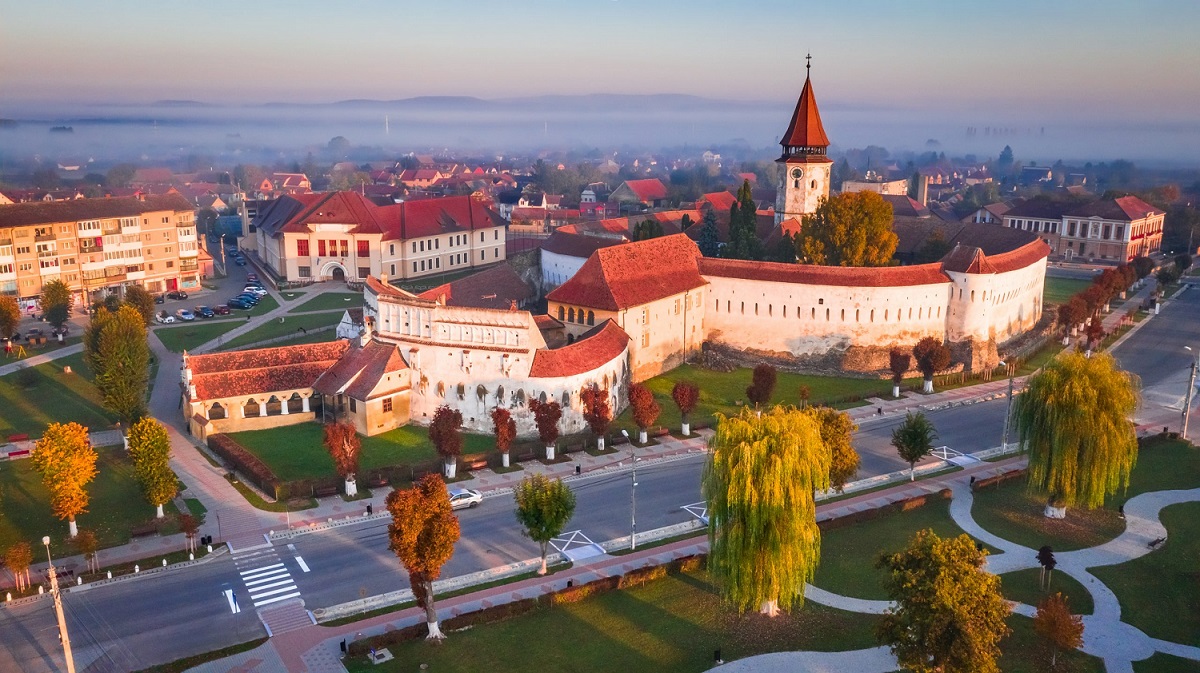
( Source: Compania Apa Brasov )
One advantage of visiting the church is its proximity to other internationally renowned tourist attractions. Only half an hour’s drive away is Râșnov Fortress, one of the best-known peasant citadels in Transylvania, while at a similar distance stands the famous Bran Castle, nicknamed “Dracula’s Castle.” Nearby, you will also find mountain resorts such as Poiana Brașov, an ideal destination for ski and winter sports enthusiasts. Less than an hour to the northeast lies the town of Sfântu Gheorghe, with its special charm and strong Székely cultural identity. Thus, Prejmer can become the central point of a trip that blends history, nature, and the traditions of various Transylvanian communities.
Access to Prejmer is simple and fast, making it attractive for both Romanian and foreign visitors. From Brașov, the drive takes about 20 minutes along the national road DN11, which connects the city to Târgu Secuiesc. For those not traveling by car, there are convenient alternatives: regular bus and train services reach the small Prejmer station, from where the church is only a short walk away.
For international visitors, the closest airport is Brașov-Ghimbav International Airport, located about 30 kilometers away, recently inaugurated and designed specifically to facilitate tourist access to the treasures of Transylvania. If needed, Prejmer can also be reached via Sibiu International Airport (140 km away) or Henri Coandă International Airport in Bucharest-Otopeni (around 180 km).

( Source: Biserica Fortificată din Prejmer )
Beyond its geographical advantages and good infrastructure, Prejmer stands out for its peaceful atmosphere, typical of Saxon villages. Visitors here discover not only a world-class historical site but also a place where time seems to flow differently, with the calm rhythm of rural life, where traditional houses, quiet lanes, and natural landscapes create the perfect setting for cultural exploration.
Thanks to its privileged location and exceptional accessibility, the Fortified Church of Prejmer is not just a destination in itself but also an ideal starting point for exploring the Brașov area and all of Transylvania—a place where history intertwines with the beauty of nature and the warmth of local hospitality.
History of the Fortified Church of Prejmer
Today, the Fortified Church of Prejmer remains not only a symbol of Transylvania and Saxon heritage but also a destination that captivates with its authenticity, history, and grandeur. For anyone traveling through Brașov County, a visit here is more than a simple tourist stop—it is an unforgettable experience that connects you to the past and reveals one of medieval Europe’s best-kept secrets.

( Source: miniCalatorii )
The village of Prejmer has an eight-century-old history, first documented in 1240, shortly after the Teutonic Knights were tasked by King Andrew II of Hungary with defending Țara Bârsei. They brought not only military expertise but also Western architectural influences that left a lasting mark on the region. Although the knights were expelled in 1225, the beginnings of the church’s construction remained tied to their activity and to the Cistercian order, which inspired its original plans.
( Source: Reddit)
The Evangelical church in Prejmer was built in the early Gothic style, based on a Cistercian “Greek cross” plan. It is believed that architects and craftsmen from Burgundy and the Upper Rhine contributed to its construction, given the similarities with other Cistercian structures in Western Europe. In the 15th century, as Ottoman and Tatar attacks intensified, the church was heavily fortified, transforming from a simple place of worship into a true defensive bastion.

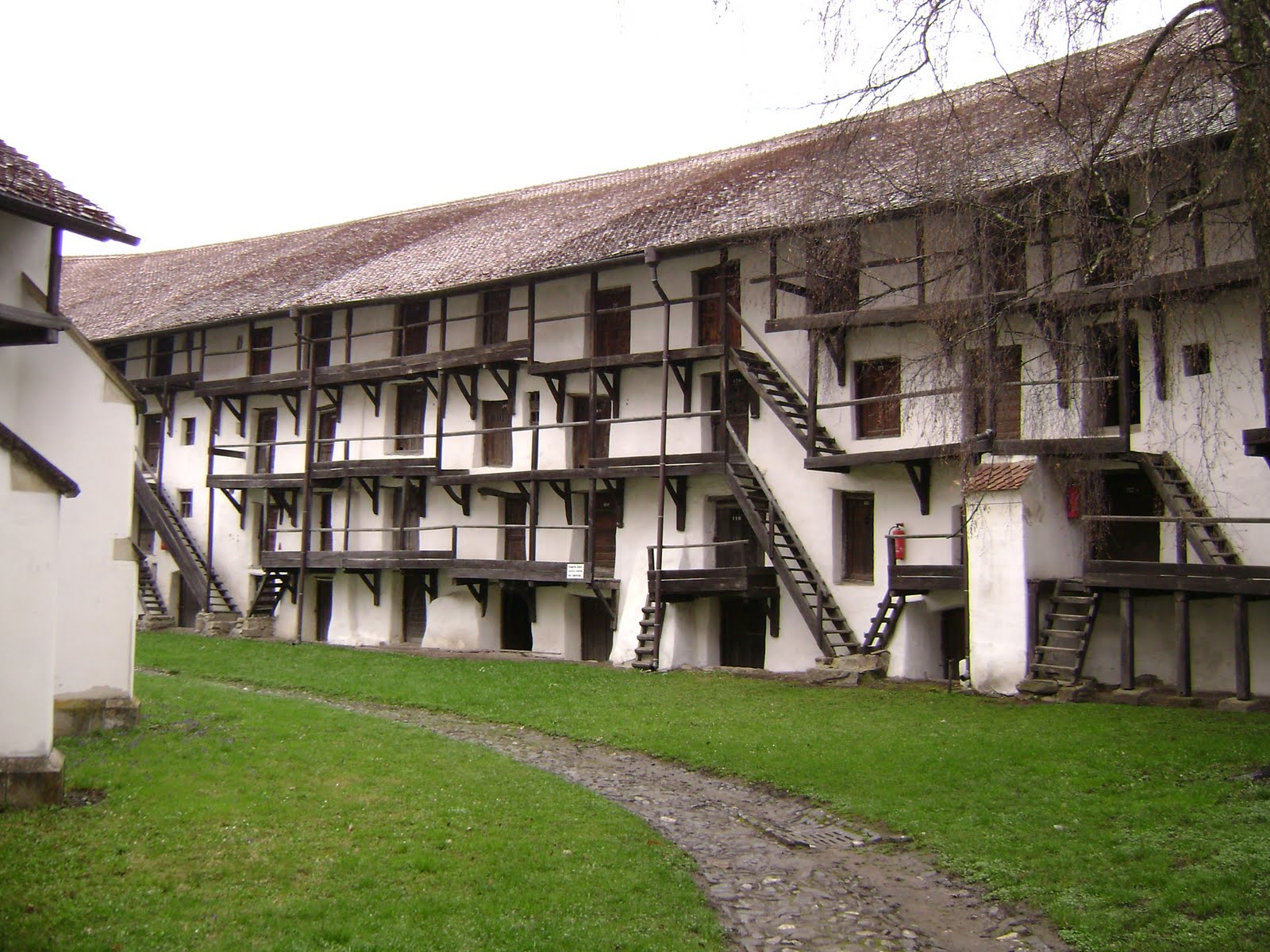
The fortification took shape gradually, over several stages. The outer walls, built of stone and brick, were raised to 12 meters in height and thickened to nearly 4 meters at the base, ensuring resistance against medieval artillery. They were fitted with defensive towers, bastions, firing slits, and an ingenious system of interior corridors. The main entrance was secured by a long, dark access tunnel—nicknamed the “Corridor of Death”—designed to slow down and expose invaders. Inside, the enclosure was organized with over 270 rooms arranged on 3–4 levels, where village families stored food, weapons, and valuables, making it possible to withstand long sieges.

The strategic importance of the complex is proven by the fact that Prejmer was attacked more than 50 times throughout its history—yet the fortification was never conquered by force. Architecturally, the church itself preserves clear Gothic elements: solid buttresses, tall pointed-arch windows, and a sober interior characteristic of the Cistercian tradition. In later centuries, the structure was continually adapted, and its role gradually shifted. While in the Middle Ages the fortified church was primarily a military refuge, in modern times it remained a symbol of the Saxon community’s identity in Prejmer, serving as both a place of worship and a site of collective memory.
( Source: Turist Agrement )
Over the centuries, the fortification was owned and managed by the Saxon community of Prejmer, organized under the Evangelical Church. The fortress was maintained and used by locals until the 19th century, when the threat of invasions disappeared. Following partial depopulation of the area and the massive emigration of Saxons in the 20th century, the church came under the care of the Evangelical Church of the Augsburg Confession in Romania, which still administers it today.

At present, the ensemble has been part of the UNESCO World Heritage
Heritage List since 1999 and is internationally recognized as the strongest complex of its kind in Southeastern Europe. Its highest distinction, however, came with its inclusion in the famous Michelin Green Guide, where it received three stars—the top recognition, awarded only to sites that are deemed “worth a special journey.”
What Is the Michelin Guide?
For many, the name Michelin is synonymous with gastronomic excellence. Yet few know that the story of the famous guide began more than a century ago, in a very different context.
In 1900, brothers André and Édouard Michelin, founders of the Michelin tire company in France, published the very first Michelin Guide. Their idea was simple yet ingenious: to encourage automobile travel—at the time a luxury for only a few—by offering drivers practical information about routes, gas stations, mechanics, hotels, and places to eat. Thus, the guide was not born as a tool for gastronomic evaluation, but as a resource meant to promote mobility and, implicitly, tire sales.

( Source: Business Magazine)
As cars became more accessible and travel became more frequent, the guide evolved. In the 1920s, it began including detailed reviews of restaurants and hotels, employing anonymous inspectors for the first time, who visited locations and scored their experiences based on clear and consistent criteria. Out of the desire to standardize these evaluations, the Michelin star system was born, introduced in 1926 for restaurants.
Initially, there was only one star, but in 1931, the system was refined into the three-tiered scale we know today:
-
One Michelin star – “a very good restaurant in its category.”
-
Two Michelin stars – “excellent cooking, worth a detour.”
-
Three Michelin stars – “exceptional cuisine, worth a special journey.”
Over time, the Michelin Guide expanded beyond gastronomy, eventually including tourist and cultural attractions through what is known as the Michelin Green Guide. This guide rates cities, museums, monuments, and historical sites using the same star system. Thus, a three-star site is not merely recommended, but considered so valuable that it justifies a dedicated trip.
The fact that the Fortified Church of Prejmer received three Michelin stars in the Green Guide is an extraordinary recognition of its universal value, placing it alongside world-famous attractions such as the Eiffel Tower or the Colosseum in Rome. What mattered was not only its history and architecture but also the authenticity and uniqueness of the experience it offers visitors.
Today, Michelin continues to symbolize quality, and its stars—whether culinary or cultural—remain among the most respected and sought-after distinctions worldwide.
What the Three Michelin Stars Mean for Prejmer
Earning three Michelin stars is the highest recognition a tourist attraction can receive in the Michelin Green Guide. This distinction is not awarded lightly and, according to Michelin’s methodology, it indicates that the site is “worth a special journey.” In other words, it is not just an interesting stop along a broader itinerary, but a destination that, through its historical, architectural, and cultural value, alone justifies planning a trip.
Today, the Fortified Church of Prejmer is the only site in Romania to have received this ultimate recognition, placing it alongside universal heritage landmarks such as Notre-Dame de Paris, the Alhambra in Granada, or Mont Saint-Michel. This distinction transforms Prejmer from a place “to visit if you are in the area” into a standalone destination of international value.
( Source: Hot News )
The Fortified Church of Prejmer is not just a historical monument but also a symbol of resilience, medieval ingenuity, and Saxon cultural heritage. Its recognition with three Michelin stars places this destination firmly on the map of universal heritage, alongside Europe’s most famous landmarks. Yet beyond distinctions and its imposing walls, Prejmer remains a place that captivates through authenticity—a space where you can feel the pulse of the past, where every stone, every refuge chamber, and every architectural detail tells a story of people, faith, and survival.
For Romania, the three Michelin stars are both a confirmation of the richness and diversity of its cultural heritage and an invitation for travelers worldwide to discover the authentic beauty of Transylvania.
Whether you are passionate about history, medieval architecture, or simply seeking a place to experience the true tranquility of Transylvanian villages, Prejmer deserves not just a visit, but a special journey—exactly as the Michelin stars affirm.