Travel Ideas
The best places to escape the heat this summer

Fortunately, Romania is full of natural hideaways where the thermometer doesn’t climb dizzyingly high and the landscapes are more breathtaking than any desktop background.
Whether you prefer the shade of cliffs in a wild gorge, the cool altitude of an alpine road, or the constant freshness of an underground salt mine, the country offers excellent options to help you stay energized and in a good mood throughout the summer. You don’t have to go abroad to experience fresh air and natural coolness — it’s all just a few hours away from anywhere in Romania.
In this article, we’ll introduce you to four refreshing destinations that are perfect for a weekend escape or even a completely different kind of holiday:
- Vârghiș Gorges (Cheile Vârghișului), hidden in the heart of Covasna County — a spectacular trail through dense forests, caves, and hanging bridges, where steep cliffs block out the sun;
- Transfăgărășan, the famous alpine road that climbs above 2,000 meters, where the air is thinner and lakes like Bâlea provide invigorating coolness in the middle of summer;
- Red Lake (Lacul Roșu), a natural gem formed by a landslide, surrounded by cool mountains and easy hiking trails that can be enjoyed even on the hottest days;
- Turda Salt Mine (Salina Turda), a spectacular underground world with a constant temperature of 12–13°C — a welcome escape from the heat, plus real health benefits.
Each of these places offers more than just bearable temperatures – they give you access to adventure, movement, relaxation, and peace. These are places where nature retains its raw power, and you can rediscover your balance without suffocating in the scorching heat of the lowlands.
If summer wears you out, maybe it’s time to turn it into a different kind of experience: cooler, closer to nature, and healthier.
Vârghiș Gorges – cool air, wilderness and adventure in a hidden corner of Transylvania
If you're dreaming of a place to cool off in the middle of nature, far from the crowds yet full of spectacular views, the Vârghiș Gorges are a perfect choice. Located on the border between Covasna and Harghita counties, in the Perșani Mountains area, these dramatic gorges are part of the “Vârghiș Gorges – Vârghiș Hill” nature reserve, one of Romania's most scenic and lesser-known natural destinations.

(Source: Blogul de calatori)
The gorges were formed by the erosion of the Vârghiș stream in the mountainous limestone of the area, resulting in a succession of steep cliffs, caves, natural tunnels, and narrow passages that offer visitors an adventurous and refreshing route. Due to the karst terrain, the canyon has vertical walls up to 200 meters high that filter sunlight, maintaining a consistently cooler temperature and natural shade, making the walk extremely pleasant even on scorching days.
The tourist trail, about 4 kilometers long (round trip), is well arranged, accessible, and captivating. Along the way, you will cross over 10 wooden and metal suspension bridges, walk on dirt and rocky paths, pass through cool beech forests, and admire numerous natural caves, the best known being the Great Cave of Merești (one of the largest caves in the area) and the Peștera Șura Cailor.
The place is often considered a hidden treasure of Transylvania – far from massive tourist flows but incredibly well preserved and wild. The air is clean, the flora diverse, and the fauna – including bats and cliff-dwelling birds – makes this area a natural reserve of scientific and ecological interest. In fact, there are over 120 caves and grottos here, some of them hard to access, but all adding to the charm of the place and its status as a speleological paradise.
What truly makes the Vârghiș Gorges special is the unique sense of isolation – you feel cut off from the world but deeply connected to nature. Along the entire trail, you hear only the sound of flowing water, the rustle of the forest, and occasionally the footsteps of another hiker. It’s the ideal place for a one-day mini adventure where you can recharge your batteries without phone signal or city noise.
Nearby are several traditional Székely villages, such as Merești, where you can taste local products or stay overnight in a rustic guesthouse. And if you love photography, you will find dramatic, contrasting sights here with steep cliffs, suspension bridges, and rays of light filtering through the forest canopy.
Transfăgărășan – Cool Air, Altitude, and Alpine Drama on Romania’s Most Spectacular Road
If you're dreaming of an escape from the suffocating summer heat that combines the coolness of the mountains with unforgettable scenery, the Transfăgărășan is one of the most breathtaking and refreshing options in Romania. Famously dubbed “the best road in the world” by the British show Top Gear, the Transfăgărășan is an experience in itself – a blend of adventure, natural beauty, and modern history that leaves a lasting impression.
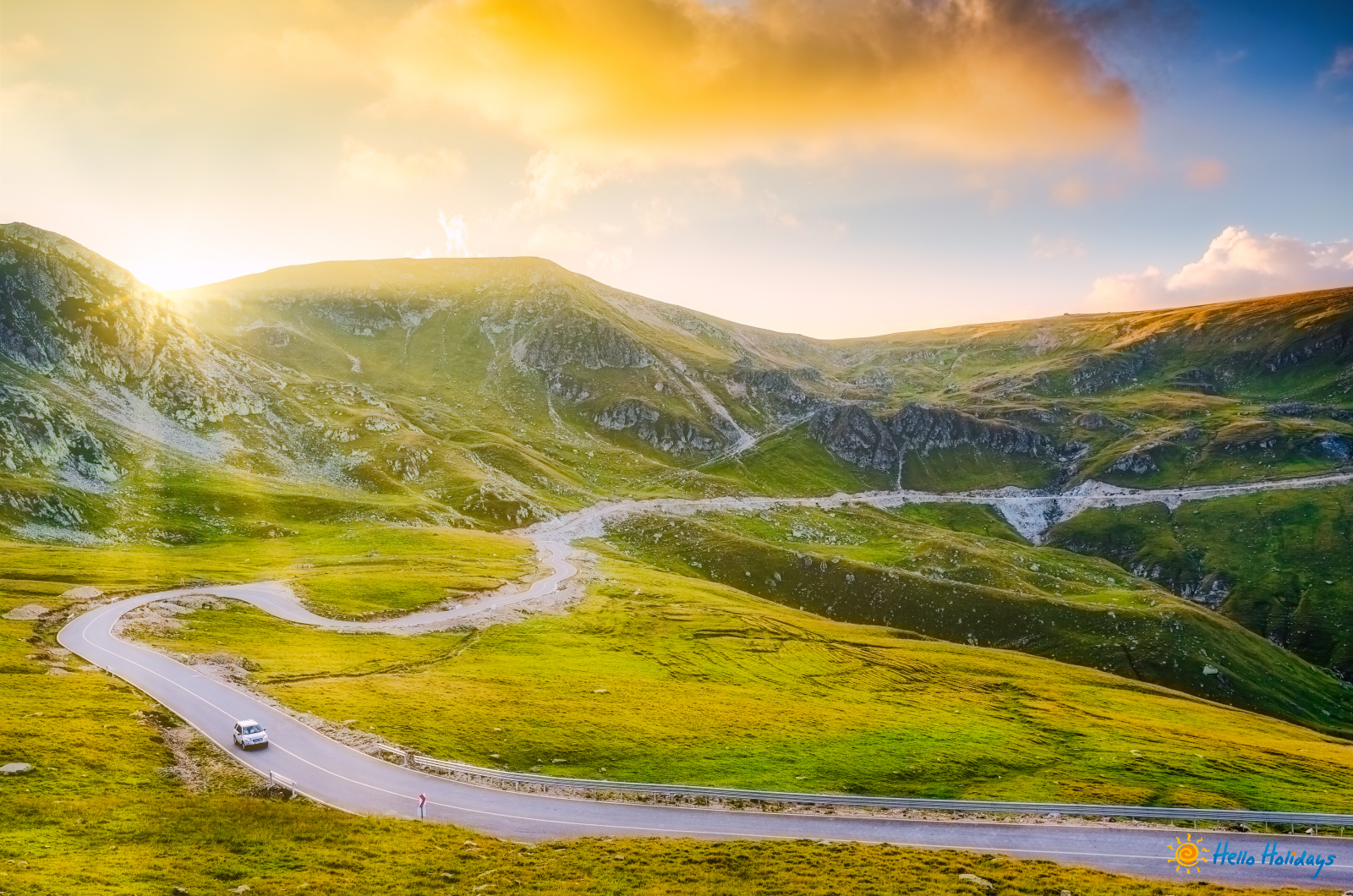
(Source: Hello Holidays)
Built between 1970 and 1974 during the communist regime, the Transfăgărășan was originally designed as a strategic military road, capable of allowing the rapid movement of troops across the Carpathians in the event of a conflict. It was an ambitious and extremely difficult project, carried out under harsh conditions, with significant human and financial sacrifices. Today, however, it stands as a symbol of Romanian engineering and one of the country’s most spectacular tourist attractions.
The road crosses the Făgăraș Mountains, the highest in Romania, connecting Argeș County with Sibiu County, and rises to an altitude of over 2,000 meters near Lake Bâlea. Due to this altitude, temperatures on the Transfăgărășan are significantly lower than in the rest of the country, making it a cool oasis during the hot months of July and August.
Among the most important attractions along the route are:
- Lake Bâlea, a glacial lake situated at over 2,000 meters altitude, surrounded by dramatic peaks and fresh air. In summer, its shores are perfect for a picnic, a walk, or, for the brave, even a quick swim;
- Bâlea Waterfall, one of the most spectacular waterfalls in Romania, accessible via an easy trail of about one hour;
- Capra–Bâlea Tunnel, the longest road tunnel in Romania, piercing through the mountain for 884 meters and offering a unique sensation when passing between the two slopes;
- Vidraru Dam, an impressive engineering monument located on the southern part of the road, where you can admire the artificial lake from the footbridge or the observation tower;
- Poenari Fortress, the legendary refuge of Vlad the Impaler, perched on cliffs and accessible by climbing over 1,400 steps.
Besides these attractions, the entire route is a visual destination in itself: dramatic hairpin bends, dizzying viewpoints, dense forests at the foothills, and steep cliffs at altitude. It’s a perfect road for passionate drivers, hiking enthusiasts, nature photographers, or simply anyone looking for coolness and unforgettable landscapes.
The Transfăgărășan is open only during the warm season, usually from June to October (depending on weather conditions), so summer is the ideal time to visit. Whether you drive it all the way or just stop at Lake Bâlea, you will immediately feel the difference in temperature and atmosphere compared to the lowland areas.
Lake Roșu – tranquility, legend, and coolness in the heart of the Eastern Carpathians
Located at the foot of the Hășmaș Mountains, in Harghita County, Lake Roșu is one of Romania’s most picturesque and mysterious mountain destinations. Situated at an altitude of approximately 980 meters, near the Bicaz Gorges, the lake is surrounded by coniferous forests and steep cliffs that create a spectacular backdrop and a cool atmosphere even on the hottest summer days.
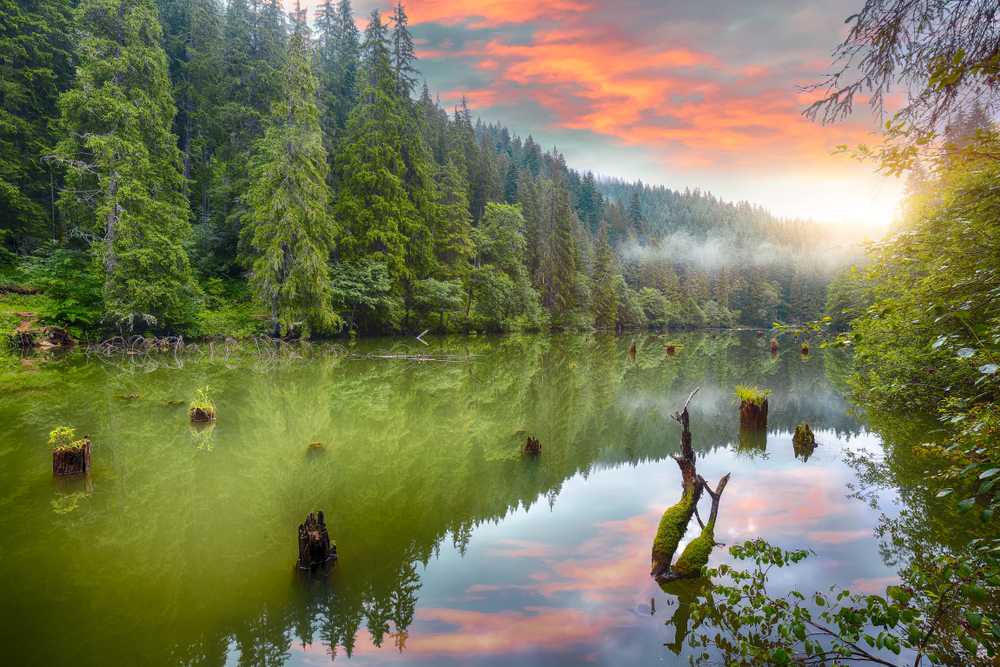
(Source: Libertatea)
The lake was naturally formed in 1837 as a result of a landslide that blocked the course of the Bicaz River, flooding a fir forest. The tree trunks, frozen vertically in the water, can still be seen today emerging from the calm surface of the lake, giving the landscape a mythical, almost unreal air. This is where the unique charm of the place comes from: the feeling that you are looking at a submerged forest, frozen in time.
Its name – "Roșu" (Red) – comes from the reddish soil brought by the mountain waters, but also from local legends about a young girl whose red dress was swallowed by the lake after an earthquake. Like many spectacular places in Romania, Lake Roșu is surrounded by stories and symbols that enhance the charm of a visit.
Surrounded by spruce forests and tall cliffs, the lake offers an oasis of calm, ideal for active relaxation. You can rent leisure boats and paddle on the water, in the middle of the “drowned forest,” silently admiring the reflection of the mountains. Around the lake, there are marked easy hiking trails to attractions such as "Gyilkos Rock" (nicknamed the “Sleeping Bear”), the Bicaz Gorges, or the Cupaș Basin, all perfect for cool hikes in the fresh mountain air.

(Source: Comuna Bicazu Ardelean)
The area is well equipped for tourists, with guesthouses, terraces, local product shops, and picnic zones. Even so, the place has not lost its authentic charm: mornings are quiet, the forest echoes with birdsong, and the morning mist rising over the water creates an almost mystical atmosphere.
Red Lake is an excellent destination for those seeking a balance between relaxation, activity, and contemplation. It is ideal for families, romantic couples, as well as photography enthusiasts or legend lovers.
Salina Turda – coolness, fresh air, and a spectacular underground world
If you’re looking to escape the summer heat in a truly unique and healthy way, Salina Turda is probably one of the most fascinating options in Romania. Located in Cluj County, in the heart of Transylvania, this former salt mine turned tourist attraction is a spectacular example of historical and architectural reconversion – and also a true cool refuge, with constant temperatures of 12–13°C throughout the year.
The history of the salt mine dates back to Roman times, when salt was manually extracted in the area, with the most significant developments occurring in the 17th–19th centuries, when the galleries and extraction chambers took the shape we can admire today. After mining operations ceased in 1932, the place was abandoned for a while, but it was reopened to the public in the 1990s and quickly became one of the most visited tourist attractions in Romania.

(Source: Tripadvisor)
What truly makes the Turda Salt Mine special is the way the old mine has been transformed into a futuristic yet natural space, without losing the authenticity of the place. Visitors can admire:
-
Rudolf Hall, immense and spectacular, where you’ll find an actual underground amusement park, with a panoramic wheel, ping-pong tables, mini-golf, bowling lanes, and even an amphitheater for concerts;
-
The lake in the Terezia Mine, where you can take a boat ride in a lunar-like setting, with salt stalactites hanging above the water;
-
Franz Josef Gallery, a long and peaceful area where you can walk at your own pace and fully experience the benefits of the salty air;
-
The Salt Waterfall, a natural formation that catches the eye with its texture and lighting;
-
Panoramic elevators and spiral staircases, which take you between the mine levels and offer unique perspectives of the entire structure.
Beyond the visual spectacle, the Turda Salt Mine is known for its therapeutic properties. The air inside is extremely clean, free of allergens and bacteria, and is recommended for treating respiratory conditions. Visiting the mine is not just a tourist experience, but also beneficial to your health – especially for those suffering from asthma, sinusitis, or allergies.
Located just a few kilometers from the city of Turda and about 40 minutes from Cluj-Napoca, the salt mine is easily accessible and well connected. Nearby, you can also explore natural attractions such as Turda Gorge, or enjoy authentic Transylvanian cuisine in local restaurants.
Conclusion
Summer doesn't have to mean just heatwaves, crowds, and exhaustion. Romania offers spectacular and refreshing alternatives, perfect for those seeking peace, fresh air, and unforgettable experiences. Whether you choose to explore the forests and caves of the Vârghiș Gorges, breathe in the thin air along the Transfăgărășan highway, relax by the shores of the Red Lake, or immerse yourself in the cool silence of the Turda Salt Mine, you'll discover that coolness can be more than a refuge – it can be an essential part of the perfect holiday.
These destinations are not just places to “escape the heat,” but true experiences where nature, health, and beauty come together in harmony. Leave the city behind, take a deep breath, and enjoy Romania at a pleasant temperature – closer than you think, and more spectacular than you expect.