Idei de călătorii
The most breathtaking natural reserves in Romania
In today’s fast-paced, urbanized world—where noise, crowds, and constant motion have become the norm—many of us crave an escape. Not just a vacation, but a return to places where nature still feels alive, authentic, and untouched. Romania, blessed with remarkable landscapes and extraordinary biodiversity, offers exactly that: an impressive network of nature reserves and national parks where the balance between man and nature is carefully preserved.
Whether you’re passionate about hiking, photography, camping, wildlife watching, or simply seeking peace and quiet, these protected areas are the perfect backdrop for reconnecting with yourself and the natural world. Here, forests stretch unbroken, wildlife thrives in its natural habitat, and the scenery—whether alpine peaks or shimmering wetlands—will leave you breathless.
In this article, we’re taking you through four of Romania’s most spectacular nature reserves, each with its own identity, charm, and story worth discovering:
The Danube Delta – A Wild Paradise of Water and Birds
Where the Danube ends its 2,800-kilometer journey to the Black Sea lies a land of wonder: the Danube Delta, one of Europe’s—and the world’s—most valuable and spectacular natural reserves. Spanning over 5,000 km², the Delta is not only the second-largest delta in Europe but also the best-preserved.
The Delta’s formation is a slow, ongoing process that began more than 10,000 years ago when the river started depositing sediments at the edge of the Black Sea. Over time, this natural work of art has created a mosaic of channels, lakes, endless reed beds, sandbanks, and floating islands—a diversity of habitats home to an astonishing variety of life.
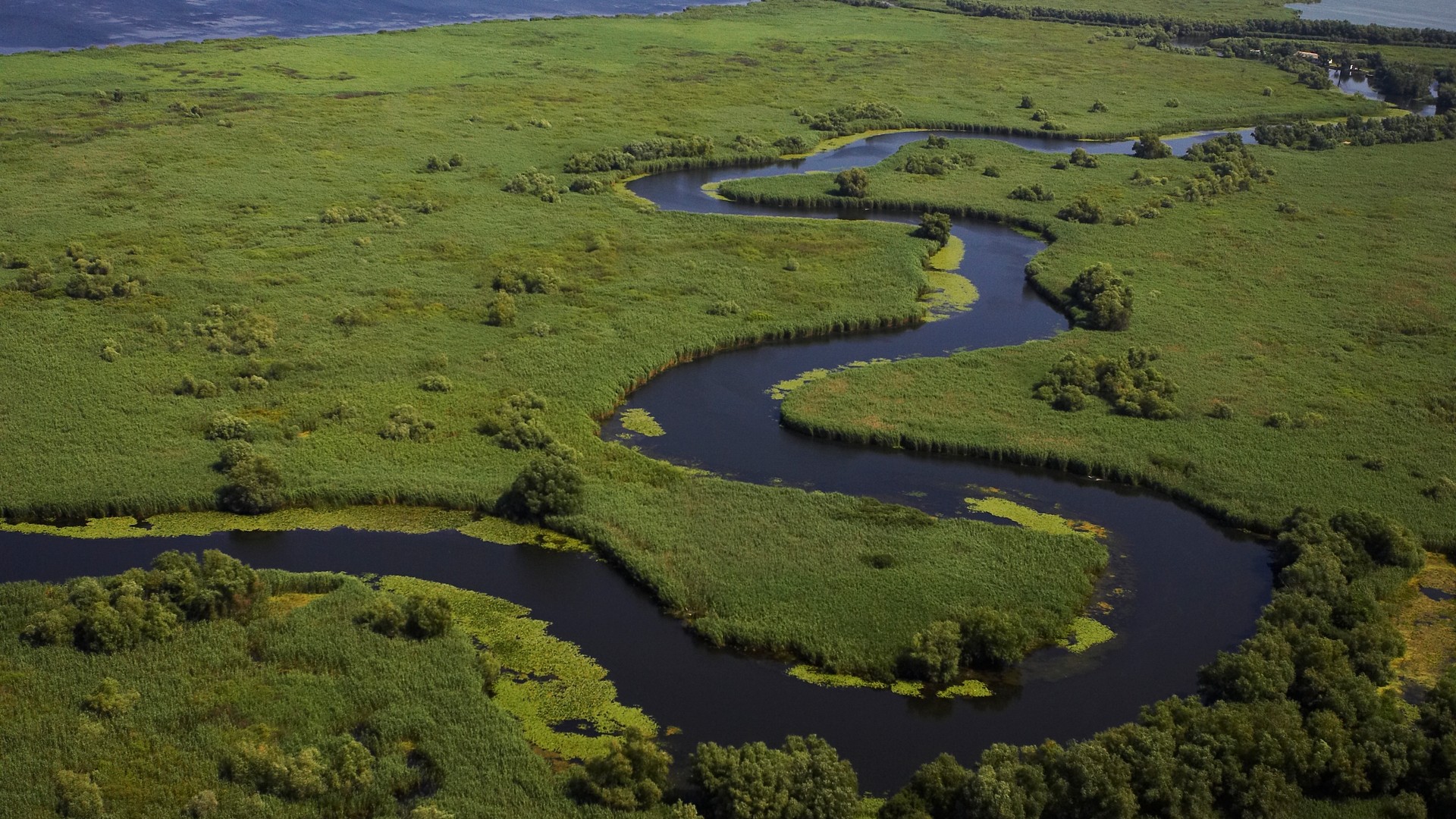
( Source: WWF Romania )
Recognized as a UNESCO World Heritage Site in 1991 and designated a Biosphere Reserve, the Danube Delta shelters over 300 species of birds, including some extremely rare ones such as the Dalmatian pelican, black-winged stilt, great egret, and white-tailed eagle. It is also home to more than 100 species of fish, 1,000 species of plants, and countless insects, mammals, and reptiles that form a truly unique ecosystem.
But the Delta’s magic is not only in its biodiversity—it’s in the atmosphere: a blend of deep silence, slow movement, and untouched beauty. Narrow reed-fringed channels, wide lakes, weeping willows, and the mirror-like reflection of the sky in the water create an almost surreal landscape, one that invites you to slow down and simply watch.
Highlights you shouldn’t miss:
-
Inner channels and lakes (Sulina, Dunavăț, Uzlina, Letea, Matita) that can be explored by boat with local guides
-
Letea Forest, a one-of-a-kind ecosystem that feels like a tropical jungle, is home to wild horses and sand dunes
-
Sfântu Gheorghe Village, perched at the very spot where the Danube meets the sea, a place where time seems to stand still
-
Sacalin Island, a strictly protected, almost untouched sanctuary teeming with wildlife
-
The Danube Delta Museum in Tulcea, the perfect starting point for exploring the region
The Delta is also remarkable for its traditional way of life. The small fishing villages scattered across its sandbanks are accessible only by water. Wooden houses stand on stilts, and the rhythm of life follows the river’s flow. Visitors are encouraged to embrace responsible and eco-friendly tourism: staying in traditional guesthouses, savoring fresh fish dishes, and exploring the labyrinth of waterways by guided boat tours or kayak.
The Danube Delta is more than just a destination—it’s a complete experience. It’s a place where the waters seem to breathe, the sky feels bigger, and silence becomes part of the scenery. Perfect for nature lovers, birdwatchers, photographers, and anyone seeking an authentic escape far removed from the usual vacation routine, the Delta will leave you both inspired and renewed.
Retezat National Park – The Land of Glacial Lakes and Legendary Mountains
In the heart of the Southern Carpathians, nestled between the Jiu Valley and Țara Hațegului, rises a breathtaking mountain realm where jagged peaks pierce the sky and valleys cradle crystal-clear alpine tarns: Retezat National Park. Established in 1935 as Romania’s first national park, it remains one of the most spectacular and best-preserved protected areas in Europe.
What makes Retezat truly special is its almost untouched wilderness. Here, nature reigns supreme: over 20 peaks exceeding 2,000 meters, more than 80 glacial lakes (the highest concentration in the Carpathians), dense forests, alpine meadows, dramatic rock formations, and a stunning diversity of life.
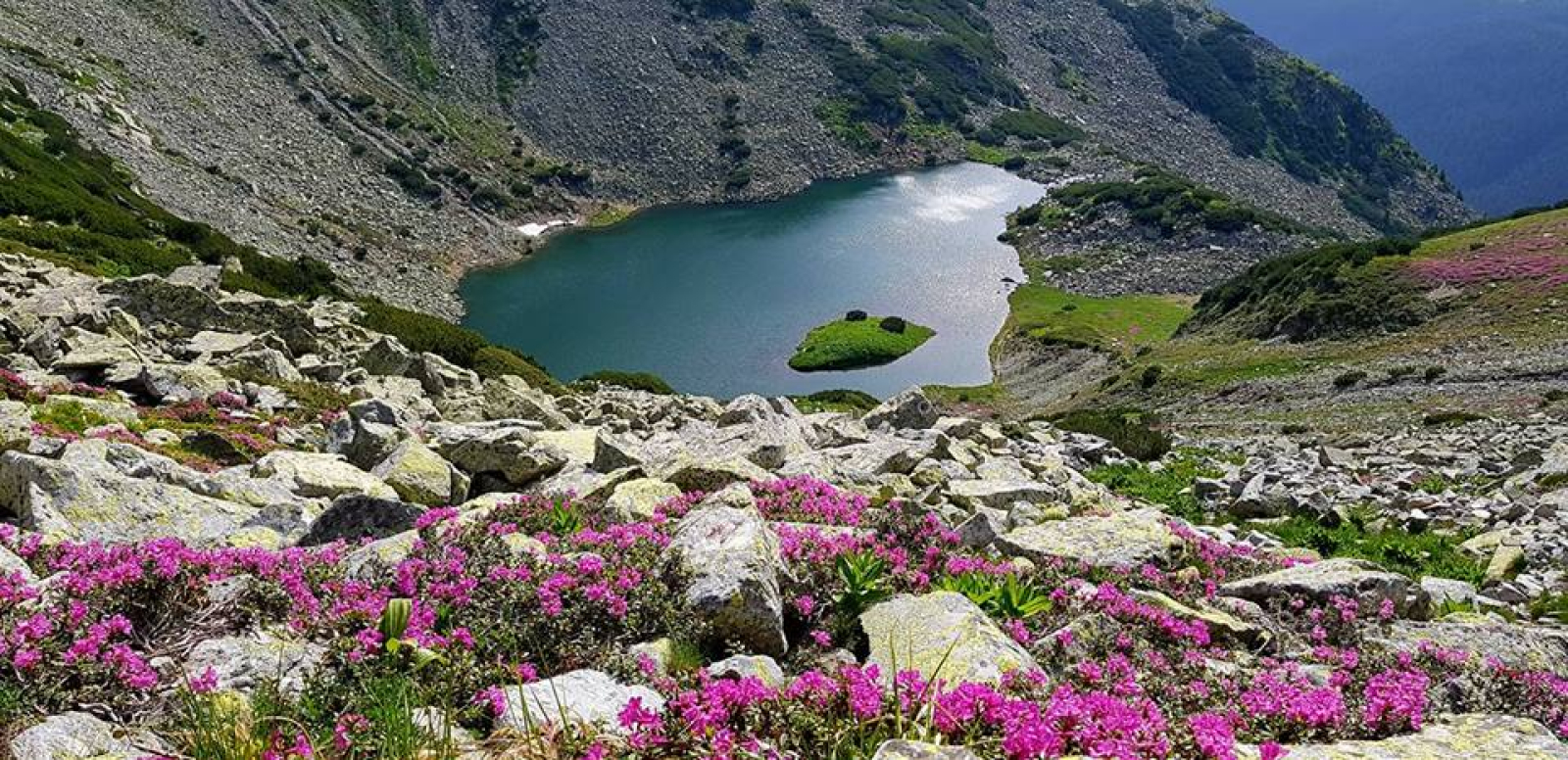
At an altitude of 2,040 meters lies Bucura Lake, the largest glacial lake in Romania—a dream destination for hikers. From here, trails lead to the park’s tallest summits: Peleaga (2,509 m – the highest), Papușa, Custura Bucurei, or Retezatul Mare. On a clear day, the panorama stretches across the entire Carpathian chain, an unforgettable natural spectacle.

( Source: Tribuna )
Retezat is often called “the mountain with blue eyes”, as its alpine lakes mirror the sky in an almost magical silence. Some of the most famous include:
-
Zănoaga Lake, the deepest glacial lake in Romania (29 m)
-
Galeșu Lake, a perfect spot for camping at the forest’s edge
-
The Rea Valley tarns, a string of remote alpine pools in a suspended valley, are difficult to reach but of pure beauty
Beyond the dramatic scenery, Retezat is home to an extraordinarily rich flora and fauna. Over 1,200 plant species thrive here, many rare or endemic, alongside some of Europe’s last large predators: wolves, lynx, brown bears, and golden eagles all roam the vast forests of the park.
This area is ideal for multi-day hikes, mountain camping, photography expeditions, or summer getaways, being relatively easy to reach from the towns of Hațeg, Petroșani, or Hunedoara. A visit can also be combined with a stop at the Țara Hațegului Dinosaur Geopark, where ancient geological history blends seamlessly with the present-day fairytale landscape.
The park is carefully managed, and most trails are well-marked, but many require good fitness and proper gear. This very fact is what keeps Retezat wild and authentic—a place where you can truly feel the raw power of nature.
Bicaz Gorges–Hășmaș National Park – Sheer Cliffs, Winding Roads, and Breathtaking Nature
Located in the central-eastern part of the Eastern Carpathians, straddling Harghita and Neamț counties, Bicaz Gorges–Hășmaș National Park is a geological jewel of Romania and one of the most impressive canyon areas in the entire country. With its dramatic relief and unforgettable scenery, this park is a must-see for lovers of nature, photography, adventure, and tranquility.

( Source: Comuna Bicazu Ardelean )
The park’s centerpiece and most famous attraction, Bicaz Gorges, was sculpted over millennia by the Bicaz River, which carved through the limestone rock to form a spectacular canyon nearly 8 km long. Towering vertical walls, some rising over 300 meters, flank a winding road that seems straight out of a movie, with sharp hairpin bends, tunnels carved into rock, and ever-changing vistas at every turn. It is one of Romania’s most scenic mountain roads, a favorite for photographers and travelers from around the world.
But Bicaz Gorges–Hășmaș National Park is more than just its iconic gorge. The area offers a striking variety of landscapes:
-
Red Lake (Lacul Roșu) – formed naturally after a landslide in 1837, surrounded by conifer forests and dramatic mountain peaks. The submerged tree trunks rising from its waters create a truly magical scene.
-
Altar Stone (Piatra Altarului) – at 1,154 m, one of the most imposing vertical walls in the Eastern Carpathians and a legendary climbing spot.
-
Hășmașul Mare Peak (1,792 m) – the park’s highest summit, offering sweeping panoramas over the Eastern Carpathians in a peaceful and less-traveled setting.
-
Piatra Singuratică (The Solitary Rock) – an isolated rock formation and symbol of the park, attracting hikers with its striking shape and accessible trail.
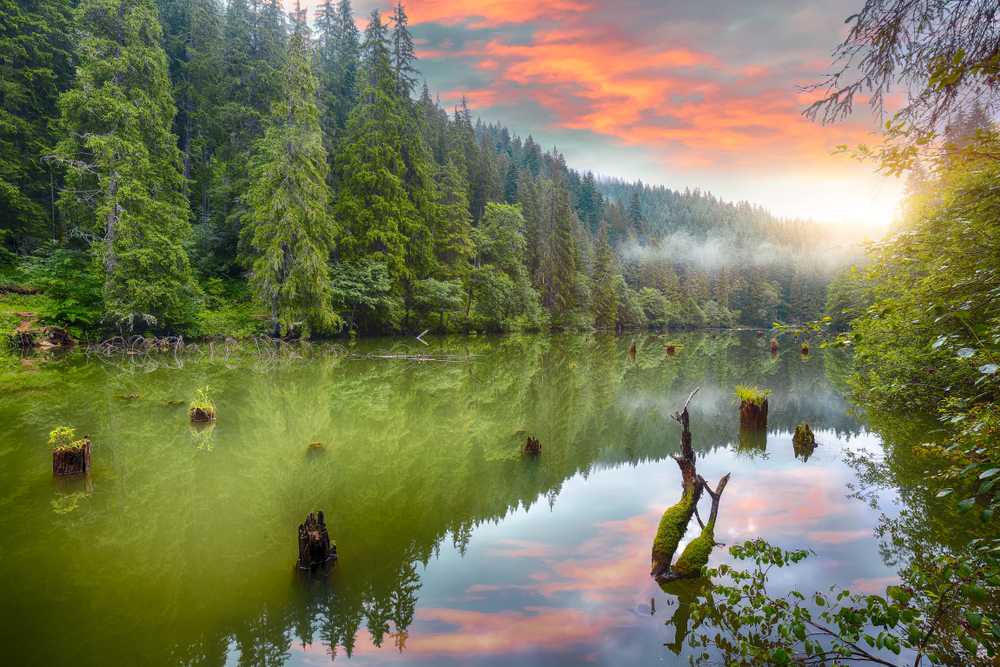
( Source: Libertatea )
The park is a true biodiversity sanctuary, home to more than 1,100 plant species and a diverse fauna, including rare species such as the capercaillie, brown bear, lynx, wolf, and golden eagle. Beyond its natural wealth, the area has a strong cultural identity, inhabited by both Hungarian and Romanian communities who preserve authentic traditions and warm hospitality.
Hiking trails are plentiful and varied, ranging from gentle walks around the lake or through the gorges to moderate climbs toward the Solitary Rock or Hășmașul Mare Peak. The park is easily accessible from towns like Gheorgheni, Bicaz, or Miercurea-Ciuc, and the surrounding area offers numerous mountain guesthouses, campsites, and tourist information centers.
Rodnei Mountains National Park – Towering Peaks, Glacial Lakes, and Untamed Wilderness in Romania’s North
Stretching across Maramureș and Bistrița-Năsăud counties, Rodnei Mountains National Park is one of Romania’s most spectacular and diverse protected areas. Founded in 1990 and declared a UNESCO Biosphere Reserve in 1979, this park is a true treasure of mountain biodiversity, featuring dramatic landscapes, challenging trails, and a level of wilderness rarely found in Central Europe.
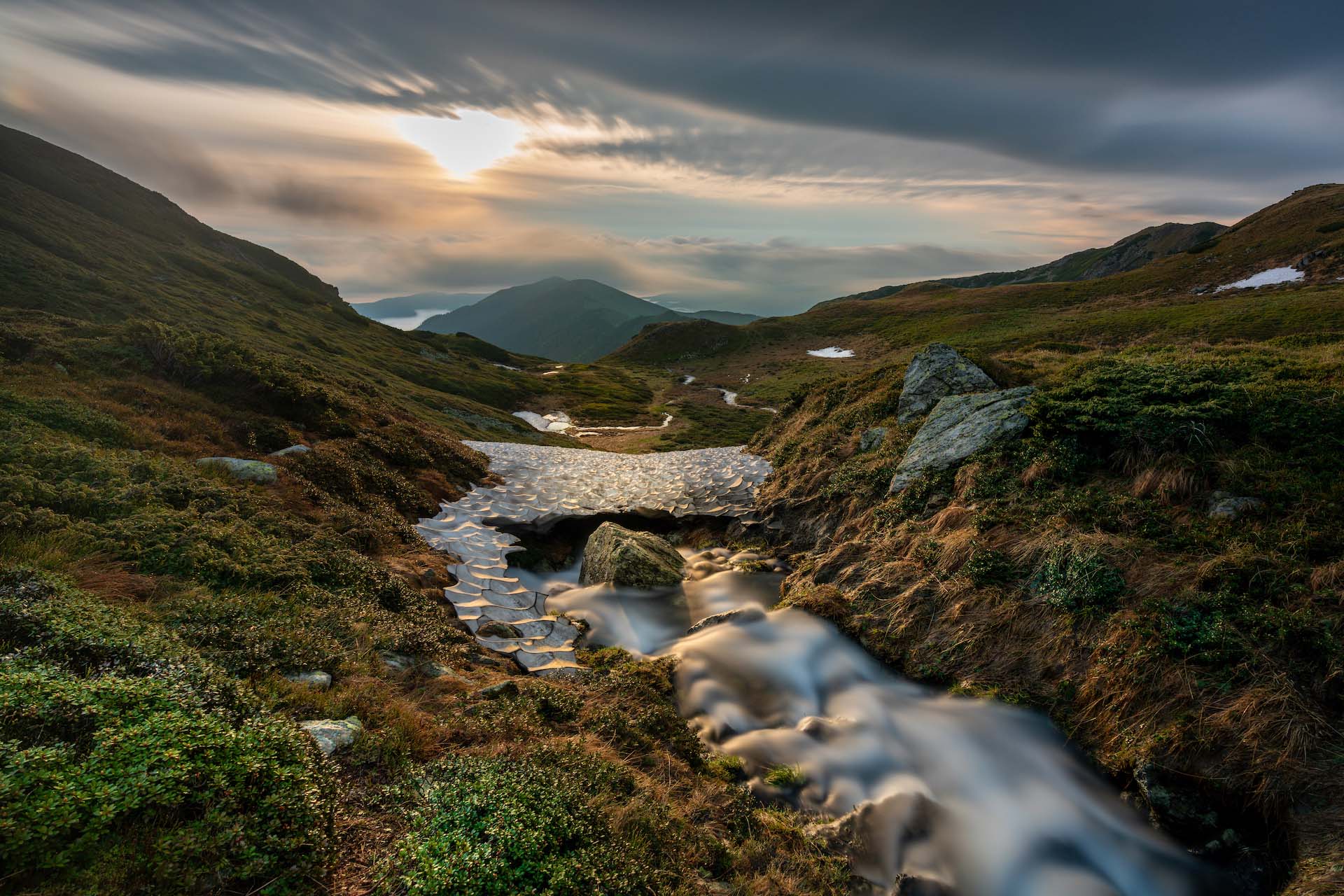
The Rodnei Mountains are the highest mountain range in the Eastern Carpathians, dominated by Pietrosu Mare Peak (2,303 m)—a rugged giant offering breathtaking panoramas over historic Maramureș and Bucovina. The summit can be reached via a marked trail starting from Borșa, one of the main access points to the park. From here, you can also set off toward other must-see attractions, such as:
-
Iezer Glacial Lake – nestled in a cirque at the foot of Pietrosu, famous for its near-perfect round shape and crystal-clear waters
-
Horses’ Waterfall (Cascada Cailor) – the tallest waterfall in Romania (90 m), easily accessible via chairlift from the Borșa resort, offering Alpine-like scenery
-
Ineu Peak (2,279 m) – with its rugged ridge, one of the wildest and most remote alpine routes in the Carpathians
-
Cobășel Cave – a mysterious karst system, little explored but fascinating for speleology enthusiasts
What makes Rodnei Mountains National Park truly special is its combination of high altitudes, vast ridge trails, and invaluable biodiversity. Rare species such as chamois, capercaillie, marmots, and golden eagles roam freely here, while the flora includes endemic and glacial relict plants such as edelweiss, globe-flowers, and mountain pine.
This is an ideal destination for day hikes, multi-day backpacking trips, or photography tours, where the morning light reveals the mountains’ pure, sculpted lines. The lack of aggressive tourist infrastructure keeps the park in an almost pristine state, offering visitors an authentic, unspoiled wilderness experience.
The park is also surrounded by traditional rural communities—villages of historic Maramureș where you can experience warm hospitality, wood-fired home-cooked meals, centuries-old customs, and a slower pace of life that feels like stepping back in time.
Conclusion
In a country where mountains, water, and forests coexist in harmony, Romania’s nature reserves are far more than simple tourist destinations—they are true lessons in balance, beauty, and respect for the environment. From the labyrinth of waterways in the Danube Delta to the sharp peaks of Retezat and Rodnei, or the towering walls of the Bicaz Gorges, these places keep alive the deep connection between people and nature.
Whether you’re seeking an escape from everyday life, a trail that will test your limits, or simply a quiet corner where you can breathe fresh air, Romania’s national parks and reserves offer exactly what you need. They are places that educate, inspire, and heal, bringing us closer to what truly matters.
So, if you want your next journey to mean more than just beautiful photos—to be an authentic experience in the heart of untamed nature—don’t hesitate to explore these protected areas. You’ll discover not only unforgettable landscapes, but also a calmer, more present, and freer version of yourself.
Romania is home to places of rare beauty. All you have to do is… seek them out where nature still speaks freely.