Travel Ideas
The Most Impressive Caves in Romania
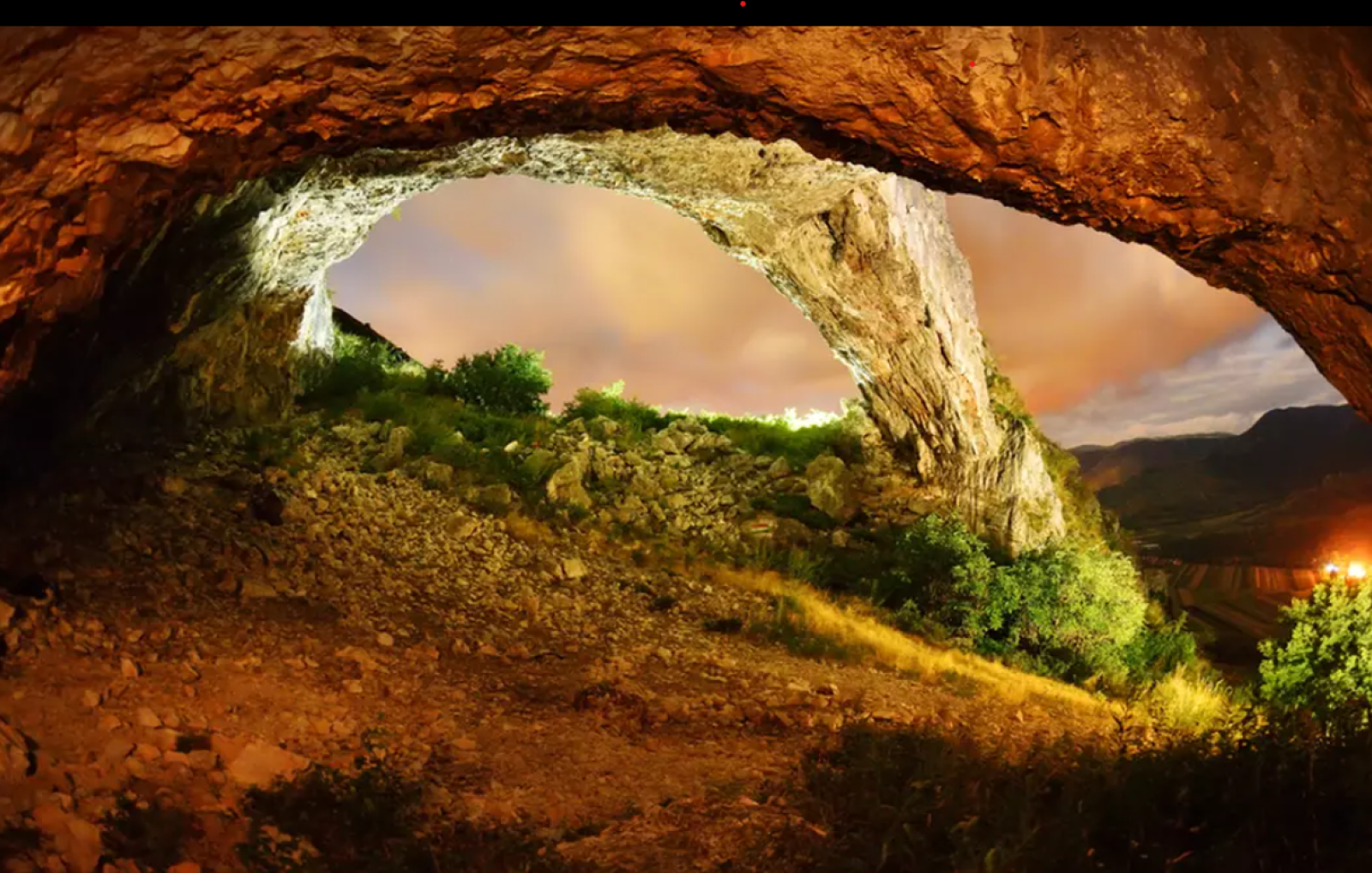
Shaped over millions of years by water, time, and spectacular geological processes, Romania’s caves offer not only stunning views but also a journey into a mysterious, tranquil, and story-filled world.
With over 12,000 discovered caves, our country is one of the richest in Europe in karst formations. Whether we talk about caves with ice thousands of years old, galleries adorned with impressive stalactites, or places with immense archaeological value, Romania is a must-visit destination for nature lovers, adventurers, and science enthusiasts.
:contrast(8):quality(75)/https://static4.libertatea.ro/wp-content/uploads/2021/12/pestera-scarisoara-1024x756.jpg)
(Source: Libertatea)
In this article, we aim to take you through four of the most spectacular caves in Romania, each with its unique charm and easily accessible to the general public:
- Scărișoara Cave: located in the heart of the Apuseni Mountains, houses one of the largest underground glaciers in the world – a spectacular ice cathedral accessible year-round.
- Urșilor Cave: in Bihor County, is renowned for its artistically illuminated galleries and the numerous naturally preserved cave bear fossils dating back over 15,000 years.
- Comarnic Cave: hidden in the wilderness of the Semenic Mountains, is one of the longest and least commercial caves open to visitors in Romania – an authentic place for those seeking peace and genuine discoveries.
- Muierii Cave: in Gorj County, is not only a spectacular tourist attraction but also an important archaeological site – the place where traces of the oldest modern woman in Europe were found.
Each of these caves has its own story, its unique kind of beauty, and its own way to amaze you: whether through ice that never melts, natural limestone pillars formed drop by drop, or the deep silence that makes you feel like you’ve stepped into another world.
If you’re looking for a different kind of adventure, a cool place to escape the scorching summer days, or simply want to connect more deeply with nature, a visit to one of these caves will offer you an authentic, spectacular, and memorable experience.
Let’s start our underground journey and discover the hidden beauties of Romania!
Scărișoara Cave – the Ice Cathedral in the Heart of the Apuseni Mountains
Hidden in the heart of the Apuseni Mountains, amidst a spectacular mountain landscape, lies one of the most fascinating caves in Romania and Europe: Scărișoara Cave. Known primarily for its underground glacier that is thousands of years old, the cave is not only a tourist attraction but also a unique natural monument that impresses with its mystery, size, and special climate.
Scărișoara Cave is located in Alba County, at an altitude of over 1,100 meters, in the village of Gârda de Sus, and is easily accessible to visitors. What makes it truly special is that it shelters the largest underground glacier in Romania and the second largest in Europe, with an estimated volume of over 75,000 cubic meters of ice. Studies have shown that this glacier is more than 3,500 years old, and the constant temperature inside the cave is 0°C, even in the middle of summer.
The entrance to the cave is dramatic, through a deep 48-meter shaft, at the end of which visitors descend a steep metal staircase with a direct view of the ice platform. The feeling is like descending into a “natural cathedral” formed by rock and ice walls, softly illuminated, with an atmosphere of absolute silence.

(Source: Alba Iulia)
The cave is divided into several zones, of which only a part is open to the public, the rest being scientifically protected. Visitors can see:
- The Large Hall: an impressive cavity with a permanent ice floor, where spectacular ice stalagmites and columns form during the cold season;
- The Church: an area where the ice forms altar-like structures and silhouettes that seem sculpted by the hand of an invisible artist;
- The Small Hall: and other sectors with ephemeral ice formations, visible mainly in the spring months.
Access is controlled, and local guides provide explanations about the formation of the glacier, the impact of climate change on the cave, and its importance to researchers. Over time, the cave has been intensively studied by Romanian and foreign speleologists, becoming a reference point in the study of alpine karst phenomena.
Besides the cave, the area offers numerous hiking trails through the Apuseni Mountains, traditional villages, spectacular gorges, and other interesting caves, making a visit to Scărișoara a complete experience for nature and exploration lovers.
It is a place that fascinates not through bustle or exaggerated tourist dimensions, but through deep silence, the mysterious cold of ancient ice, and the feeling of stepping into a place untouched by time. Scărișoara Cave is not just a natural attraction but a symbol of the Apuseni Mountains and a truly memorable experience — especially in the warm season, when the contrasts become even more visible.
The Bears' Cave – The Natural Museum of Prehistory in the Heart of Bihor
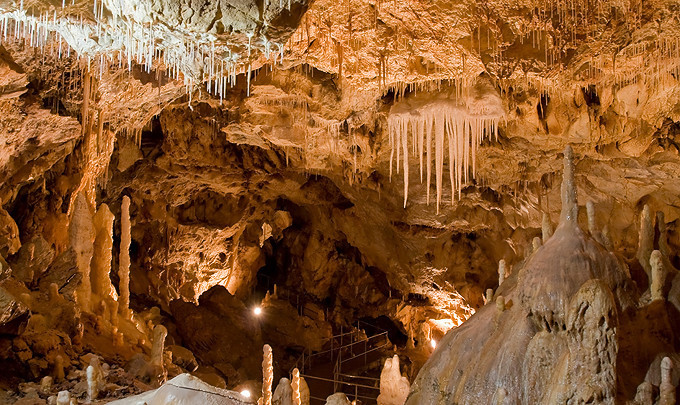
One of the most famous and spectacular caves in Romania, Bears' Cave is located in Bihor County, in the Apuseni Mountains, near the Stâna de Vale resort and the village of Chișcău. It is a top tourist destination thanks to the beauty of its galleries, accessibility, and especially for the discovery that gave it its name — an impressive number of fossils belonging to an extinct species: the cave bear (Ursus spelaeus).
(Source: Kiss FM)
The cave was accidentally discovered in 1975 during mining works at the local quarry. Following speleological research, it was revealed that deep inside lay a true fossil sanctuary, where hundreds of cave bears naturally died, becoming trapped inside about 15,000 years ago. The discovery was spectacular: an almost complete bear skeleton was found in its natural position, while the remains of other specimens were exceptionally well preserved.
What makes Bears’ Cave unique is the combination of the natural beauty of the karst formations and the scientific value of the fossils. Its galleries are divided into three main sections:
- The Bone Gallery: where numerous fossils can be seen, including the famous complete skeleton of the cave bear, displayed in a specially arranged space;
- The Candle Gallery: named after the long, thin stalactites that hang from the ceiling like stone candles;
- The Emil Racoviță Gallery: named in honor of the great Romanian speleologist, where spectacular stalactites and stalagmites dominate, some reaching impressive heights.
The cave is easy to visit, equipped with pathways, railings, artistic lighting, and permanent guides. The interior temperature remains constant, around 10°C, and the visit lasts approximately 45 minutes, during which you are led through a true living underground museum, where nature has sculpted and preserved part of Europe’s prehistoric history.
Although relatively small compared to other caves in the Apuseni Mountains, the visual and emotional impact is truly strong. The professional presentation, lighting scenography, and stories told by guides transform the visit into a memorable experience — not only for children but also for adults passionate about science, history, or photography.
The area around the cave is picturesque, with numerous guesthouses, mountain trails, and natural attractions, making it suitable for a weekend trip or even a full mountain vacation in Bihor.
The Bears’ Cave is not just a destination to check off a list but a place that inspires respect and fascination for the forces of nature and the history of life on Earth. It is a symbol of the region and proof that true scientific and visual treasures lie hidden deep within the mountains.
Comarnic Cave – the wild and mysterious giant of the Banat Mountains
Located in the heart of the Semenic – Cheile Carașului National Park, in Caraș-Severin County, Comarnic Cave is one of the longest and most impressive caves in Banat and across the entire country. Unlike heavily tourist-adapted caves, Comarnic still retains a wild and authentic atmosphere, offering visitors an experience closer to classic speleology, but in a safe and organized setting.
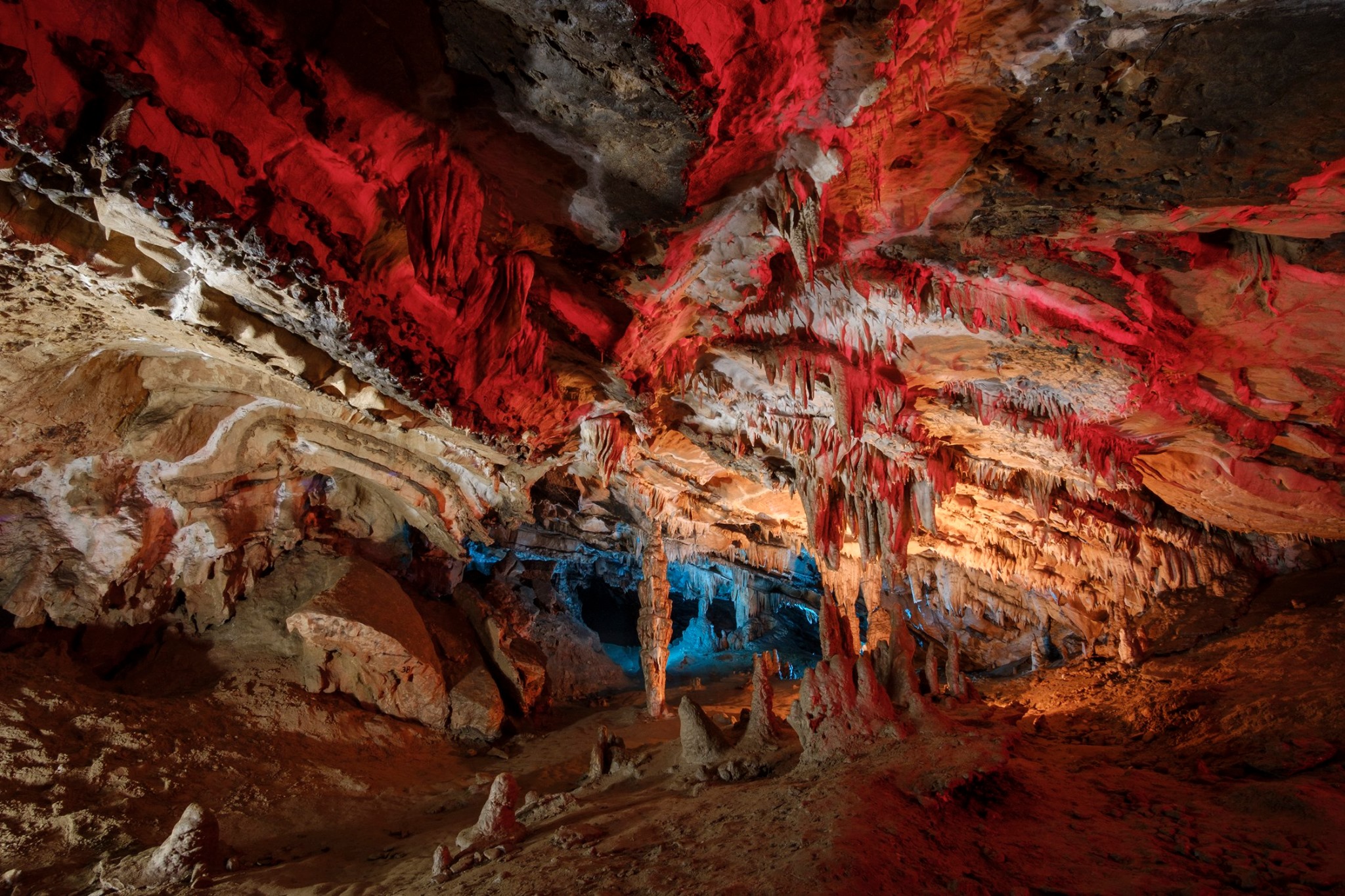
(Source: Monitorul Cluj)
With a total explored length of over 6,000 meters, Comarnic Cave is considered the most significant karst formation in the Anina Mountains. Although it’s not entirely open to the public, the tourist trail covers more than 1,700 meters—enough to experience the monumental beauty of this underground space.
The cave has been known since the 19th century and is mentioned in the works of renowned speleologist Emil Racoviță. Access is from the Caraș Gorges (Cheile Carașului), via a mountain trail that adds to the charm of the experience with a short hike before descending underground. The visit itself is guided, and the route is only minimally developed—striking a balance between natural preservation and visitor safety.
What makes it special? First and foremost, the impressive size of the galleries. In some areas, the ceiling rises over 30 meters high, and the underground chambers open like stone cathedrals, with karst formations ranging from thin, delicate stalactites to massive columns and limestone domes. The landscape is completed by striking formations such as the “White Dome” (Domul Alb), the “Bears’ Gallery” (Galeria Urșilor), and the “Great Hall” (Sala Mare).
Comarnic Cave is also scientifically important: traces of cave bears (Ursus spelaeus) and fossils of prehistoric animals have been found here, and the stable interior climate makes it an ideal site for research into the evolution of underground environments.
A visit to Comarnic is recommended for those seeking an authentic and peaceful experience, far from crowded tourist trails. Located within a national park, the cave is surrounded by dense forests, dramatic gorges, wild valleys, and fresh mountain air—perfectly complementing the underground adventure.
Comarnic Cave is more than just a cave – it’s a complete journey into nature, where you can feel the force of the earth and the deep silence of limestone shaped by time. It’s ideal for those who want to explore the profound, untouched, and monumental side of Romania.
The Women's Cave – legend, history, and mystery in the depths of Gorj
Located in the commune of Baia de Fier, in Gorj County, at the foot of the Parâng Mountains, the Women's Cave (Peștera Muierii) is one of the most visited and fascinating caves in Romania. Steeped in legends and with a remarkable natural and archaeological history, this cave offers a complete experience: visual splendor, accessibility, and a past that weaves together geology, myth, and science.
The cave has been known for centuries by locals, and its name originates from an old tradition: during times of war, women and children would take refuge here to hide and survive. Thus, it became known as “the cave of the women” – a shelter for life in times of hardship. It was officially explored for the first time in the early 20th century, and in 1963 it became the first cave in Romania to be electrified, opening its doors to the general public.
:contrast(8):quality(75)/https://static4.libertatea.ro/wp-content/uploads/2021/12/pesteri-din-romania-pestera-muierii.jpg)
(Source: Livertatea)
What makes it truly special is the way it combines geological spectacle with archaeological and anthropological significance. In the 1950s, human fossils over 30,000 years old were discovered here, including the remains of one of the oldest modern women found in Europe. These findings placed Peștera Muierii (The Women's Cave) on the world map of paleontology, offering evidence of human habitation in the Paleolithic era.
From a tourist perspective, the accessible route is about 350 meters long, while the total length of the cave's galleries exceeds 3 kilometers. The interior is a true display of shapes and colors, featuring:
-
High domes, impressive halls, and narrow passages;
-
Well-preserved stalactites and stalagmites, some resembling petrified waterfalls;
-
Unique karst formations such as “The Heart,” “Altar Hall,” “Frozen Waterfall,” or “The Stone Spider”;
-
Natural sculptures that look like human or animal figures, or gothic-style columns, fueling imagination and local legends.
The cave is very well arranged, with artistic lighting and easy access, making it one of the most suitable caves for families with children or first-time visitors. During the tourist season, local guides offer captivating explanations about the cave’s formations, history, and the stories passed down through generations.
Upon exiting the cave, visitors can continue their adventure by exploring the nearby Polovragi Cave, or enjoy the breathtaking mountain scenery and peaceful rural charm of the Southern Carpathians.
Conclusion
Romania’s underground world is a silent, yet overwhelming spectacle. From the ice cathedrals of the Apuseni Mountains to the natural museums in the heart of Bihor, the wild galleries of Banat, or the legendary chambers of Gorj, the country’s caves offer a rare diversity of shapes, stories, and emotions.
Each cave presented – Scărișoara, Urșilor (Bears’ Cave), Comarnic, and Muierii (Women’s Cave) – has its own personality and charm. Some impress with eternal ice, others with prehistoric relics or the sheer grandeur of karstic halls. What unites them all is the deep respect for nature and the awe inspired by its quiet, breathtaking creations.
A visit to one of these caves is not just a one-day trip, but a journey into another universe – one where time flows slower, drop by drop, shaping limestone walls into forms that both amaze and inspire. Whether you're a passionate traveler, a nature lover, a parent seeking unique experiences for your kids, or a tourist visiting Romania for the first time, these caves truly deserve a place on your itinerary.
Discover them, respect them, and let them tell you – in their profound silence – the stories of thousands of years.