Travel Ideas
Unmissable Destinations for History Enthusiasts in September
It is, therefore, the perfect time to discover Romania through the lens of its fascinating history. For those passionate about ancient tales, medieval walls, and places steeped in legend, this month becomes an invitation to explore.
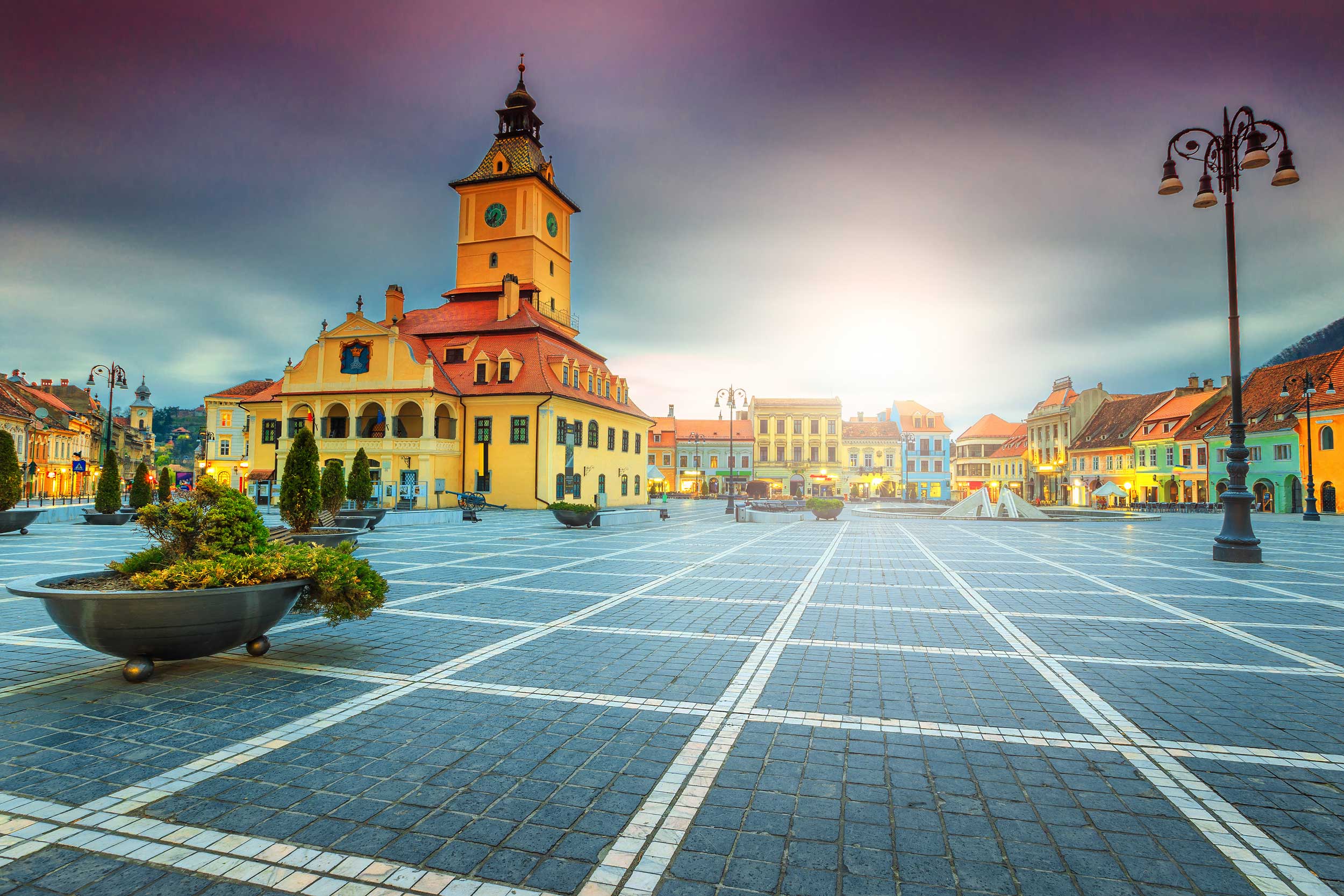
Our country hides historical treasures at every turn, but a few destinations stand out for their unique atmosphere. Deva welcomes you with its hilltop fortress, a witness to centuries of turmoil and battles. Sibiu, with its medieval charm, leads you through cobbled streets where every building seems to tell a story. Bran remains synonymous with Dracula legends and one of the most visited castles in the world, while Sinaia impresses with the royal elegance of Peleș Castle, a symbol of European architectural refinement. And last but not least, Brașov combines modern urban energy with a charming historic center, preserved like a true medieval jewel.
In this article, we propose an autumn itinerary that brings together five of Romania’s most beautiful and significant historic destinations. Each place has its own identity and an impressive trove of stories, and visiting them in September gives you the chance to experience them in a calmer, more authentic setting.
Deva – The Fortress Watching Over Transylvania
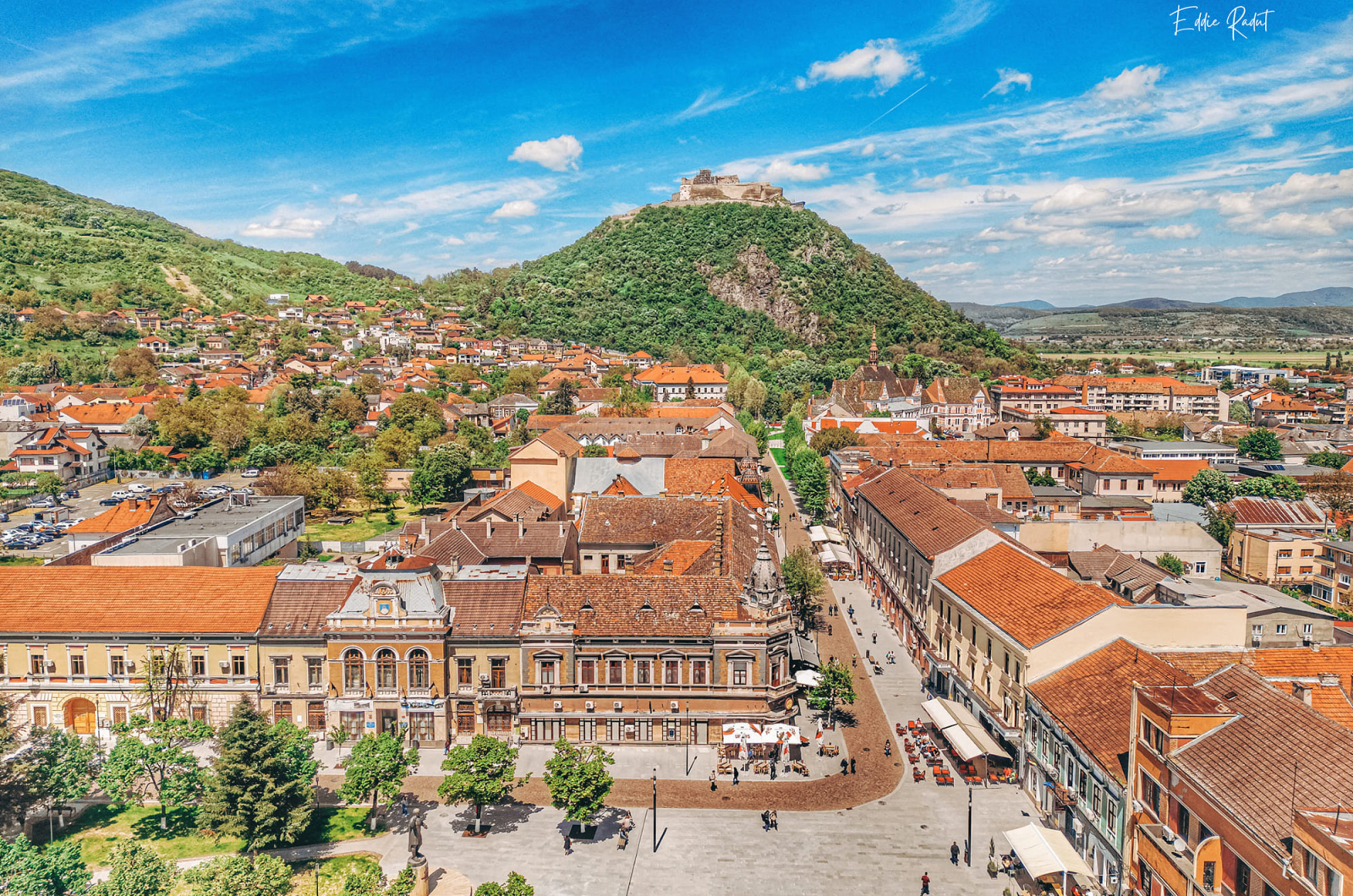
Perched on a volcanic hill overlooking the city below, Deva Fortress is one of the most important medieval fortifications in Transylvania and a symbol of Romanian resilience over the centuries. Built in the second half of the 13th century, after the Tatar invasion of 1241, the fortress played a strategic role in defending the region and controlling the trade routes that crossed the Mureș Valley. Its walls, bastions, and towers, though now appearing as ruins, evoke a turbulent period when Transylvania was contested between kingdoms and principalities.

(Source: Go Hunedoara )
The history of the area, however, stretches far deeper in time. The Deva region was inhabited as far back as the Dacian period, and during the Roman era, it became a zone of significant military and economic importance. Not far from the city lie the remains of the Roman colony Ulpia Traiana Sarmizegetusa, the capital of Roman Dacia, and the castrum at Micia (near present-day Vețel), which demonstrated the strategic role of the Mureș Valley in the Roman Empire’s defense system. These settlements are evidence of intense Romanization and the cultural foundation upon which the Romanian identity was built.
Throughout the Middle Ages, the fortress became not only a military bastion but also an important administrative center, often caught in conflicts between local nobles, the Principality of Transylvania, and Ottoman power. In the 19th century, it experienced dramatic episodes, such as the explosion in 1849 during the Revolutions of 1848–49, which destroyed a significant part of the fortification.
Today, Deva Fortress remains a site of profound historical resonance for Romania. It represents a link between the Dacian era, the Roman heritage, and the medieval period, illustrating the continuity of the Romanian people in this region. Visitors can reach the fortress via a modern funicular, and once at the top, the spectacular panorama reveals not only the natural beauty of the area but also the strategic importance this location has held throughout history.
Deva is not just a quiet provincial town; it is a gateway to understanding Romania’s past—a place where Dacian and Roman history meets the Middle Ages and the defining moments of the struggle for national identity and independence.
Sibiu – The Medieval Heart of Transylvania
Few cities in Romania manage to preserve the medieval spirit as well as Sibiu. Founded by Saxon settlers in the 12th century, the city was for centuries an important commercial, cultural, and military center of Transylvania. Today, strolling along its cobbled streets, among colorful buildings and spacious squares, you can feel the past come alive at every corner.
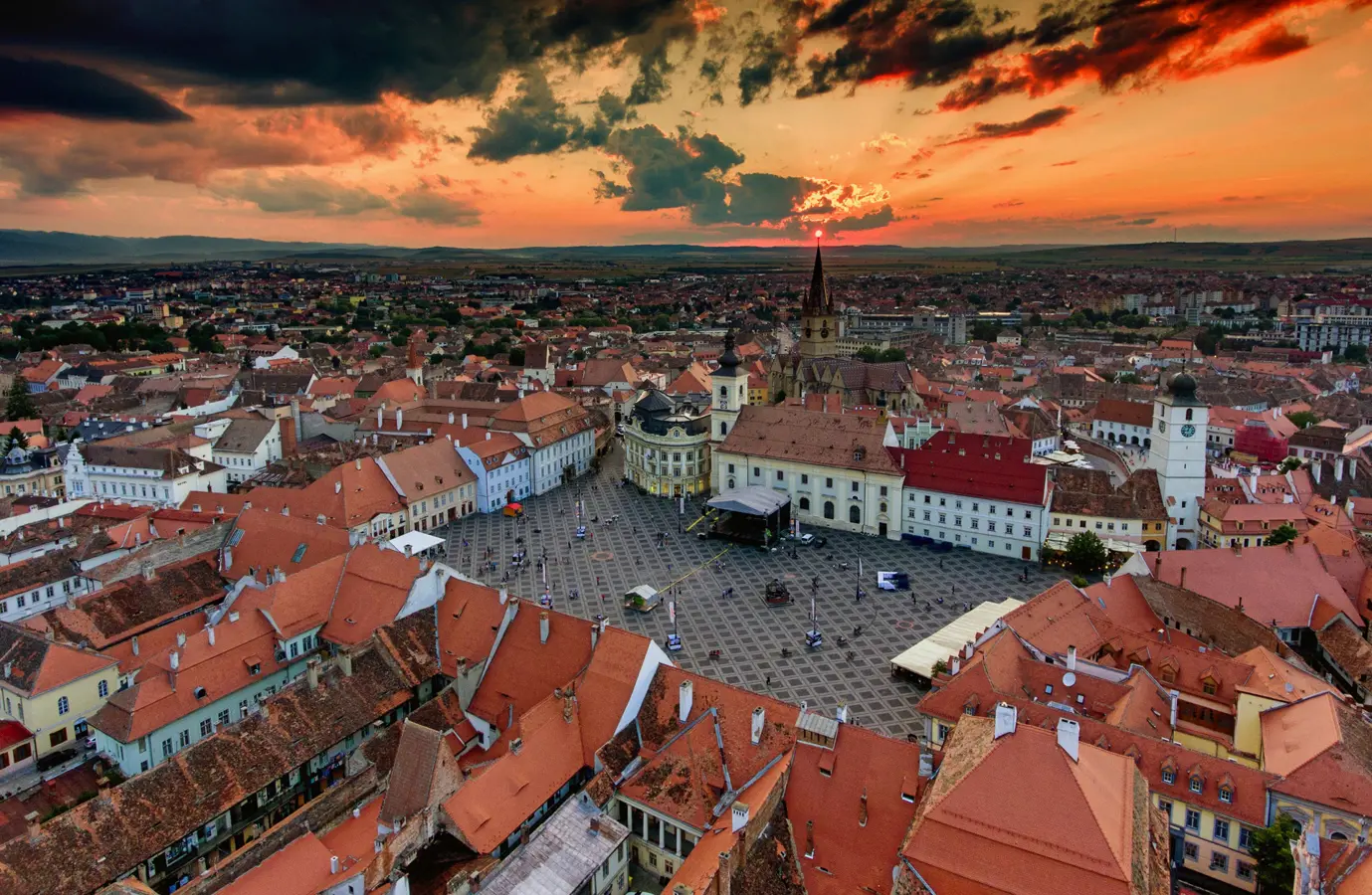
(Source: Avion Tourism )
The city’s historical landmarks are countless: the Large Square, with the Council Tower watching over its residents for centuries; the Small Square, with its famous “eyes” on the rooftops that seem to follow visitors; and the Bridge of Lies, steeped in urban legends. Additionally, the fortified walls and the guilds’ defensive towers testify to a time when the city stood as a strong bastion against invaders.
September makes Sibiu an even more enchanting destination. The crisp autumn air adds a special charm to strolls, while frequent cultural events—from exhibitions to festivals—blend the historic atmosphere with a modern touch. Whether you choose to visit museums, explore Gothic churches, or simply get lost in the streets, Sibiu offers a unique experience where history and the present intertwine harmoniously.
Bran – Between Legends and History
Few places in Romania have captured as much international fascination as Bran, thanks to its famous castle, often associated with the myth of Dracula. Built in the 14th century, Bran Castle was originally a strategic fortress intended to guard the pass between Transylvania and Wallachia. Over time, the building’s roles have changed, serving as a customs point, a royal residence, and today, as one of the most visited museums in the country.

(Source: History Hit)
Dincolo de legenda lui Dracula, Branul are o istorie autentică fascinantă. Castelul este strâns legat de familia regală a României, fiind reședința preferată a Reginei Maria, care a lăsat o amprentă vizibilă asupra atmosferei locului. Arhitectura gotică, încăperile pline de obiecte istorice și scările înguste care par să ascundă secrete creează o experiență aparte pentru vizitatori.
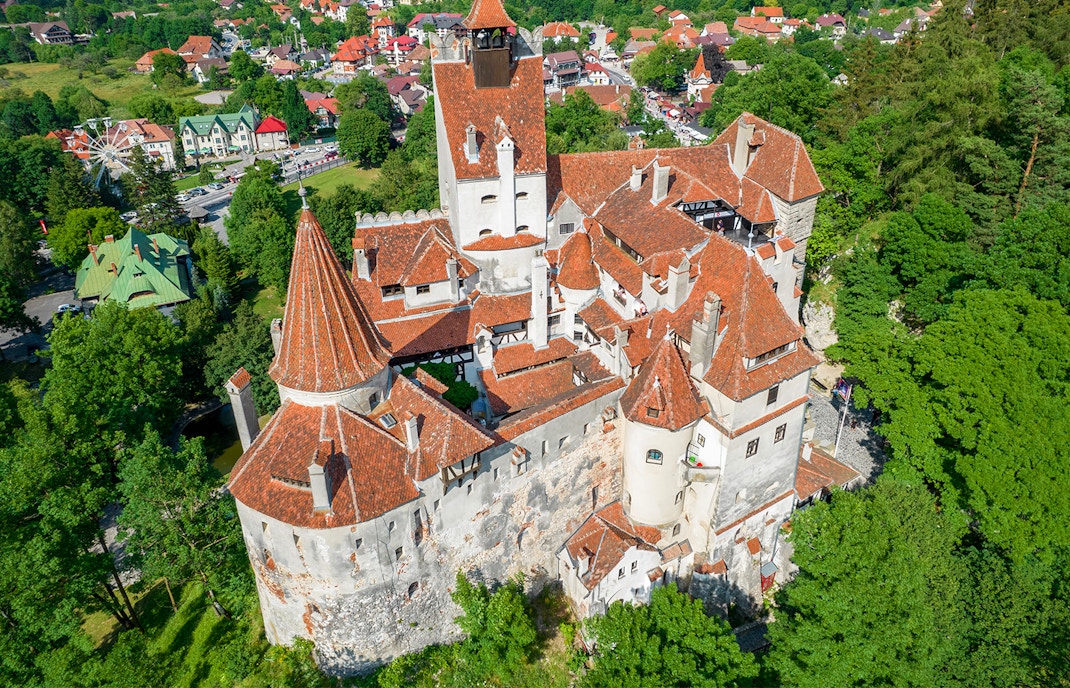
(Source: Bran Castle Tickets)
Septembrie este momentul ideal pentru a descoperi Branul: natura din jur începe să se coloreze în tonuri de toamnă, iar atmosfera mai liniștită îți permite să te bucuri de vizită fără aglomerația verii. O plimbare prin satul Bran completează călătoria, aducând în prim-plan tradițiile locale, gastronomia specifică și peisajele montane spectaculoase.
Sinaia – The Royal Residence of the Carpathians
Nicknamed “the Pearl of the Carpathians,” Sinaia is one of Romania’s most elegant mountain resorts, with a history closely intertwined with the country’s destiny. Its name comes from the Sinaia Monastery, built in the 17th century by monks inspired by the Holy Land, around which the town gradually developed. A turning point in the city’s history came when King Carol I chose it as his summer royal residence, transforming Sinaia into a symbol of royalty and Romania’s modernization.
The historical heart of the town is undoubtedly Peleș Castle, considered one of the most beautiful castles in Europe. Built at the end of the 19th century, Peleș blends Renaissance and Baroque architectural styles with German influences, and it was the first fully electrified castle in Europe. Its richly decorated rooms witnessed important historical decisions and the day-to-day life of the royal family. Nearby stands Pelișor Castle, smaller but equally charming, the favorite residence of Queen Maria, who imbued its interiors with a unique Art Nouveau style found nowhere else in Romania.
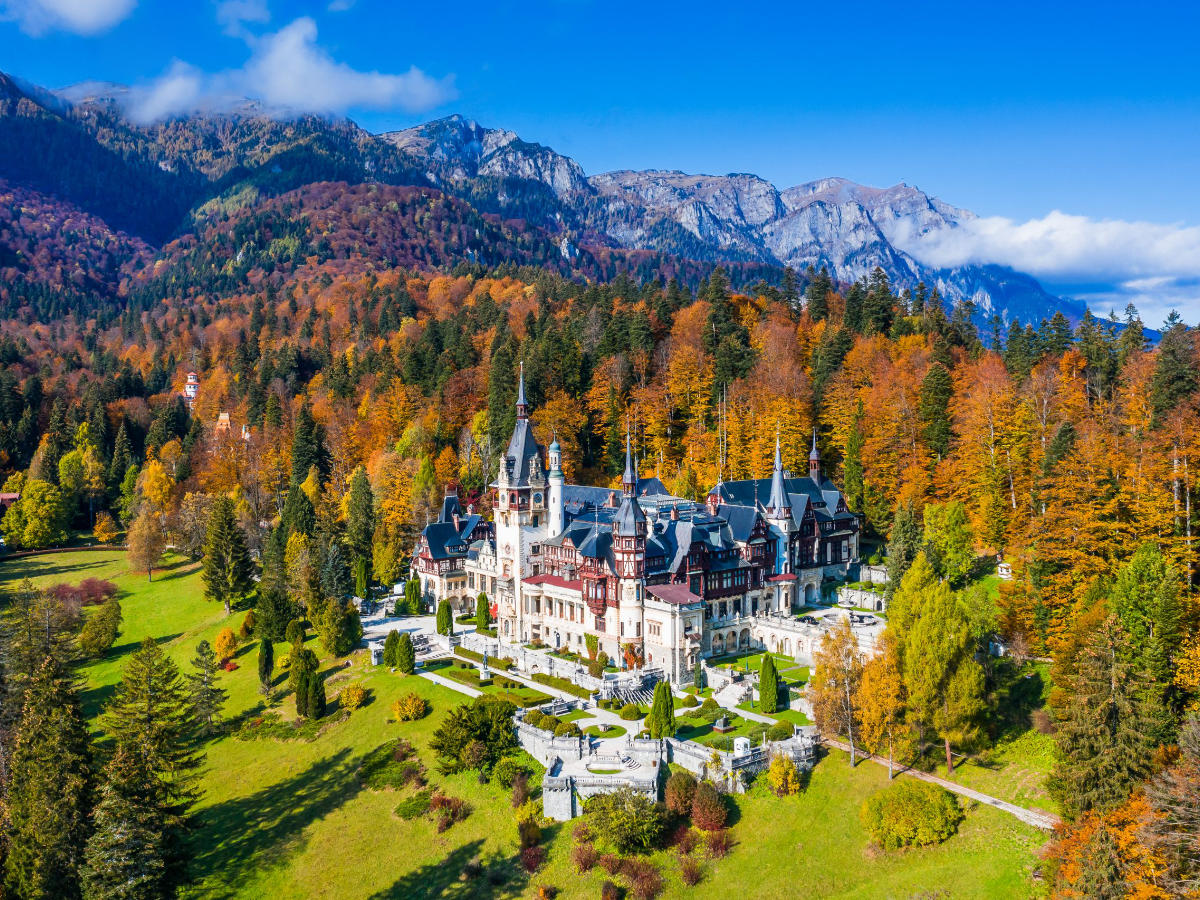
(Source: Gandit in Romania )
Another historical landmark of the town is the Sinaia Railway Station, inaugurated in 1913. Built to receive royal trains and distinguished visitors from across Europe, the station remains to this day an architectural monument and a symbol of the town’s connection to the modernization of the country’s railway infrastructure.

(Source: Obiective Turistice)