Travel Ideas
Autumn Hike in the Vargyas Gorge
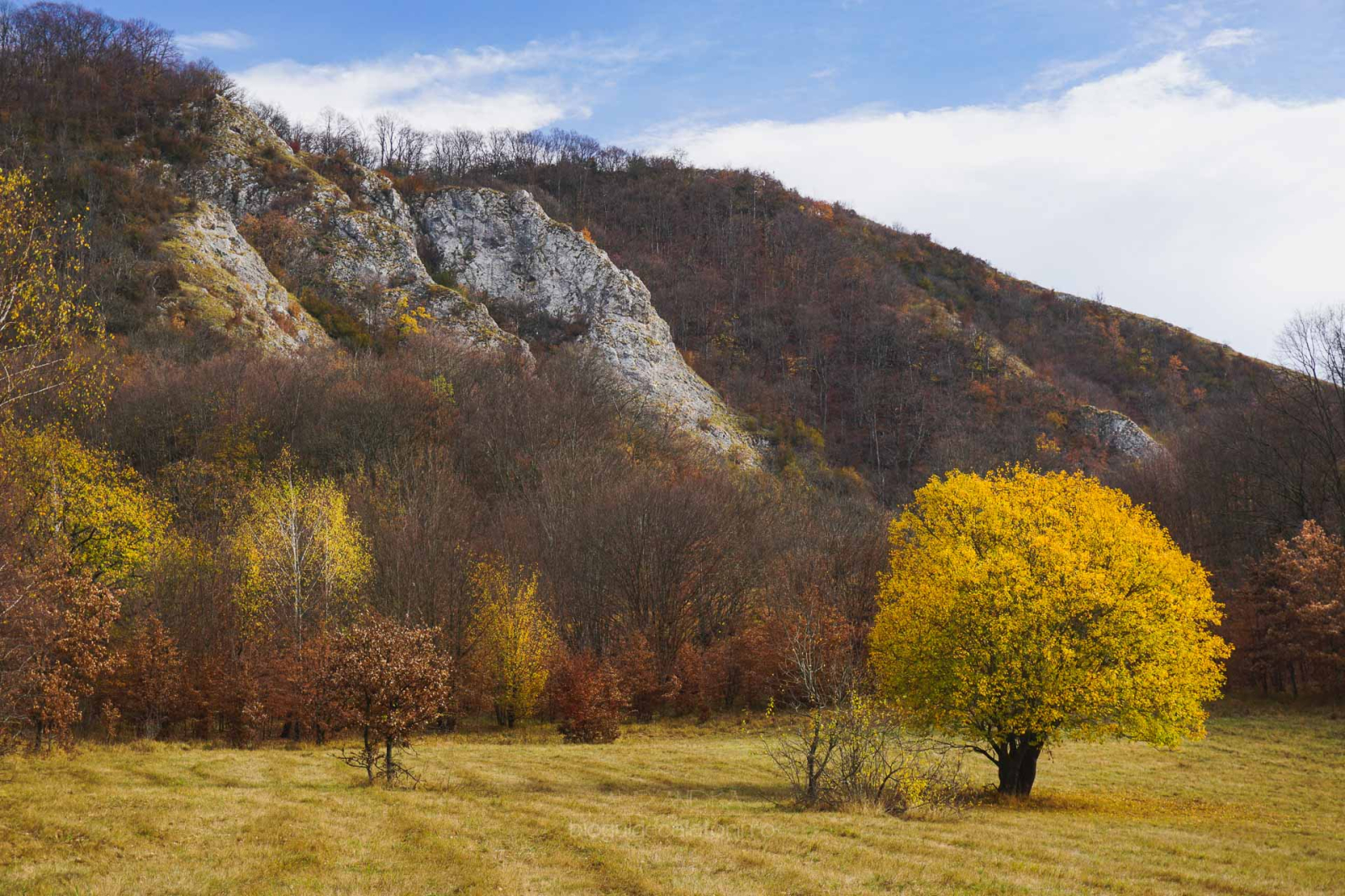
According to weather forecasts, sunshine will return for a few more days in the last weeks of October, and spending them indoors would be a crime. We have a great tip on where to visit this autumn: one of Transylvania’s most beautiful gorge valleys, the Vargyas Gorge (Cheile Vârghișului).
Carved out by the Vargyas Stream in the North Perșani Mountains at the border of Harghita and Covasna counties, this limestone canyon is not only one of Szeklerland’s most valuable nature reserves, but also the region’s most spectacular natural wonder alongside the Bicaz Gorge (Cheile Bicazului). The gorge valley welcomes hikers with the thrill of suspension bridges, the soothing sound of the rushing stream, and the mystery of caves carved directly into the cliff walls.

(Source: PeMeleaguri.ro)
Important Details and Technical Data for the Hike
The thematic trail through the Vargyas Gorge is an exceptionally easy route accessible to almost anyone, making it an ideal choice for families, beginner hikers, or anyone looking to recharge in nature. The main trail is marked with a blue cross following the Gorge Trail (Poteca Cheii) along the stream. It features an elevation gain of just 200 meters over a distance of approximately 4 kilometers each way (8 kilometers round trip). Completing the hike at a comfortable pace, including photo breaks and cave visits, takes about 5–6 hours.
You can enter the nature reserve from two directions: via Homoródalmás (Merești) or Vargyas (Vârghiș). For visitors coming from Brașov or Sfântu Gheorghe, the Vargyas entrance is the most practical, offering the quickest access to the gorge's most stunning section. From the village of Vargyas, a 12-kilometer paved road (single-lane with numerous passing bays) followed by 2 kilometers of well-maintained forest road suitable for any passenger vehicle leads to the barrier, where you'll find the designated parking area and information center.
The Hiking Experience: Suspension Bridges and Secrets of the Gorge
Starting from the parking lot along the blue cross trail and passing the information board near the barrier, you first cross an open meadow offering breathtaking views of the rusty autumn colors on the surrounding hillsides. After barely ten minutes of walking, you enter the dense forest, and the true adventure begins. The most exciting highlight of the hike is the 9 wooden bridges spanning the Vargyas Stream: two are fixed, while seven are gently swaying suspension bridges where, for safety reasons, a maximum of two people may cross at a time.
After an initial rocky section that requires a bit of attention, you reach the second bridge—the first real moving suspension bridge on the trail. Adhering to the two-person safety rule adds a touch of playful excitement and a small surge of adrenaline as the wooden slats creak softly beneath your feet. The absolute highlight of the hike lies around the third bridge, where the gorge’s three most significant caves are grouped together.
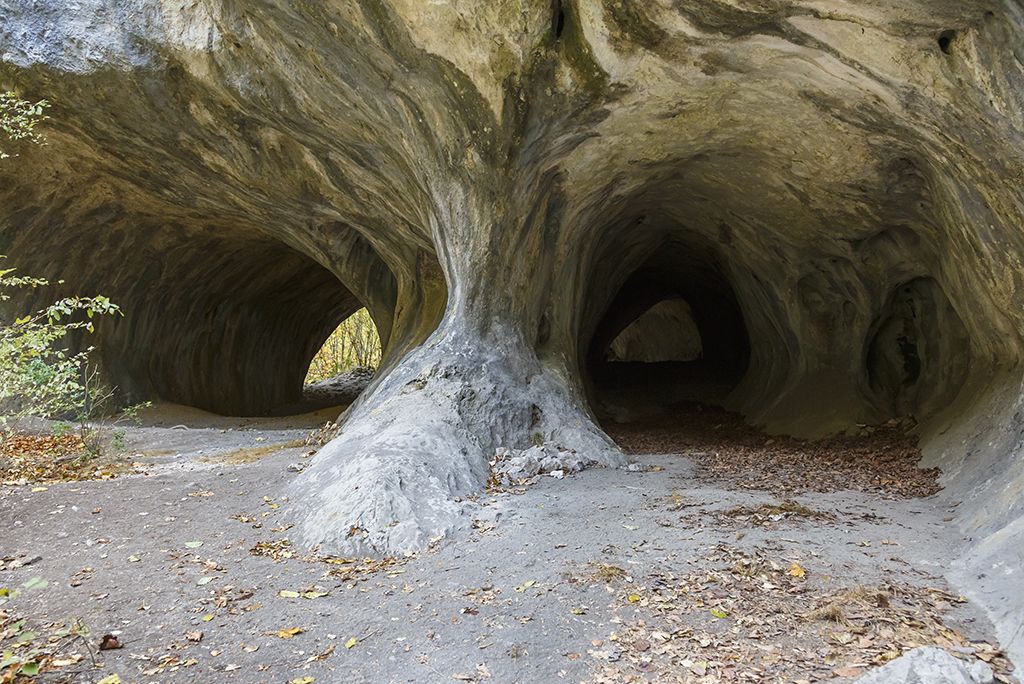
Before crossing the third bridge, following the blue dot trail on a steep upward climb brings you to Tatár-lik (Gaura Tătarilor). This is the gorge's most spectacular formation: a massive cavern yawning in the hillside that resembles a giant pair of eyes and a nose on one side, while leading into a natural rock tunnel on the other. Because the trail up is steep and slightly slippery, reaching it requires good hiking shoes and steady footing.
After crossing the third bridge, stable new metal staircases lead up to the famous Orbán Balázs Cave, also known as the Merești Great Cave (Peștera Mare de la Merești). Stretching 1,800 meters long with a 50-meter elevation difference, it is one of the longest cave systems in the Eastern Carpathians, 900 meters of which can be explored without speleological equipment. The cave is one of Transylvania’s most crucial bat habitats: across the gorge's 128 caves live 19 different species of bats, accounting for more than half of all bat species found in Romania. Starting October 15th, the interior galleries close to visitors to protect bat colonies during their winter hibernation and mating season, but the massive entrance chamber (Elizabeth Hall / Sala Elisabeta) remains open year-round and can be explored freely with a headlamp. In the torchlight, the cave walls sparkle as if you've stepped into a magical fairy tale, and with a bit of luck, you might even spot rare horseshoe bats.
Just a few steps further along the yellow stripe trail lies the Horse Barn Cave (Peștera Șura Cailor), which impresses hikers with its grand 15-meter-high portal and the roaring sound of the underground stream reverberating in quiet moments.
(Source: 7 minuni al Transilvaniei)
What Else Is Worth Visiting Near the Vargyas Gorge?
If you want to explore more of Harghita and Covasna counties' natural and cultural treasures after your gorge hike, the surrounding area offers countless must-see attractions. The Daniel Castle in Vargyas—renamed Polixenia Culinary Estate as of this year—boasts nearly 450 years of history dating back to the 16th century. Its east-west, elongated structure sits perpendicular to the main road, with its northern facade facing the courtyard of honor and its southern facade overlooking the former grand castle park. Its architecture harmoniously blends late Renaissance, Baroque, Neoclassical, and Neorenaissance styles, enriched by Renaissance carvings and heraldic stone plaques reused during 18th- and 19th-century expansions. The castle was recently restored under the direction of Larix Studio and architect Miklós Köllő. Named after Polixénia Pekry (wife of Baron István Daniel and an 18th-century writer), the estate brings centuries of history together with contemporary hospitality. Visits require advance booking via the email or phone number listed on their official website.

(Source: Polixenia Culinary Estate)
Just an hour’s drive away lies Lake Saint Ana (Lacul Sfânta Ana) in the Ciomatu volcanic massif—Central Europe's only intact volcanic crater lake—providing a perfect backdrop for relaxing strolls amidst autumn-colored forests. In its immediate vicinity lies the Mohoș Peat Bog (Tinovul Mohoș), a unique nature reserve where guided tours reveal rare Arctic tundra vegetation and carnivorous plants. For post-hike relaxation and recovery, the nearby resort town of Băile Tușnad offers excellent thermal and mineral water wellness facilities. Culture enthusiasts should also visit Miercurea Ciuc, where the 17th-century Mikó Castle houses the Szekler Museum of Ciuc, highlighting the region’s rich heritage.
Don't let the last warm autumn days slip away—plan your weekend getaway, book your ideal accommodation on stayhere.ro, and set off on your trip this very weekend!