Travel Ideas
Internationally renowned destinations to visit in Romania
Romania is a country that surprises every time with the diversity of its landscapes, its historical stories, and the authenticity of places that have managed to conquer visitors from all corners of the world. From spectacular mountain roads winding through the clouds to traditional villages where time seems to have stood still, each destination offers a different yet equally memorable experience. In recent years, more and more international tourists have begun to discover the charm of Romania, attracted by the rare combination of wild nature, valuable cultural heritage, and authentic hospitality. This article aims to take you on a journey through some of the most renowned places that have become symbols of Romanian tourism and landmarks on the European map of must-see destinations.
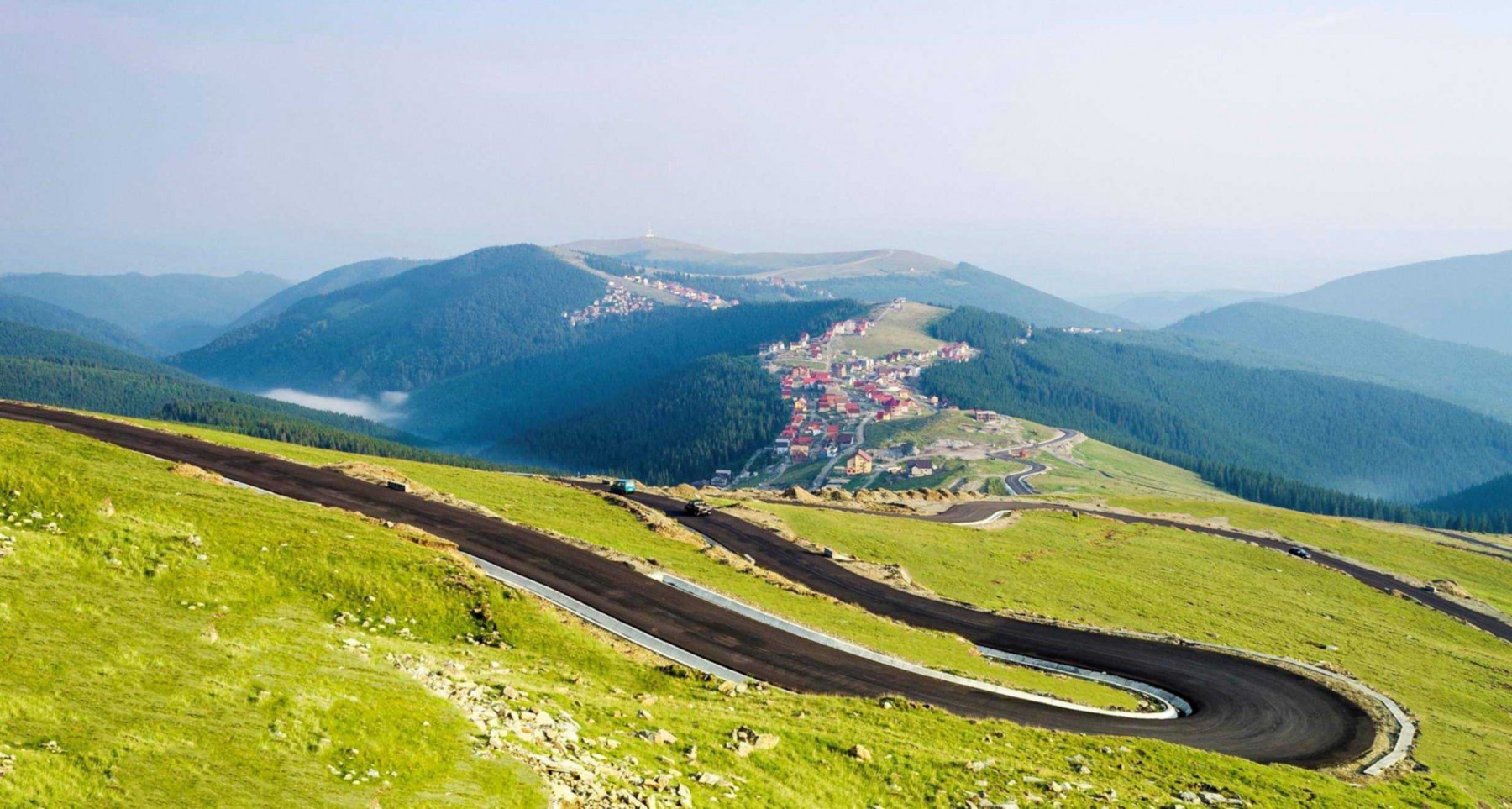
One of these places is the Transalpina, the famous "King's Road," considered one of the most spectacular mountain routes in Europe. The road climbs to over 2000 meters in altitude, offering dramatic views of the Parâng Mountains, dizzying serpentines, and a sense of freedom that attracts both driving enthusiasts and nature lovers. Transalpina is not just a road, but a complete experience, where every stop reveals impressive panoramas and the authentic silence of the Romanian mountains.
At the historical and legendary pole stands Bran Castle, one of Romania's most well-known attractions internationally. Often associated with the myth of Dracula, the castle impresses with its medieval architecture, its strategic positioning between the mountains, and the fascinating stories that shroud its walls. Beyond the legend, Bran represents an authentic foray into the region's history and culture, offering visitors a captivating experience that blends reality with imagination.
In the heart of Transylvania, the village of Viscri has become a symbol of sustainable tourism and carefully preserved traditions. The colorful Saxon houses, the quiet lanes, and the slow pace of daily life create an authentic setting, appreciated even at an international level. Visitors are drawn to the simplicity of the place, the traditional crafts, and the rare feeling of returning to the essentials. In the same spirit of UNESCO heritage, the Fortified Church of Prejmer represents an impressive example of medieval defensive architecture, being one of the best-preserved fortifications of this type in Europe. The massive walls, interior corridors, and historical atmosphere offer a fascinating perspective on how local communities protected their lives and faith in troubled times.
Last but not least, the city of Sibiu completes this selection with its cultural elegance and vibrant atmosphere that blends tradition with modernity. A former European Capital of Culture, Sibiu impresses with its well-preserved historical center, lively squares, international festivals, and distinct architecture that attracts tourists from all over the world annually. Every corner of the city tells a story, and every visit becomes a complex cultural experience full of discoveries.
These internationally renowned destinations represent only a part of Romania's tourism richness, but together they outline a powerful image of a country worth exploring with patience and curiosity. Whether you are looking for adventure on spectacular mountain roads, medieval legends, the quiet of traditional villages, or urban effervescence, Romania offers authentic and memorable experiences for every type of traveler. In the pages that follow, we invite you to discover these extraordinary places and let yourself be inspired by their unique charm, preparing for a journey that promises to remain in your memory for a long time.
Transalpina – The Spectacular Road of the Romanian Mountains
Transalpina, nicknamed "The King's Road," is one of the most spectacular mountain roads in Europe and, undoubtedly, one of the most impressive experiences Romania can offer to lovers of nature, adventure, and memorable landscapes. Crossing the Parâng Mountains and reaching altitudes of over 2,000 meters, this panoramic road connects the historical regions of Transylvania and Oltenia, offering a journey that is not just about the destination, but about every moment spent on the route. The wide serpentines, dramatic elevation changes, and open panoramas of the mountain ridges create a unique visual and emotional experience, which is why Transalpina has become an internationally recognized attraction and a landmark for Romanian tourism.
Iulian_A%C8%99tilean.jpg)
( Source: Visit Sibiu County )
The road begins its ascent through dense forests and picturesque mountain villages, where the quiet atmosphere gradually prepares the traveler for the natural spectacle that follows. As the altitude increases, the vegetation changes, and the horizon becomes wider and wider, revealing the proud peaks of the Carpathians and endless stretches of alpine meadows. One of the most impressive points on the route is the Urdele Pass, located at approximately 2,145 meters altitude, where the feeling of freedom is amplified by the profound silence of the mountain and the clean air that seems to redefine the rhythm of the journey. Here, tourists can stop to admire the dramatic landscapes, photograph unforgettable panoramas, or simply enjoy the rare sensation of being above the clouds.
The history of Transalpina adds a special dimension to the experience. It is said that the route has been used since ancient times by shepherds crossing the mountains with their flocks, and in the interwar period, it was modernized at the initiative of King Carol II, which is why it is also known as "The King's Road." Over time, the road has become a symbol of engineering ambition and the deep connection between people and the mountain, reflecting both the pastoral tradition of the region and the desire to open spectacular paths through the heart of nature.
( Source: Arhiepiscopia Râmnicului )
Beyond its natural beauty, Transalpina offers a variety of experiences for all types of travelers. Driving and motorcycling enthusiasts consider this route a true challenge and a memorable adventure, while hiking lovers find numerous mountain trails starting near the road and leading to glacial lakes, alpine ridges, and areas of authentic wilderness. In the warm season, the meadows are covered with alpine flowers, and in the autumn months, nature's spectacular colors transform every curve into a vivid painting. Also, the small traditional sheepfolds encountered along the route offer an authentic foray into pastoral culture, where tourists can discover the taste of local cheeses and the genuine hospitality of the mountain people.
The experience of Transalpina is one that invites slowing down and contemplation, spontaneous stops, and the discovery of details that transform a simple trip into a personal story. Each segment of the road offers a different perspective on the Carpathians, from deep valleys and endless forests to rocky ridges and open alpine plateaus. Besides the natural spectacle, the route connects visitors with the authentic essence of mountainous Romania, a rare combination of unaltered landscapes, living traditions, and profound silence.
Today, Transalpina is more than a road; it is an experience that defines the spirit of adventure and the natural beauty of Romania. For international tourists, it represents a spectacular surprise and an authentic alternative to Europe's already famous mountain routes, and for local travelers, it remains a constant source of inspiration and pride. Regardless of the season or the reason for the visit, Transalpina promises a memorable journey, where every curve reveals a new perspective and every stop becomes an invitation to discover the authentic charm of the Romanian mountains.
Bran Castle – History, Legend, and Medieval Architecture
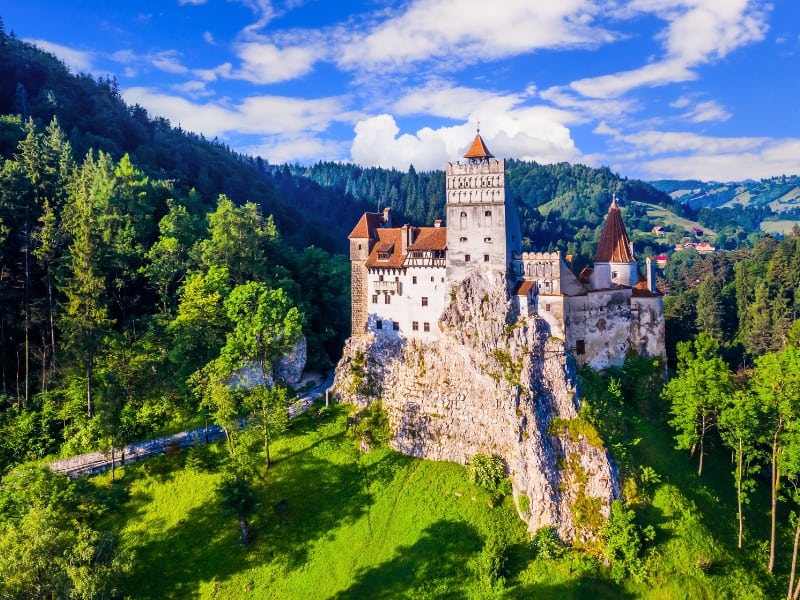
Bran Castle is one of Romania's most emblematic tourist attractions and an internationally recognized symbol, located at the border between history, legend, and spectacular mountain landscapes. Strategically situated between the Bucegi and Piatra Craiului Mountains, the castle dominates the Bran Valley with its imposing silhouette, sharp towers, and white walls that seem straight out of a medieval tale. Initially built in the 14th century with a defensive role and as an important customs point between Transylvania and Wallachia, Bran has over time become a place loaded with historical, cultural, and symbolic meanings, attracting hundreds of thousands of visitors annually who are fascinated by its special charm.
:contrast(8):quality(75)/https://static4.libertatea.ro/wp-content/uploads/2021/07/castelul-bran-istoric-legenda.jpg)
( Source: Libertatea )
Although often associated with the legend of Dracula and the controversial figure of Vlad the Impaler, Bran Castle impresses beyond myths through its historical authenticity and the unique atmosphere it offers. The castle's interior reveals rooms decorated with period furniture, art collections, and personal objects reflecting the life of Romania's royal family, as in the interwar period, the castle became the favorite residence of Queen Marie. She transformed Bran into an elegant and welcoming space, adding romantic gardens, panoramic terraces, and a refined air that is preserved to this day. Every room tells a story, and the narrow stairs, hidden corridors, and secret passages create a captivating experience for visitors, offering them the sensation of a journey back in time.
Viewed from the outside, Bran Castle looks like an unyielding fortress, but inside, the atmosphere is surprisingly warm and intimate. Small windows reveal spectacular views of the surrounding villages and the dense forests encircling the area, and the inner courtyard offers a quiet space where the past seems still present. The castle's architecture, with Gothic influences and well-preserved defensive elements, illustrates how medieval constructions were adapted for both protection and living comfort. Visitors can explore the high towers, admire the historical collections, and discover fascinating details about daily life in past eras.
( Source: iTurist )
The area around Bran Castle contributes significantly to the charm of the experience, offering a special natural setting and the authentic atmosphere of a Transylvanian mountain village. Local markets, traditional crafts, and the region's specific gastronomy complete the visit with a foray into local culture, where tourists can discover artisanal products, traditional dishes, and the warm hospitality of the locals. At the same time, the proximity to mountain trails and nature reserves makes Bran an ideal starting point for nature explorations, whether it be hiking, cycling, or simple walks through quiet mountain landscapes.
Bran Castle remains a perfect example of how history, legend, and modern tourism can coexist in harmonious balance. For international tourists, it represents a gateway to Romania's culture and traditions, an experience that goes beyond clichés and offers an authentic perspective on national heritage. For Romanian visitors, Bran is a familiar yet always fascinating place, where every return brings a new discovery. Whether viewed as a medieval fortress, a royal residence, or a symbol of Transylvanian legends, Bran Castle continues to inspire the imagination and remains one of the country's most memorable tourist destinations, a place where the past and present intertwine in a captivating and authentic experience.
Viscri – Traditional Village and Authentic UNESCO Heritage
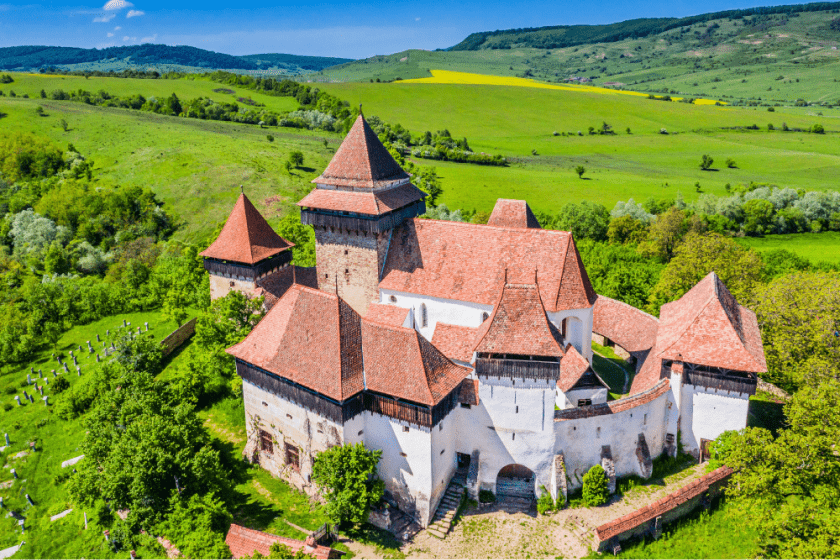
Viscri is one of the best-known traditional villages in Romania and a destination that has managed to conquer the hearts of tourists from all over the world through its rare authenticity, the profound silence of the Transylvanian rural landscape, and the respect for cultural heritage carefully preserved for generations. Located in the heart of Transylvania, in Brașov County, Viscri seems to belong to another era, where time flows at a gentle pace, and daily life unfolds according to old traditions, unaltered by modern bustle. The village is known especially for its fortified church included in the UNESCO heritage, but also for its well-preserved Saxon architecture, colorful houses aligned along cobblestone streets, and the authentic atmosphere that offers visitors a deep and memorable experience.
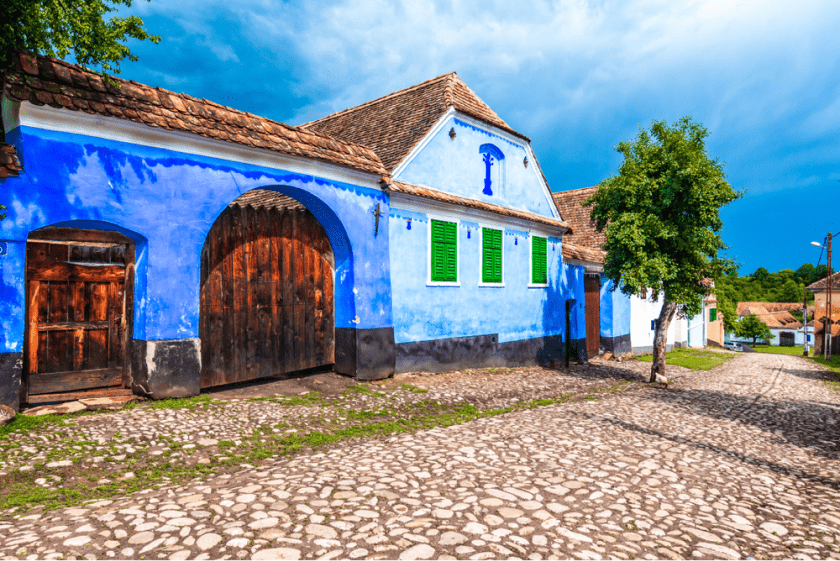
At first glance, Viscri impresses with its simplicity and visual harmony. Traditional houses, painted in pastel shades of blue, green, or ochre, are surrounded by large wooden gates and well-kept gardens, and the unpaved roads contribute to the rustic charm of the place. In the village, the sound of footsteps on gravel, the clink of bicycles, and the rustle of the wind through the trees create a calm and comforting atmosphere, rarely found in crowded tourist destinations. The community's life is closely linked to nature and agricultural traditions, and visitors have the opportunity to observe authentic daily activities, from raising animals and working in the fields to local crafts such as weaving, blacksmithing, or woodworking.
( Source: Valea Verde Retreat )
The fortified church in Viscri represents the spiritual and historical center of the village, being one of the best-preserved constructions of this type in Transylvania. Initially raised in the 13th century and consolidated over time to protect the community during periods of conflict, the church impresses with its solid walls, defensive towers, and simple but meaningful interior. Visitors can climb the tower to admire the panorama of the village and the gentle hills surrounding it, discovering at the same time details about the history of the Transylvanian Saxons and how the community adapted over the centuries. Inside the fortification are the supply rooms, silent witnesses to the times when locals took shelter within the walls to defend their lives and goods.
In recent decades, Viscri has become a remarkable example of sustainable tourism and responsible heritage conservation. Numerous local projects have contributed to the restoration of traditional houses and the revitalization of the community, transforming the village into a model of authentic rural development. Tourists are encouraged to experience village life by staying in traditional guesthouses, participating in craft workshops, or tasting local dishes prepared according to old recipes. Simple gastronomy, based on natural ingredients and products from local households, completes the experience with authentic flavors reflecting the region's cultural identity.
( Source: Valea Verde Retreat )
Besides cultural heritage, the natural landscapes around Viscri offer numerous opportunities for exploration and relaxation. Green hills, extensive pastures, and country roads invite long walks, hikes, or bike rides, where the silence of nature is interrupted only by the song of birds and the rustle of grass in the wind. Each season brings a new facet of the village: spring with wildflowers and fresh air, summer with golden fields and quiet evenings, autumn with warm colors and rich harvests, and winter with white landscapes and an almost magical atmosphere.
Viscri is not just a tourist destination, but a profound experience inviting slowing down, reconnection with nature, and the rediscovery of the simple values of rural life. It is the place where authenticity is not a promoted concept, but a daily lived reality, and every visit becomes an occasion to better understand the traditions, the community, and the discreet beauty of Transylvania. For international tourists, Viscri represents an authentic window into Romanian culture, and for those discovering it for the first time, the village often becomes an unforgettable memory and a reason to return again and again in search of its silence and timeless charm.
Prejmer Fortified Church – A Remarkable Medieval Fortress
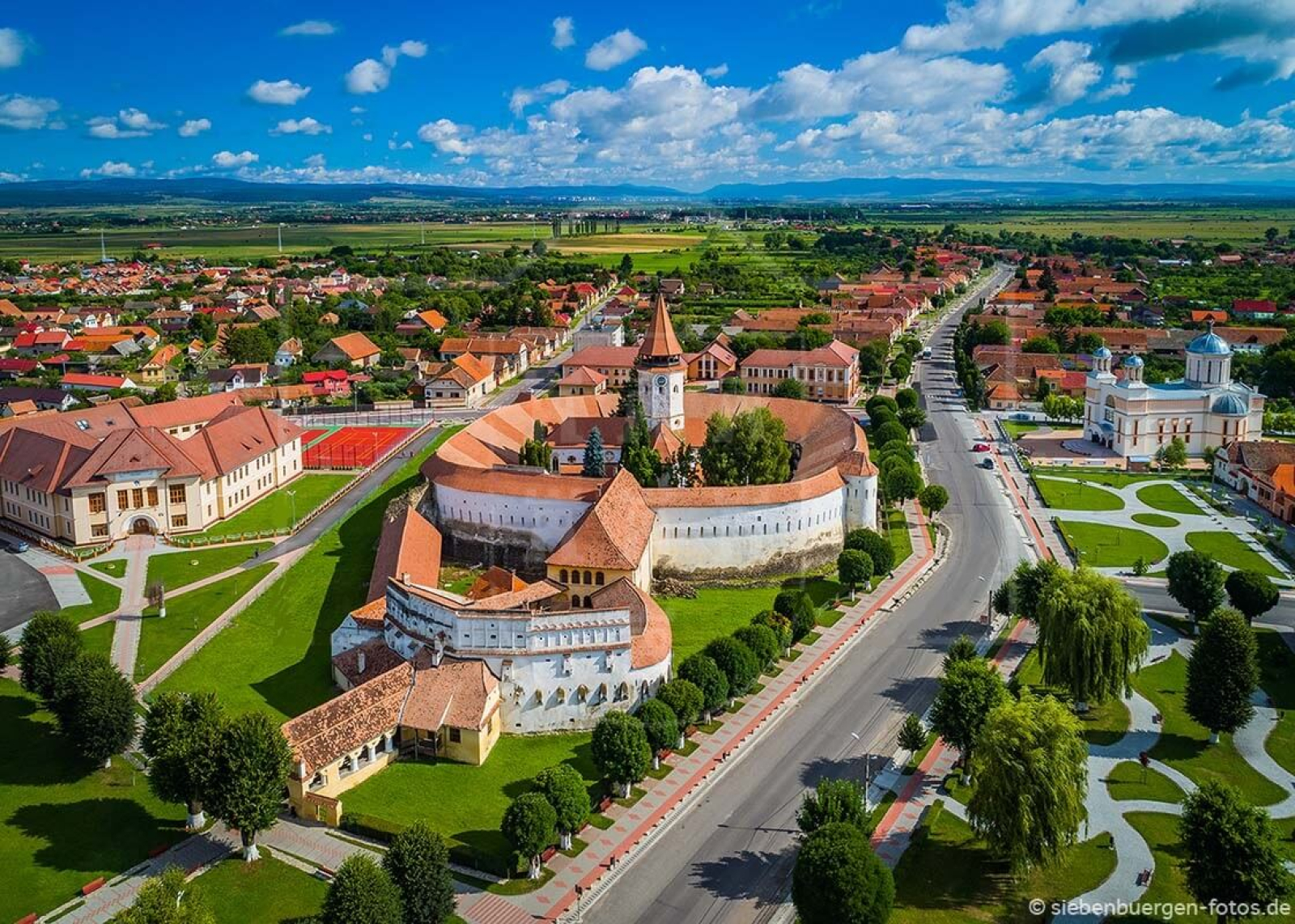
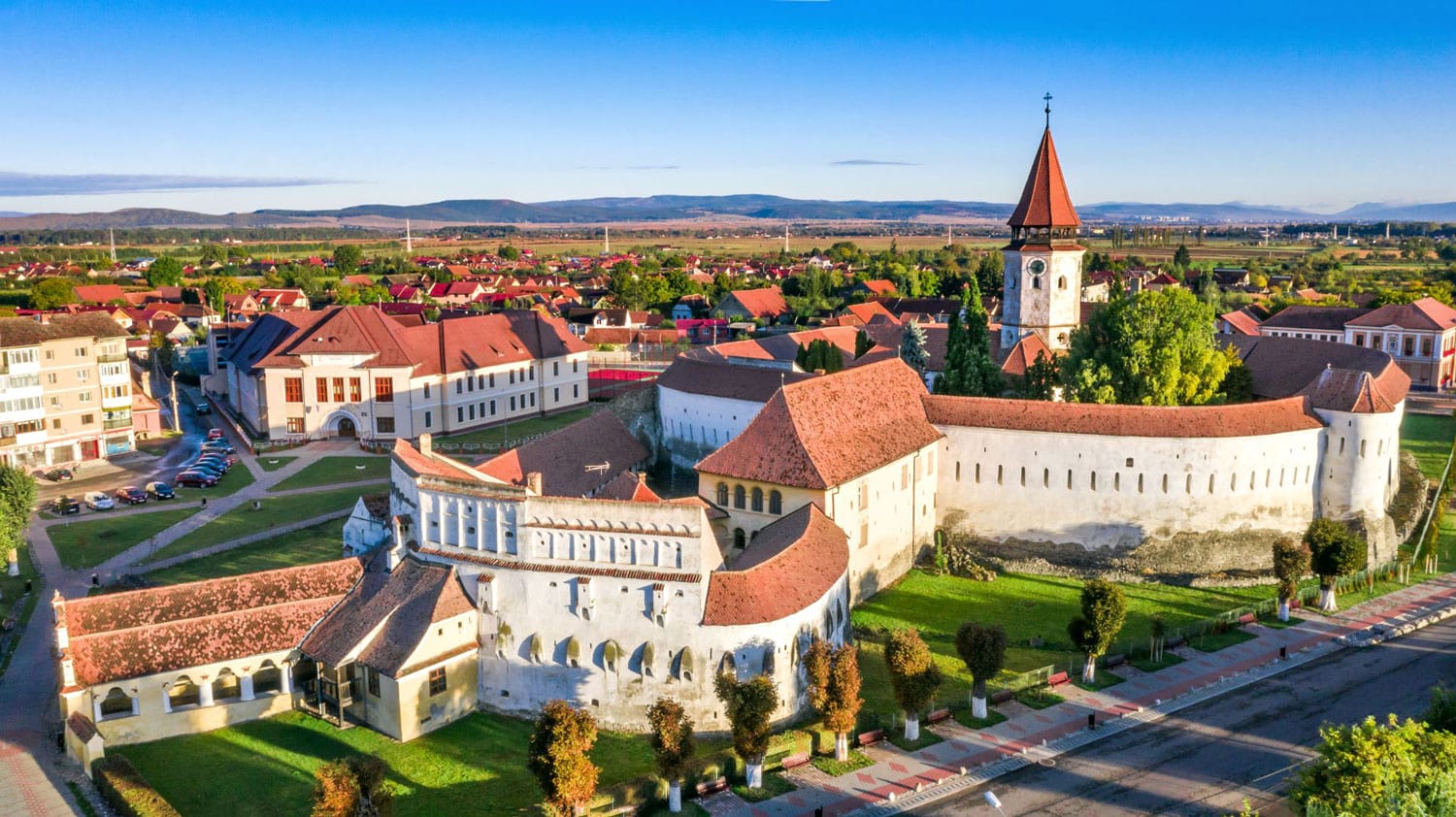
The fortified church of Prejmer represents one of the most impressive and well-preserved medieval constructions in Romania and throughout Eastern Europe, being a symbol of architectural ingenuity and the community spirit that defined the Saxon villages of Transylvania. Located near Brașov, in Burzenland, this fortification included in the UNESCO World Heritage impresses from the very first glance with its massive, perfectly circular walls that surround the church like an unyielding fortress. Initially built in the 13th century by the Teutonic Knights and later developed by the local Saxon community, the church played an essential role both as a place of worship and as a safe refuge for inhabitants during periods marked by invasions and conflicts.
( Source: Sonoro MusikLand )
The architecture of the complex is remarkable for the harmonious combination of religious and defensive elements. The church itself, raised in early Gothic style, impresses with its elegant proportions and simple but solemn interior, reflecting the spiritual values of the medieval community. Around it rise the fortified walls over 10 meters high and nearly 4 meters thick, designed to withstand repeated attacks. One of the most fascinating features of the fortification is the ingenious system of supply rooms arranged on multiple levels inside the walls, each belonging to a family in the village. These spaces were used for storing food, tools, and valuables, transforming the fortress into a true collective refuge in times of crisis.
Visiting the fortified church of Prejmer is an experience that offers a deep perspective on medieval life in Transylvania. Narrow corridors, steep stairs, and small rooms preserve the authentic atmosphere of an era when security and community solidarity were essential for survival. Observation towers and battlements allow visitors to imagine how inhabitants watched over the village and prepared for potential attacks, and ingenious defensive mechanisms, such as massive gates and locking systems, reflect the advanced level of organization and technical ingenuity of the time.

( Source: bisericafortificataprejmer )
Beyond its historical and architectural value, Prejmer also impresses with the quiet atmosphere of the village surrounding it. Traditional houses, orderly streets, and the rural landscapes of Burzenland create an authentic setting where visitors can discover the calm rhythm of Transylvanian life. The area is ideal for relaxing walks, exploring local traditions, and discovering the region's specific gastronomy, completing the cultural experience with moments of relaxation and contemplation.
Over time, the fortified church of Prejmer has become not only a historical monument but also a remarkable example of European heritage conservation. Careful restorations have preserved the authenticity of the construction, and the UNESCO status has contributed to its international recognition as one of the best-preserved fortifications of this type in the world. For tourists interested in history, architecture, or culture, Prejmer offers an educational and captivating experience, and for those seeking peace and authenticity, the place becomes an invitation to reflection and discovery.
The fortified church of Prejmer is not just a tourist attraction, but a living testimony of a united community, a past full of challenges, and a tradition of adaptation and resilience. Visitors who cross its threshold discover not only an impressive construction but also a profoundly human story about faith, solidarity, and survival, an experience that perfectly completes the complex and fascinating image of Romania as an internationally renowned tourist destination.
Sibiu – Historical Elegance and European Capital of Culture
Sibiu is one of the most elegant and well-preserved historical cities in Romania, a destination that manages to harmoniously blend medieval heritage with the energy of a modern cultural center, recognized and appreciated internationally. Located in the heart of Transylvania, at the foot of the Făgăraș Mountains, the city impresses with its distinctive architecture, wide squares, and cosmopolitan atmosphere reflecting the historical influences of the communities that contributed to its development over the centuries. A former European Capital of Culture, Sibiu has become a reference point for Romanian tourism, attracting visitors through its festivals, diversified gastronomy, and the rare balance between tradition and modernity.
The historical center of the city represents the heart of the Sibiu experience, formed by a spectacular architectural ensemble divided into the Upper Town and the Lower Town, connected by narrow passages, old stairs, and bridges loaded with stories. The Great Square is the central point of urban life, a generous space surrounded by colorful historical buildings, lively terraces, and cultural events held throughout the year. Nearby is the Small Square, with its intimate charm and facades decorated with "eye" windows, emblematic architectural elements that seem to watch over passersby. The Bridge of Lies, one of the city's best-known symbols, completes the romantic atmosphere and offers a panoramic perspective of medieval houses and cobblestone streets.
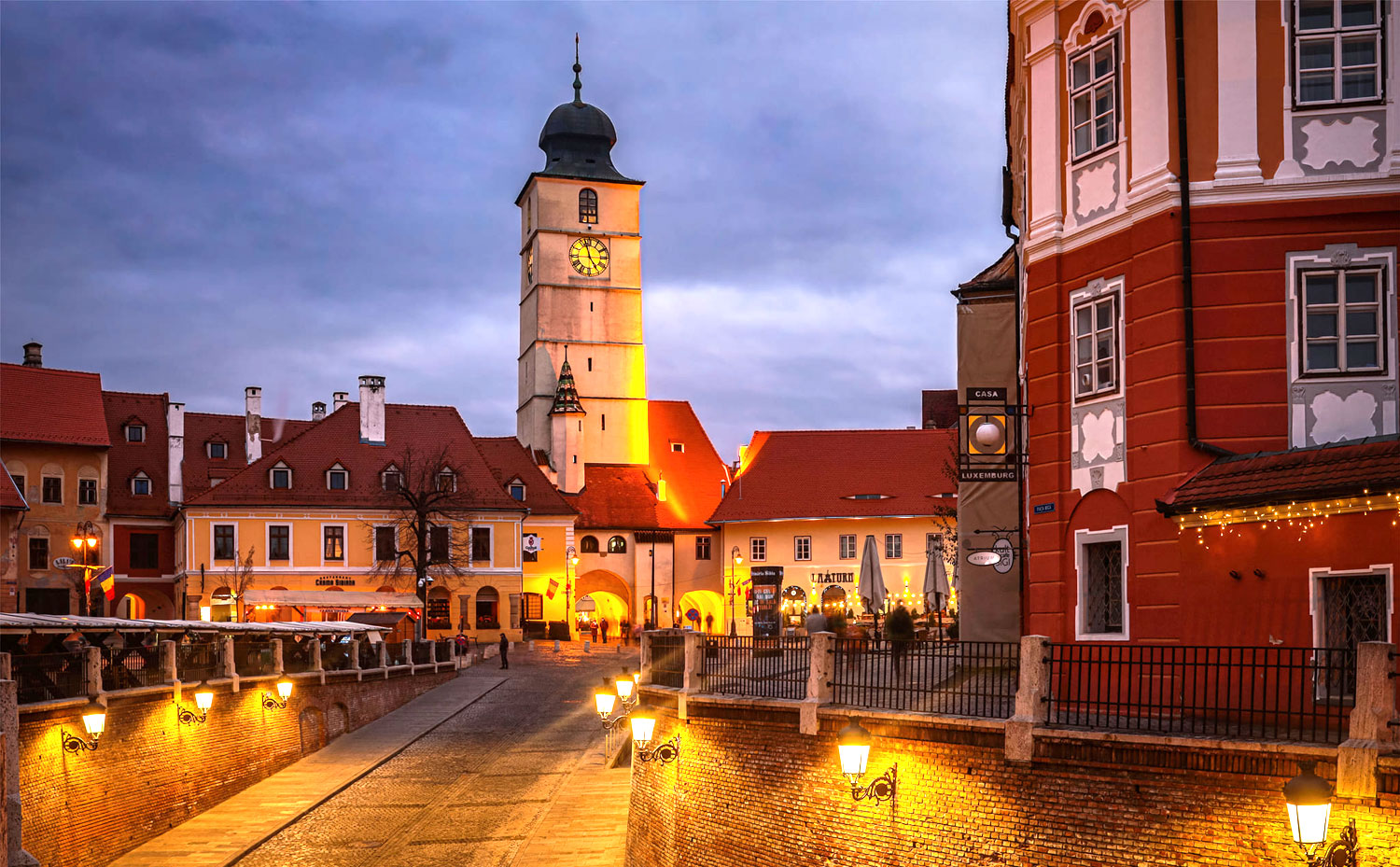
( Source: Romania Tourism )
Sibiu's history is reflected in every corner of the city, from old bastions and defense towers to Gothic churches and modern museums. The Evangelical Cathedral, with its imposing tower, dominates the urban landscape and offers visitors the chance to discover a solemn interior, loaded with art and spirituality. Nearby, the Brukenthal National Museum, one of the oldest and most important museums in Central and Eastern Europe, houses valuable collections of European and Romanian art, reflecting the city's rich cultural tradition. At the same time, the Astra Museum, located in Dumbrava Sibiului, offers an extensive foray into traditional Romanian culture, presenting authentic households, craft workshops, and demonstrations of rural life of yesteryear.
Besides its historical heritage, Sibiu is a vibrant city with an active and diverse cultural scene. International festivals of theater, music, film, and gastronomy transform the city into a dynamic space where art and creativity are celebrated throughout the year. Chic cafes, modern restaurants, and lively markets create a friendly atmosphere where visitors can enjoy culinary experiences inspired by both Transylvanian traditions and international influences. In the evening, the warm lights of historical buildings and discreet music in the squares contribute to the city's charm, offering a perfect setting for relaxing walks.
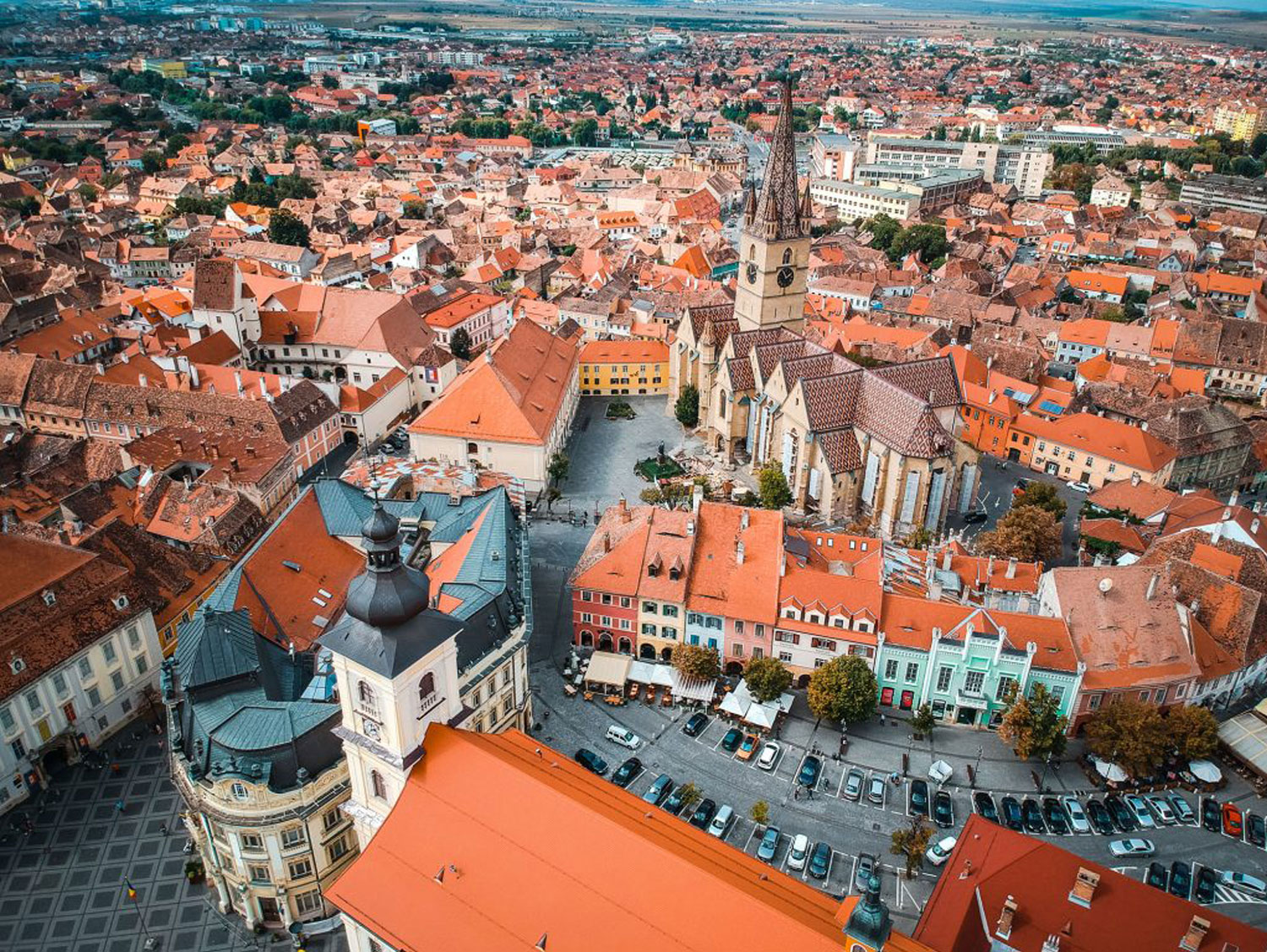
( Source: Romania Tourism )
Sibiu is also an ideal starting point for exploring the mountain regions and traditional villages in the surroundings. The proximity to the Transfăgărășan, Mărginimea Sibiului, and numerous natural trails offers excellent opportunities for hiking, cycling, or cultural excursions, completing the urban experience with spectacular landscapes and authentic traditions. This combination of nature, history, and cultural life makes Sibiu a complex and balanced destination, suitable for both art and architecture lovers and those seeking relaxation and inspiration.
Through its discreet elegance, well-preserved heritage, and the creative energy that animates it, Sibiu manages to offer an authentic and memorable experience to every visitor. It is a city that not only proudly preserves its past but transforms it into a constant source of inspiration for the present and future. Whether discovered for the first time or rediscovered upon every return, Sibiu remains a destination that harmoniously blends history and modernity, offering a vibrant and refined image of contemporary Romania.