Travel Ideas
Romania's Most Beautiful Forests

Autumn has arrived, and the trees are glowing in thousands of colors. The weather is very pleasant right now, offering the perfect opportunity for a weekend stroll, relaxation, and admiring nature. We have gathered 4 superb forests worth visiting this autumn, where you can take beautiful photos and disconnect from the noise of the city.
1. Letea Forest
Located in the Danube Delta, in Tulcea County, Letea Forest is the oldest protected area in the country, officially preserved since 1930. The reserve lies between the Sulina and Chilia branches, 23 km northwest of the town of Sulina, and represents one of Romania's most unique and beautiful natural treasures. The forest, approximately 700 years old and spanning 3,000 hectares, is the northernmost subtropical forest in Europe and, at the same time, the only place on the continent where lianas grow naturally.
The reserve harbors an extremely rich wildlife: around 500 plant species and 3,000 animal species live here undisturbed. Among the exotic plant species in Letea Forest, many are unique in Europe or even in the world; some of them emerged because migratory birds brought seeds from Africa. One of the forest's most famous attractions is the large population of wild horses living here. Beyond the wildlife specific to the Danube Delta, protected bird species can be observed in the area, such as the red-footed falcon or the white-tailed eagle, while the forest is also populated by numerous reptile species and about 2,000 different insect species. The contrast between the sand dunes and the colorful autumn foliage creates a spectacular photographic backdrop.

(Source: Discover Dobrogea)
2. Mociar Forest
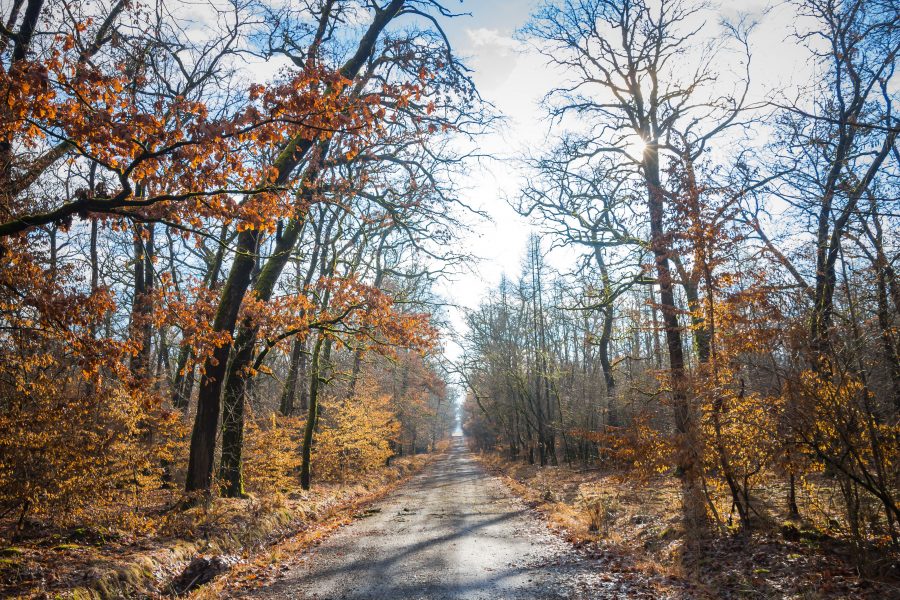
In Mureș County, on the eastern edge of the town of Reghin (37 km from Târgu Mureș) on the road to Sovata, lies the Mociar Forest Reserve—one of the most wonderful and oldest forests in the southeastern corner of Transylvania. Spanning a generous area of 569 hectares at an average altitude of 400 meters, this area of rare beauty received protected status back in 1932. The historic decision to protect it by law stemmed from the desire to save and conserve a true natural treasure: impressive pedunculate oaks (Quercus robur), ancient giant trees that continue to dominate the landscape today.
Inside the reserve, around 300 ancient oaks can be admired—veritable pillars of history, with ages estimated between 650 and 720 years. The dimensions of these trees are truly impressive: their heights range between 15 and 20 meters, while their massive trunks reach a remarkable diameter of 1.5 to 4 meters. Although oak accounts for 60% of the forest, European ash (20%), hornbeam (10%), and Eurasian aspen (10%) also make up significant proportions. In the autumn months, the leaves of these deciduous trees glow in thousands of shades of yellow and dark brown. The fauna of Mociar Forest consists of species typical of deciduous forests: roe deer, wild boars, hares, foxes, and various birds of prey find shelter here. Due to the difficult terrain, the human footprint on the ecosystem is virtually non-existent. This natural isolation has helped Mociar Forest maintain its primordial state, offering visitors the sight of a space untouched by civilization.
(Source: Térj haza, vándor)
3. Caraorman Forest
Spanning an area of 2,245 hectares between the Sulina and Sfântu Gheorghe branches, Caraorman Forest is one of the most important natural landmarks in the Danube Delta. Directly rivaling Letea Forest, it is rightfully considered a landmark forest area of the country. Under the protection of the Danube Delta Biosphere Reserve, the territory impresses with its blend of dense vegetation and terrain: the sandy landscape of Caraorman offers the spectacle of impressive sand dunes up to 10 meters high.
The oaks in Caraorman Forest can exceed 30 meters in height. The most famous and, at the same time, most feared attraction in the area is the famous "kneeling oak," which earned its name from its huge, sprawling branches that reach all the way to the ground. This ancient tree is approximately 400 years old, and its trunk circumference reaches 30 meters. Thanks to the special microclimate and the tranquility of the area, the forest hosts eagle species and rare birds under strict protection.

(Source: Delta Dunării)
4. Cozia Forest
Few people know that one of the country's largest single natural treasures lies in the eastern part of Vâlcea County. Cozia Forest, part of Cozia National Park, is one of the most impressive forests in Romania, stretching over approximately 17,100 hectares and attracting numerous visitors every year to the foothills of the Southern Carpathians.
The landscape of Cozia Forest spectacularly combines ancient Dacian beech, oak, and hornbeam forests with rocky scree slopes, deep gorges, alpine thickets, and sunny meadows, offering rare natural diversity. The rich vegetation is complemented by rare and protected plant species, such as wild iris, edelweiss, angelica, or martagon lily. This untouched ecosystem provides an ideal habitat for the large mammals of the Carpathians: brown bears, wolves, lynxes, as well as various bat species live here. The area is also rich in amphibians and rare insect species, such as the alpine longhorn beetle or the stag beetle. Located just 209 km from Bucharest, it is an ideal destination for a weekend mountain hike, where during the leaf-fall season, the forest glows in shades of gold, copper, and crimson.
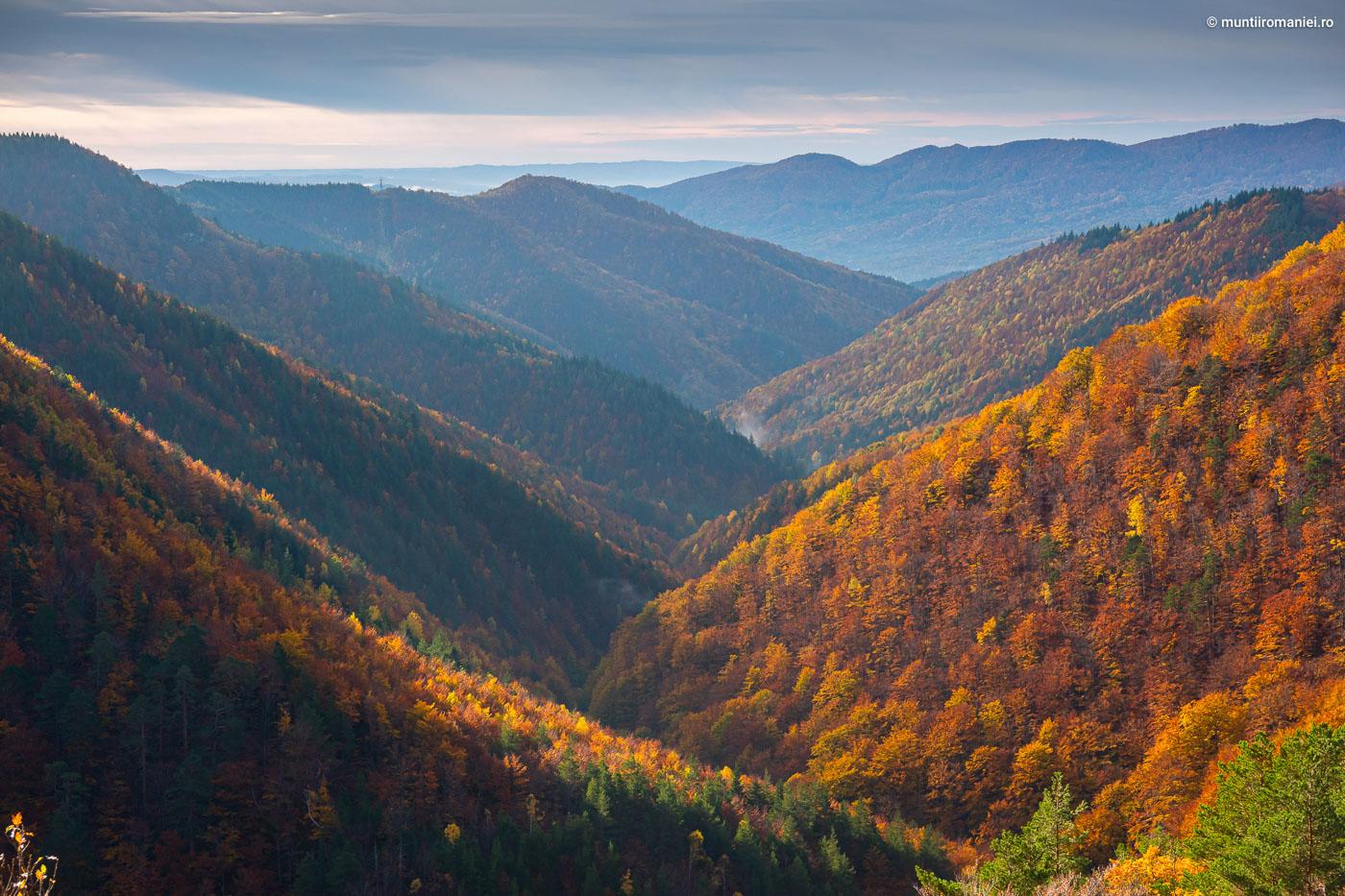
(Source: Zbor peste Munții României)
Romania shelters over 6 million hectares of forest—nearly a third of the country's territory—a green treasure that places it among the richest and most diverse natural environments in Europe. Preserving this natural heritage is vital not only for the balance of our ecosystems, but also to pass down an authentic nature to future generations.
Whichever of these forests you choose for your autumn getaway—whether it's the sand dune reserves of the Danube Delta, the ancient oaks of Mociar Forest, or the vast forest of the Cozia Mountains—the tranquility of nature and the view of colorful leaves will guarantee a full recharge. To rest in comfort after a full day of walking and photography, choose the destination closest to you and book your accommodation on stayhere.ro!